Europe is facing renewed pressure over border security as migration, national security and the future of open borders return to the center of political debate. The warning associated with U.S. Homeland Security Secretary Markwayne Mullin comes at a particularly sensitive moment, with a major migration crisis in Spain’s North African enclave of Ceuta exposing divisions over how Europe should protect its external borders.
The issue is bigger than one border crossing. It raises questions about how European countries respond when migration surges suddenly, how responsibility should be shared across the European Union, and whether existing border systems are strong enough to respond to a rapidly changing security environment.
Recent events have already pushed European leaders toward stronger border measures. The European Commission has called for enhanced external-border protection, better cooperation with third countries, stronger early-warning systems and tougher action against migrant-smuggling networks.
Against this backdrop, the message behind “Mullin warns Europe on border security” resonates with a broader international discussion: secure borders are increasingly being viewed as a fundamental part of national and regional security.
Europe’s Border Crisis Enters A New Phase

Europe has spent years debating migration policy. The arguments have often centered on asylum, legal migration, integration and humanitarian responsibilities.
But the latest developments have added another dimension: border resilience.
The recent crisis in Ceuta demonstrated how quickly pressure can build around a strategically sensitive European territory. Spanish authorities reported that tens of thousands of migrants entered the enclave during the crisis, with the vast majority subsequently returning to Morocco. The episode also resulted in a tragic loss of life.
The scale of the incident immediately triggered political concern across Europe.
For supporters of stronger border controls, the crisis was evidence that European governments need faster response mechanisms. For critics of tougher policies, the deaths and humanitarian consequences demonstrated why Europe needs safe migration routes and functioning asylum procedures.
That disagreement is unlikely to disappear.
Instead, the debate is increasingly shifting toward how Europe can combine border security with humanitarian obligations.
Why Mullin’s Border Message Matters
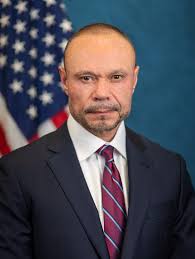
Markwayne Mullin is now closely associated with U.S. homeland-security policy, making any discussion involving his approach particularly relevant to European policymakers watching developments in Washington.
The United States has its own long-running debate over border enforcement. European governments, however, face a different geographical and political environment.
The European Union contains an internal free-travel area through the Schengen system, meaning that weaknesses at an external border can have consequences far beyond the country where an irregular crossing occurs.
That makes external-border protection a shared European concern.
A crisis affecting Spain, Italy, Greece or another frontline country can quickly become a broader EU political issue.
This is why the phrase “secure your border” has gained political force. It is no longer simply about fences, patrol officers or immigration checks. It is also about intelligence sharing, technology, maritime surveillance, organized-crime networks, document security and cooperation with neighboring countries.
Ceuta Shows The Pressure Europe Faces
The Ceuta crisis has become an important example of the challenges facing Europe.
Ceuta is a Spanish territory on the North African coast and therefore represents a unique point where European and African migration dynamics meet.
The recent surge produced an extraordinary response. Spain said roughly 70,000 of about 72,000 migrants who entered the enclave had returned to Morocco, while European officials moved quickly to discuss the wider implications.
The situation also created political tension among European governments.
Some countries argued that Spain’s migration policies could create additional pressure on European borders. Others emphasized solidarity with Spain and rejected the idea that the crisis should be used to undermine European unity.
The European Commission ultimately emphasized stronger cooperation, external-border protection and coordination against smuggling networks.
The lesson for European policymakers is clear: border crises can become regional crises very quickly.
The Schengen Challenge
One of the biggest questions surrounding Europe’s border debate is the future of the Schengen system.
Schengen allows people to travel between participating European countries with limited internal border controls. It is one of the most visible achievements of European integration.
But Schengen depends heavily on confidence that the external borders are properly managed.
When countries believe external borders are under pressure, they may introduce temporary internal controls.
The European Commission currently maintains a list of countries using temporary border controls for specific security, migration or public-order reasons. Austria, for example, has cited irregular migration along Balkan routes and wider security concerns among the reasons for temporary controls.
This creates a difficult balance.
Europe wants the economic and social benefits of open internal borders. At the same time, governments want the ability to respond when migration or security pressures increase.
A stronger external-border system could help protect both objectives.
Border Security Is About More Than Migration
Another important point is that modern border security cannot be reduced to migration alone.
European security officials increasingly have to consider multiple threats at the same time.
These include:
- Irregular migration
- Human trafficking
- Smuggling networks
- Terrorism
- Cyberattacks
- Drone activity
- Foreign interference
- Infrastructure sabotage
- Weapons trafficking
- Organized crime
The European Commission has highlighted a broad range of threats affecting the EU’s eastern regions, including hybrid attacks, weaponized migration, drone activity, cyberattacks, sabotage and information manipulation.
That means border protection is becoming a multidimensional security operation.
A country can have a physical barrier and still face serious vulnerabilities if it lacks intelligence, surveillance technology or coordination between agencies.
Europe’s Eastern Border Adds Another Security Concern
Migration is only one part of Europe’s wider border-security challenge.
The war in Ukraine has transformed the security environment along the EU’s eastern flank.
The European Council has called for Europe to strengthen its defense readiness and specifically stressed the importance of protecting EU land, air and maritime borders. The council cited repeated airspace violations and a serious drone incident in Romania among the security concerns facing Europe.
This changes the meaning of border security.
European governments are increasingly thinking about borders not only as immigration checkpoints but also as strategic defensive lines.
The eastern border involves military preparedness.
The southern border involves migration and maritime security.
Airspace involves drones and other emerging technologies.
Digital borders involve cybersecurity and data protection.
Together, these challenges require a coordinated strategy.
Why Stronger European Coordination Is Becoming Necessary
One country cannot solve every border problem alone.
The recent Ceuta crisis demonstrated the importance of cooperation between Spain, Morocco and European institutions. European officials have emphasized cooperation with third countries, stronger external borders, early-warning mechanisms and action against smuggling organizations.
This approach could become increasingly important.
European countries can share intelligence about migration routes, criminal organizations and potential security threats. They can also coordinate border technology, patrol resources and emergency response.
However, cooperation is difficult when national governments disagree about migration policy.
Some countries favor strict enforcement and rapid deportation.
Others prioritize asylum access and humanitarian protection.
Still others are concerned primarily with maintaining free movement inside Europe.
The challenge is creating a system that can address all three concerns without allowing one crisis to overwhelm the entire structure.
Technology Could Transform Border Protection
Technology is becoming a major part of modern border security.
Biometric systems, automated passport checks, artificial intelligence, drones, satellite monitoring and advanced databases can help authorities identify people and detect suspicious activity.
Europe has already been expanding its digital border infrastructure.
However, technology also creates challenges.
European airports and airlines have warned that the implementation of the EU’s Entry/Exit System has caused significant operational pressure, with reports of border-control queues reaching several hours during busy periods.
This highlights an important lesson.
A secure border system must also be efficient.
If technology creates excessive delays, it can disrupt tourism, trade and transportation.
The goal should therefore be a border system that is both secure and practical.
The Humanitarian Dimension Cannot Be Ignored
Any discussion of border security must also recognize the human cost of migration crises.
The recent Ceuta emergency resulted in numerous deaths, reminding policymakers that dangerous migration routes can quickly become deadly.
Stronger borders do not automatically solve the reasons people leave their homes.
Wars, poverty, political instability, persecution and economic hardship can continue to drive migration.
For this reason, European policymakers face two responsibilities at the same time.
They must maintain effective border control.
They must also ensure that asylum seekers and vulnerable migrants are treated according to European and international law.
Humanitarian groups have argued that Europe needs safe migration pathways and reforms to asylum procedures alongside stronger border management.
That makes the debate much more complicated than simply choosing between “open borders” and “closed borders.”
Could Europe Move Toward Tougher Border Policies?
The political direction is clearly becoming more security-focused.
Several European governments have pushed for stronger controls, faster processing and tougher measures against irregular migration.
The Ceuta crisis has added momentum to those arguments.
European leaders are also increasingly discussing cooperation with countries outside the EU to prevent irregular crossings before migrants reach European territory.
That strategy can be effective when partner countries have the resources and political willingness to cooperate.
But it also creates questions about accountability.
Europe must ensure that border cooperation does not simply transfer humanitarian problems elsewhere.
A sustainable policy needs both security and legal safeguards.
What The U.S. Can Learn From Europe — And What Europe Can Learn From The U.S.
The debate surrounding Mullin also highlights an important transatlantic question.
The United States and Europe have different borders, laws and migration patterns, but both face political pressure over border security.
The U.S. experience shows how quickly immigration can become one of the most important national political issues.
Europe’s experience demonstrates something different: when multiple countries share an open internal travel zone, border security becomes a collective responsibility.
There is therefore room for cooperation between the United States and European countries in areas such as counter-smuggling operations, intelligence sharing, cybersecurity and advanced border technology.
But European governments will ultimately have to design policies that fit their own legal and political structures.
The Bigger Security Picture
The strongest lesson from Europe’s current border debate is that security cannot be treated as a temporary issue.
A border crisis can develop rapidly.
A migration route can change within days.
A smuggling network can adapt to new enforcement measures.
A drone can cross an international boundary in minutes.
A cyberattack can target critical infrastructure without physically crossing a border at all.
This means governments need permanent preparedness rather than emergency reactions.
The European Commission’s current approach to its eastern regions reflects this broader thinking. Its strategy combines security with infrastructure, economic resilience, connectivity and regional development.
That model could become increasingly important across Europe.
What Happens Next?
The next phase of Europe’s border debate is likely to focus on three major areas.
First, European governments will continue examining how to strengthen external borders without destroying the benefits of Schengen.
Second, countries will seek stronger partnerships with neighboring states to combat smuggling and reduce dangerous irregular crossings.
Third, policymakers will face increasing pressure to balance security with humanitarian responsibilities.
The Ceuta crisis has shown how quickly a border problem can become a political emergency.
It has also demonstrated that Europe cannot afford fragmented responses.
Whether the discussion begins with Mullin, European leaders or national governments, the underlying question remains the same:
Can Europe build borders that are secure, technologically capable and humane at the same time?
That is likely to be one of the defining security debates of the coming years.
Final Thoughts
The warning behind “Mullin warns Europe on border security” arrives at a moment when border protection is becoming an increasingly important part of the international security conversation.
Europe is confronting migration pressure, organized smuggling, geopolitical instability, cyber threats and new forms of hybrid warfare.
The recent Ceuta crisis has provided a dramatic reminder of how quickly border problems can escalate. European institutions have already called for stronger external borders, better early-warning systems, international cooperation and stronger action against smuggling networks.
At the same time, the humanitarian consequences cannot be ignored.
Europe’s challenge is therefore not simply to make borders harder to cross. It is to create a system capable of controlling irregular migration, protecting national security, maintaining lawful asylum procedures and preserving the economic benefits of European cooperation.
A secure border is ultimately about more than walls, fences or checkpoints.
It is about intelligence, cooperation, technology, preparedness and responsible policy.
For Europe, that conversation is no longer theoretical. The latest crisis has made it immediate.
FAQs
What is the main concern behind Mullin’s warning to Europe?
The broader concern is that Europe needs resilient borders capable of responding to migration pressure and wider security threats. The issue includes irregular migration, organized smuggling and emerging hybrid-security challenges.
Why is the Ceuta crisis important?
Ceuta is a Spanish territory in North Africa and has become a major focus of Europe’s migration debate after a large-scale border crossing. The crisis prompted discussions about stronger border controls and greater European cooperation.
Is Europe strengthening its borders?
European institutions and individual governments are taking steps to strengthen external borders, improve border technology and increase cooperation against irregular migration and smuggling.
What is the Schengen problem?
Schengen allows free movement across participating European countries. However, individual states can temporarily restore internal border controls under certain circumstances, including security and migration pressures.
Does border security only concern immigration?
No. Modern border security also involves terrorism, organized crime, cyberattacks, drones, weapons trafficking, foreign interference and other forms of hybrid threats.
Why is technology important for European borders?
Biometric identification, digital databases, surveillance systems and other technologies can help authorities improve security and process travelers more efficiently. However, poorly implemented systems can also cause delays and operational problems.
What is Europe doing about migrant smuggling?
European institutions are calling for stronger cooperation with third countries, better intelligence and action against organized smuggling networks.
Can Europe have strong borders while protecting migrants?
European policymakers argue that effective border management and humanitarian protection can coexist. The challenge is creating procedures that control irregular entry while preserving lawful asylum and human-rights protections.
Why is Europe’s eastern border also important?
Russia’s war against Ukraine and related threats have increased attention on Europe’s eastern land, air and maritime borders. EU leaders have called for stronger defense readiness and border protection.
What could happen next?
Europe is likely to continue strengthening external-border cooperation, investing in technology and debating tougher migration policies while trying to preserve the benefits of Schengen and meet humanitarian obligations.
About the Author