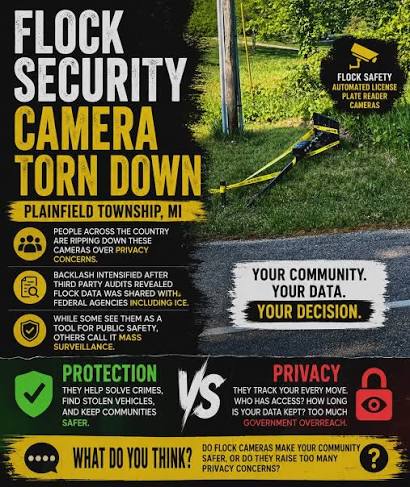
Flock cameras are at the center of a growing debate over privacy, surveillance and public safety in the United States.
The technology was introduced as a modern tool for helping police identify vehicles involved in crimes. Automated license plate reader cameras, commonly known as ALPRs, can capture vehicle information as cars pass a camera. The systems can then help investigators locate vehicles connected to reported incidents.
But the rapid expansion of these cameras has triggered a fierce backlash.
Communities, privacy advocates and some public officials are increasingly questioning how much vehicle data is collected, who can search it, how long information is retained and whether safeguards are strong enough.
The controversy has intensified in recent weeks. Connecticut Gov. Ned Lamont has urged municipalities to pause new installations while officials review privacy policies and surveillance rules. In Newtown, Connecticut, the local Legislative Council has also expressed support for a moratorium on Flock cameras amid concerns about surveillance and public trust.
The debate is becoming bigger than one camera company. It raises a fundamental question:
How much surveillance should communities accept in the name of public safety?
What Are Flock Cameras?
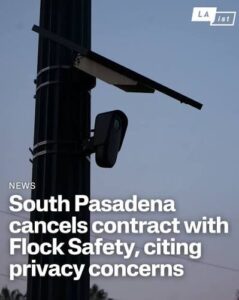
Flock Safety develops automated license plate reader technology used by law enforcement agencies, businesses and communities.
Unlike traditional security cameras that simply record video, ALPR systems use computer vision to identify and organize information about vehicles.
A camera may capture a license plate along with information such as the vehicle’s make, model, color and other distinguishing characteristics. The system can also record the time and location associated with the observation.
This creates a searchable database that investigators can use when trying to identify a vehicle.
Supporters say the technology can save valuable time during investigations.
For example, if police receive a report of a stolen vehicle, investigators may be able to search available ALPR data for a matching vehicle. Similar searches can potentially help investigate burglary, robbery, vehicle theft and other crimes.
However, critics argue that the same technology creates a detailed record of where vehicles have been seen.
That distinction is at the heart of the privacy debate.
Why Are People Worried About Privacy?
The biggest concern is not necessarily a single photograph of a license plate.
The concern is what happens when millions of observations are collected and made searchable.
A vehicle may be photographed while its driver is doing something completely ordinary. The person may be going to work, visiting a friend, shopping or attending an event.
That information can still become part of a searchable surveillance system.
Privacy advocates argue that people should not have their movements recorded simply because they drive through a public area.
The Electronic Frontier Foundation has raised concerns about the expansion of ALPR searches beyond traditional criminal investigations. Reporting on EFF’s analysis has highlighted cases involving searches connected to activities such as school residency verification, background checks and noise complaints.
That has increased concern about what critics call mission creep.
Mission creep happens when a technology introduced for one purpose gradually becomes used for many other purposes.
A camera originally installed to help investigate serious crimes could eventually become part of a much broader surveillance network.
That possibility alarms civil-liberties advocates.
Flock Safety Defends Its Privacy Protections
Flock Safety strongly disputes the idea that its technology is designed to create unrestricted mass surveillance.
According to the company’s privacy information, customer data belongs to the customer. Flock says it does not sell customer data and that customers control decisions about data sharing.
The company also says authorized law-enforcement searches require justification and create an audit trail. Its privacy policy says customer data is encrypted and that footage is generally stored for 30 days before permanent deletion, subject to applicable legal requirements.
Flock also argues that its cameras capture point-in-time vehicle images rather than continuously following individuals.
The company says the cameras cannot literally track a person in the way some critics describe.
However, critics counter that a large network of cameras can still create significant information about vehicle movements when searches are conducted across multiple locations.
That difference in interpretation is one reason the debate remains so intense.
Data Sharing Is a Major Flashpoint
One of the most controversial questions concerns data sharing.
A local police department may operate Flock cameras in its community. But the information may also become accessible to other law-enforcement agencies depending on the agreements and sharing settings involved.
Flock says customers can control sharing and can decide whether to share camera access with other police agencies. Options can include one-to-one sharing, geographic sharing or broader arrangements.
For privacy advocates, however, the existence of a connected network creates difficult questions.
If a vehicle is recorded in one city, should an agency hundreds of miles away be able to search for it?
What happens if another state has different privacy protections?
What if an agency uses the information for an investigation that local residents never expected the camera network to support?
These questions have become increasingly important as ALPR networks expand.
Police Misuse Has Added Fuel to the Controversy
Concerns about misuse have also contributed to the backlash.
A particularly striking recent case involved a former police officer in North Carolina who was accused of using Flock camera data to locate her boyfriend’s ex-wife.
According to reporting, an internal audit found that the former officer accessed Flock data 31 times for personal reasons. She was later arrested and charged with misdemeanor computer access.
The case does not establish that widespread abuse is occurring across all Flock systems.
But it illustrates why oversight matters.
Even a sophisticated security system depends on the people who are authorized to use it.
If users can search sensitive databases without meaningful controls, surveillance technology can potentially become a tool for harassment, stalking or personal investigations.
For critics, that risk is a reason to strengthen access controls, audits and penalties.
Accuracy Is Another Concern
Privacy is not the only issue.
Accuracy also matters.
If a system incorrectly identifies a vehicle or produces misleading information, the consequences can be serious.
Law enforcement officers may rely on automated information while making decisions during traffic stops or investigations.
That means agencies need clear procedures for verifying ALPR information before taking enforcement action.
Recent scrutiny of Flock systems has included concerns over false alerts and inaccurate vehicle information. Reports surrounding the Los Angeles Police Department’s use of the technology have added to the national discussion about whether the benefits justify the risks.
An automated camera should therefore be treated as an investigative tool, not unquestionable evidence.
Human verification remains critical.
Connecticut Becomes a Major Battleground
The latest controversy in Connecticut shows how quickly the debate can move from online criticism to government action.
Gov. Ned Lamont recently urged Connecticut municipalities to pause new installations of license plate readers and other surveillance technologies while officials review privacy protections and develop clearer guidance.
Newtown has also emerged as an example of local resistance.
Members of the town’s Legislative Council expressed support for a moratorium on Flock cameras. Concerns raised during the discussion included surveillance, public trust and the possibility of creating an overly broad monitoring network.
Other Connecticut communities have also reconsidered their use of the technology.
This suggests that the Flock debate is no longer limited to privacy activists.
Local governments are now being asked to decide whether the security benefits outweigh concerns about civil liberties.
Why Supporters Say Flock Cameras Matter
Despite the backlash, there are strong arguments in favor of ALPR technology.
Police departments face limited resources. Investigators can spend hours trying to identify vehicles connected to crimes.
Flock cameras can potentially provide leads quickly.
Supporters say the technology has helped investigators recover stolen vehicles, identify suspects and connect vehicles with crime scenes.
In serious investigations, minutes can matter.
A camera network can also provide information that witnesses may not have.
For example, a witness might remember only the color or type of a vehicle. An ALPR system could potentially provide investigators with additional information that helps narrow the search.
Supporters therefore argue that removing the technology could eliminate a useful investigative tool.
The question is not necessarily whether ALPR technology can help solve crimes.
It can.
The more difficult question is how it should be governed.
The Real Debate Is About Rules
The growing Flock cameras privacy backlash is ultimately a debate about rules and accountability.
Communities considering these systems may need clear answers to several questions.
Who can access the data?
What types of searches are allowed?
Does a warrant need to be obtained?
How long is information stored?
Which agencies can access the system?
Can federal agencies obtain information?
Are searches audited?
What happens when an officer misuses the system?
How are inaccurate alerts handled?
These questions should be answered before cameras are installed, not after controversy begins.
Clear policies can help protect both public safety and individual rights.
Transparency Could Become the Key Issue
Public trust is critical for any surveillance technology.
Residents may be more willing to accept cameras if they know exactly where the cameras are located, what information is collected and how the data is used.
Local governments can also publish surveillance policies and statistics about searches.
Regular audits could help identify misuse.
Independent oversight could provide another layer of accountability.
Strong penalties for unauthorized searches could discourage abuse.
These measures would not eliminate every privacy concern, but they could make the technology more accountable.
Flock itself says its systems include security controls, encryption, audit trails and customer-controlled data sharing.
The challenge is ensuring that those protections work effectively in real-world situations.
Could More Cities Remove Flock Cameras?
The answer may depend on how local governments respond to public pressure.
Some communities have already canceled contracts, rejected proposals or considered removing cameras. Recent reporting indicates that the backlash is spreading across multiple American cities.
However, other communities continue to support the technology because of its potential benefits for crime investigations.
That means the future is unlikely to be uniform.
Some cities may expand ALPR networks.
Others may restrict them.
Some may introduce strict warrant requirements or limitations on data sharing.
Others may remove cameras entirely.
The result could be a patchwork of different surveillance rules across the country.
What Happens Next?
The controversy surrounding Flock cameras is unlikely to disappear soon.
Technology is moving faster than many existing privacy rules.
As more communities install automated surveillance systems, lawmakers will face growing pressure to establish consistent standards.
The most important debate may involve balancing two legitimate interests.
Residents want safe communities.
They also want freedom from unnecessary surveillance.
Those goals do not have to be mutually exclusive.
A carefully regulated ALPR system could potentially help investigators while limiting unnecessary access to personal movement data.
But without transparency and meaningful oversight, public confidence can quickly disappear.
Final Thoughts
The Flock cameras privacy backlash reflects a much larger national debate about surveillance in the digital age.
ALPR technology can provide valuable investigative leads. It can help police locate stolen vehicles and investigate crimes more efficiently.
At the same time, widespread camera networks create legitimate questions about privacy, data sharing, accuracy and government power.
Recent developments in Connecticut, reports of misuse and decisions by some police departments and municipalities to reconsider their contracts show that the controversy is growing.
The answer is not simply to declare surveillance technology good or bad.
The real issue is accountability.
If communities are going to use Flock cameras, residents deserve clear rules, strong safeguards and transparency about how the technology works.
Public safety matters.
So does privacy.
The challenge for policymakers is finding a system that protects both.
Frequently Asked Questions
What are Flock cameras?
Flock cameras are automated license plate reader systems used to capture and analyze information about vehicles. They can record license plates and vehicle characteristics along with the time and location of a camera observation.
Why are Flock cameras controversial?
Flock cameras are controversial because critics are concerned about mass surveillance, data sharing, police access, potential misuse, accuracy and the long-term impact of searchable vehicle-location information.
Does Flock Safety sell license plate data?
Flock Safety says it does not sell customer data. The company states that customers own their data and control sharing arrangements.
How long does Flock store camera data?
Flock’s privacy policy says footage is generally stored for 30 days before permanent deletion, although applicable laws or regulations can affect retention requirements.
Can police search Flock camera data?
Authorized law-enforcement users can search ALPR information subject to the policies and access controls established by the relevant customer agency. Flock says searches require justification and generate an audit trail.
Are Flock cameras illegal?
Flock cameras are not generally illegal simply because they are surveillance cameras. However, their use can be subject to state and local laws, agency policies and privacy regulations. Some jurisdictions are considering additional restrictions.
Why are some communities removing Flock cameras?
Some communities are reconsidering or removing the cameras because of concerns about privacy, data sharing, public trust and surveillance. Other communities continue using them because they believe the technology helps investigations.
Do Flock cameras track people?
Flock says its ALPR cameras capture point-in-time vehicle observations rather than continuously tracking individuals. Critics argue that large interconnected networks can nevertheless provide significant information about vehicle movements when searches are performed across locations.
What is the biggest concern about Flock cameras?
The biggest concern for privacy advocates is the potential creation of a large, searchable record of vehicle movements and the possibility that the information could be accessed or used beyond the original purpose of the cameras.
Will the Flock camera controversy continue?
The debate is likely to continue as more communities consider surveillance technology and lawmakers review privacy protections. The future of Flock cameras will likely depend on public trust, regulation, transparency and evidence about their effectiveness.
About the Author