British and American politics are both facing moments of intense political drama, with internal party divisions becoming increasingly difficult to contain. In Britain, Anas Sarwar’s call for Keir Starmer to step down became one of the most dramatic Labour rebellions of 2026. In the United States, meanwhile, the Wisconsin governor’s race has been shaken by controversy surrounding Democratic candidate Francesca Hong and her past comments about Thanksgiving.
Although the two political stories are taking place on opposite sides of the Atlantic, they share a common theme: party unity can become a major electoral issue when candidates are forced to defend controversial positions or distance themselves from their own leadership.
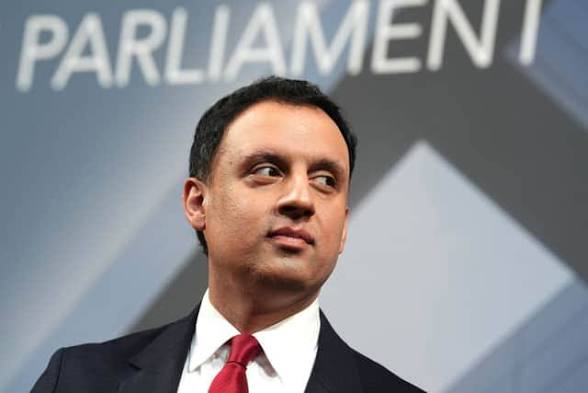
Sarwar’s intervention against Starmer was particularly significant because he was the leader of Scottish Labour and one of the most senior figures inside the wider Labour movement. In February, he publicly argued that the leadership at Downing Street needed to change, saying that the political “distraction” had to end.
Meanwhile, Wisconsin’s Democratic gubernatorial primary has become a major test of whether progressive candidates can combine ideological convictions with a message that appeals to a broad general-election electorate. Francesca Hong’s previous comments about Thanksgiving have now become a major campaign issue, with opponents arguing that her position could alienate voters in a closely contested state.
Anas Sarwar’s Starmer Exit Call Shocked Labour
The Anas Sarwar Starmer exit call emerged in February 2026 after mounting pressure on the Labour government.
Sarwar publicly called for Keir Starmer to stand down as prime minister, arguing that the situation in Downing Street was damaging Labour’s prospects in Scotland. His intervention was extraordinary because it came from a senior Labour figure rather than an opposition politician.
According to reporting at the time, Sarwar said there had been too many mistakes from No 10 and argued that the leadership problem was becoming a distraction for the party.
The intervention immediately created questions about Labour’s internal stability.
Could Starmer survive?
Would other Labour MPs follow Sarwar?
Was the move part of a wider leadership challenge?
And could Labour repair its position in Scotland before the Holyrood elections?
These questions transformed an already difficult political situation into a major leadership crisis.
Why Sarwar Broke Ranks With Starmer
Sarwar’s decision was closely connected to Scottish Labour’s electoral difficulties.
Labour had returned to power at Westminster after the 2024 general election, but its performance and political standing in Scotland remained a major concern. Sarwar had hoped to rebuild Labour as a credible alternative to the SNP, but dissatisfaction with the UK government threatened to make that task harder.
Political reporting at the time suggested Scottish Labour’s polling position had deteriorated significantly. The Guardian reported that support for Scottish Labour had fallen to around 18% in polling cited in February.
Sarwar therefore faced a difficult calculation.
Remaining completely loyal to Starmer could associate Scottish Labour with unpopular decisions and controversies in Westminster. Breaking with Starmer, however, risked creating an open civil war inside Labour.
Sarwar chose the second option.
His message was essentially that Labour needed a change in Downing Street if it wanted to restore public confidence.
Starmer Refused to Walk Away
Despite the pressure, Starmer did not immediately surrender.
He insisted that he remained committed to leading the government and Labour Party. Later reporting described him as refusing to walk away after surviving a serious challenge to his leadership.
That resistance was important because a leadership change would have created enormous uncertainty for Labour.
A leadership contest could have distracted ministers from government business, intensified factional divisions and created further opportunities for opposition parties.
For Starmer, the immediate objective was therefore survival.
For Sarwar, the challenge was different: he needed to demonstrate that his break with Starmer was justified by Scotland’s political circumstances rather than simply being a personal or factional manoeuvre.
Labour Meltdown or Strategic Rebellion?
The phrase “Labour meltdown” captured the intensity of the political coverage, but the reality was more complicated.
Sarwar’s intervention did not automatically mean that Labour was collapsing nationally.
Downing Street subsequently believed that Sarwar had acted independently rather than as part of a coordinated Westminster plot to remove Starmer.
That distinction matters.
A coordinated leadership rebellion could have threatened Starmer immediately. An individual intervention, while politically damaging, was easier for the prime minister to contain.
Nevertheless, the symbolism was powerful.
When a senior Labour leader publicly tells the prime minister to go, voters naturally begin asking whether the government itself has lost confidence.
Sarwar’s Position Became More Complicated
The relationship between Sarwar and Starmer became even more complicated in the days after the resignation demand.
Despite calling for Starmer to step down, Sarwar later said that Starmer could campaign in Scotland for Labour, provided the prime minister could demonstrate that the UK government was improving people’s lives.
That apparent contradiction illustrates the complexity of electoral politics.
Sarwar could oppose Starmer’s leadership while still needing the resources and influence of the UK Labour organisation.
Scottish Labour also needed to convince voters that it represented a distinct political alternative without completely separating itself from the national Labour government.
The result was an awkward political balancing act.
What Happened to Sarwar Later?
The political story moved on considerably after the February confrontation.
By July 2026, Sarwar had resigned as Scottish Labour leader and moved into the UK government led by Andy Burnham. His departure generated a fresh controversy because political opponents accused him of inconsistency over his previous criticisms of Westminster politics and his earlier opposition to the House of Lords.
This later development is important when assessing the original Starmer revolt.
Sarwar’s February intervention should therefore be understood as one stage in a much larger political transformation rather than as an ongoing August 2026 leadership challenge against Starmer.
Wisconsin Race Alert: Thanksgiving Controversy Explodes
Across the Atlantic, Wisconsin’s 2026 governor’s race has become another example of how old political statements can return to dominate an election campaign.
Francesca Hong, a progressive Democratic candidate and state legislator, has faced scrutiny over past comments about Thanksgiving.
The controversy stems from comments Hong made in 2020, when she criticized Thanksgiving in the context of colonial history and the COVID-19 pandemic. The remarks have resurfaced as she competes in the Democratic gubernatorial primary.
The timing is significant.
Wisconsin Democrats are preparing for a primary scheduled for August 11, and the Democratic contest has become an important battle between progressive and more moderate factions of the party.
Why Thanksgiving Became a Political Weapon
Thanksgiving is one of the most culturally significant holidays in the United States.
That makes comments about cancelling or fundamentally rethinking the holiday particularly politically sensitive.
Hong’s opponents have argued that her earlier comments demonstrate an ideological position that could be unpopular with mainstream Wisconsin voters.
Supporters, however, argue that the controversy is being amplified to distract from economic and policy issues.
The debate therefore goes beyond Thanksgiving itself.
It has become a question about whether a candidate can evolve politically, clarify an old statement and convince voters that her current policies are different from controversial positions associated with her past.
Hong Faces Questions About Her Current Position
The controversy intensified after Hong was questioned about whether she wanted to cancel Thanksgiving.
Reports said she did not give a simple yes-or-no answer during a CNN interview, instead discussing the complicated history of the holiday and her own experience as a chef.
That response created a second wave of political criticism.
In modern campaigns, a candidate often has only a few seconds to neutralize a damaging attack.
Critics argued that a straightforward rejection of cancelling Thanksgiving would have been politically safer.
Supporters countered that the issue was being deliberately reduced to a slogan while ignoring Hong’s broader political platform.
Wisconsin Democrats Face a Bigger Question
The Wisconsin controversy matters because the governor’s race is not simply about one candidate.
It reflects a broader debate within the Democratic Party about the balance between progressive politics and electoral pragmatism.
The Democratic primary has become a flashpoint between candidates and factions with different visions for the party.
David Crowley, backed by Democratic Governor Tony Evers, re-entered the race after previously suspending his campaign. Hong, meanwhile, has emerged as a leading progressive contender.
The contest is therefore being watched beyond Wisconsin.
Progressive activists see Hong as a candidate capable of expanding the party’s coalition.
Moderate Democrats worry that controversial cultural positions could give Republicans ammunition in the general election.
Republicans, meanwhile, have obvious incentives to keep the controversy alive.
Why the Race Matters Nationally
Wisconsin remains one of America’s most important battleground states.
The state has repeatedly played a crucial role in presidential and statewide elections, making its gubernatorial contest strategically important for both parties.
The Democratic Party also faces a broader question about its future direction.
Should Democrats emphasise economic issues such as housing, healthcare, wages and affordability?
Should they prioritise cultural and social issues?
Or can progressive candidates successfully combine both approaches?
Hong’s campaign has placed those questions directly in the spotlight.
Thanksgiving Controversy Could Become a General-Election Issue
The immediate political risk for Hong is that an old statement becomes a defining narrative.
A campaign can spend months discussing healthcare, education, jobs and housing, but one controversial clip can dominate social media within hours.
That is especially dangerous in a competitive state.
If Republican opponents can portray Hong as disconnected from ordinary voters, they may attempt to turn the Thanksgiving controversy into a symbol of what they describe as Democratic extremism.
Hong’s challenge is to prevent the controversy from overwhelming her economic and governing message.
The Larger Lesson From Both Political Stories
The Anas Sarwar revolt and Wisconsin Thanksgiving controversy appear unrelated, but they reveal a similar political reality.
Political parties are coalitions.
They contain competing ideological groups, regional interests, personalities and electoral strategies.
When those groups disagree publicly, the conflict can quickly become bigger than the original issue.
Sarwar’s Starmer intervention demonstrated the risks of internal rebellion.
Hong’s Thanksgiving controversy demonstrates the risks of allowing old statements to collide with a modern election campaign.
In both cases, political survival depends heavily on messaging.
Can Labour Recover From Its Internal Conflicts?
Labour’s long-term challenge is bigger than the question of whether one leader survives.
The party must maintain support across England, Scotland and Wales while managing disagreements between its parliamentary factions.
Scotland is particularly important because Labour wants to challenge the SNP and prevent voters from moving toward Reform UK or other parties.
The May 2026 Holyrood result was difficult for Scottish Labour, which returned 17 MSPs, tying with Reform UK.
That result helps explain why the party’s internal leadership debate was so consequential.
Labour cannot easily rebuild in Scotland if voters associate the party with Westminster instability.
What Happens Next in Wisconsin?
The immediate focus is the Democratic primary.
The outcome will determine which Democrat faces Republican Tom Tiffany in the general election.
Hong’s supporters will argue that her progressive message can energise voters who are frustrated with conventional politics.
Her opponents will argue that controversial positions could make it harder to win over moderate and independent voters.
The Democratic Party must therefore decide what kind of campaign it wants to run in Wisconsin.
Conclusion: Two Parties, One Political Problem
The Anas Sarwar Starmer exit call became a defining moment in Labour’s internal struggle in early 2026. Sarwar’s decision to demand a change in Downing Street exposed the pressure facing Labour in Scotland and demonstrated how quickly internal disagreements can become national political crises.
The subsequent evolution of Sarwar’s career shows that political alliances can change rapidly. By July, he had left Scottish Labour leadership and joined Andy Burnham’s government, adding another chapter to his extraordinary political year.
In Wisconsin, the focus is now on Francesca Hong and the Democratic gubernatorial primary. Her Thanksgiving controversy illustrates the growing importance of old social-media statements in modern elections. The debate is not simply about a holiday; it is about whether voters believe a candidate has changed, clarified her views and can appeal beyond her political base.
As Wisconsin approaches its August 11 Democratic primary, the race is becoming a test of progressive politics, electoral strategy and message discipline.
For voters, the central questions are straightforward: Can Labour rebuild trust after internal conflict? Can Wisconsin Democrats unite after a divisive primary? And can candidates prevent controversial moments from overwhelming the issues that matter most to voters?
Those questions will continue shaping both political stories long after the headlines fade.
Frequently Asked Questions
1. What was Anas Sarwar’s Starmer exit call?
Anas Sarwar, then Scottish Labour leader, called for Keir Starmer to stand down as prime minister in February 2026. He argued that problems surrounding Downing Street were damaging Labour’s prospects, particularly in Scotland.
2. Why did Anas Sarwar oppose Keir Starmer?
Sarwar cited what he described as repeated mistakes by the government and argued that the political distraction surrounding Starmer was hurting Labour’s ability to win support in Scotland.
3. Did Keir Starmer resign after Sarwar’s intervention?
No. Starmer resisted calls to leave and continued as prime minister. Subsequent reporting described him as determined to remain in office despite the leadership pressure.
4. Did Sarwar later leave Scottish Labour?
Yes. In July 2026, Sarwar resigned as Scottish Labour leader and moved into the UK government led by Andy Burnham.
5. What is the Wisconsin Thanksgiving controversy?
The controversy concerns past comments by Francesca Hong, a leading Democratic candidate for Wisconsin governor, about Thanksgiving and its historical and colonial context. Those comments have resurfaced during the 2026 gubernatorial campaign.
6. Why is Thanksgiving important in the Wisconsin race?
Thanksgiving is a major American holiday, so statements perceived as attacking or questioning it can become politically powerful campaign material. Hong’s opponents have used her previous comments to question her broader political judgment and appeal.
7. When is the Wisconsin Democratic gubernatorial primary?
The Wisconsin Democratic gubernatorial primary is scheduled for August 11, 2026.
8. Who is Francesca Hong?
Francesca Hong is a Wisconsin state legislator and progressive Democratic candidate seeking the party’s nomination for governor. She has become a major figure in the contest between progressive and moderate Democrats.
9. What is at stake in Wisconsin?
The winner of the Democratic primary will face the Republican nominee in the general election. The contest is significant because Wisconsin remains a major battleground and the governor’s office has substantial influence over state policy.
10. What connects the Sarwar and Wisconsin stories?
Both stories demonstrate how internal party disputes, controversial statements and leadership questions can become major electoral challenges. They also show why political candidates must carefully manage their relationships with their own parties and respond quickly when controversial issues dominate the news.
About the Author