Nuclear Raid:US Eyes Plan To Seize Iran Uranium,WW3
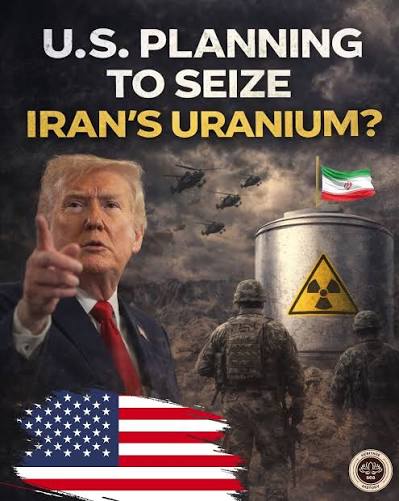
The possibility of the United States launching an operation to seize Iran’s enriched uranium has become one of the most discussed geopolitical developments in recent weeks. Reports from several major news organizations indicate that U.S. military planners have examined contingency options involving Iran’s nuclear material, although no final decision to carry out such an operation has been announced.
The reports have sparked intense debate among military experts, diplomats, and security analysts. If such a mission were ever authorized, it would rank among the most complex special operations in modern military history because it would require entering heavily protected nuclear sites while preventing radioactive contamination and avoiding a broader regional conflict.
As speculation grows, many observers are asking a simple question: Why is Iran’s uranium stockpile so important, and why is the United States reportedly considering such an extraordinary option?
Why Iran’s Uranium Matters

Iran’s nuclear program has remained at the center of international politics for more than two decades.
Although Tehran insists its nuclear activities are designed for peaceful civilian purposes, the United States, Israel, and several European governments argue that uranium enriched to high levels could significantly shorten the time needed to produce material suitable for a nuclear weapon if Iran chose to pursue one.
The International Atomic Energy Agency (IAEA) has repeatedly monitored Iran’s enrichment activities, but concerns have increased after reports suggested inspectors have not recently verified the precise location of some highly enriched uranium stockpiles.
This uncertainty has fueled discussions inside Washington over how to prevent the material from being used in a future weapons program.
Reports of a Possible U.S. Operation
According to multiple media reports, U.S. military planners have discussed contingency plans involving the recovery or securing of Iran’s enriched uranium.
These discussions reportedly include scenarios ranging from securing nuclear materials after a negotiated agreement to far more complex military options if diplomacy were to fail. Officials familiar with the planning have emphasized that such discussions are preliminary and dependent on political and military developments.
No official announcement has confirmed that a military raid has been approved.
Instead, the planning reflects how governments often prepare multiple options for rapidly changing security situations.
Why Such a Mission Would Be Extremely Difficult
Military experts believe removing enriched uranium from Iran would be unlike almost any previous special operations mission.
Several major challenges stand out.
1. Underground Nuclear Facilities
Many of Iran’s important nuclear installations are buried deep beneath mountains or protected by reinforced underground complexes.
Facilities such as Fordow and Isfahan have extensive protective infrastructure designed specifically to survive conventional attacks.
This means simply reaching the uranium could require engineering equipment in addition to military forces.
2. Heavy Military Resistance
Iran maintains one of the Middle East’s largest military forces.
Any attempt to enter Iranian territory would likely encounter resistance from the Iranian military and the Islamic Revolutionary Guard Corps (IRGC).
Military analysts warn that such resistance could rapidly expand into a broader regional conflict.
3. Nuclear Safety Concerns
Unlike conventional military objectives, enriched uranium requires careful handling.
Improper transportation could create environmental and safety risks.
Specialized teams would likely be required to secure, package, transport, and monitor radioactive material throughout the operation.
4. Intelligence Requirements
Any operation would depend on highly accurate intelligence.
Military planners would need precise information regarding:
- The exact location of uranium stockpiles.
- Tunnel layouts.
- Security systems.
- Underground access routes.
- Possible explosive traps.
Even small intelligence errors could significantly increase operational risks.
Why Diplomacy Still Matters
Despite discussions about military options, diplomacy remains an important part of U.S. policy.
American officials have continued exploring negotiations designed to limit Iran’s nuclear capabilities while reducing the risk of armed conflict.
Previous reports have suggested proposals involving the transfer, dilution, or international supervision of enriched uranium, though negotiations have faced repeated setbacks.
Many security experts believe diplomatic agreements remain the least risky method of preventing nuclear proliferation.
Global Reactions
News of possible contingency planning has generated strong reactions worldwide.
Israel
Israeli leaders have consistently argued that Iran’s nuclear program represents a major national security concern.
Recent intelligence assessments reportedly suggested Iran may have relocated sensitive nuclear equipment into more secure underground locations, increasing Israeli concerns.
Iran
Iran continues to reject allegations that it seeks nuclear weapons.
Officials maintain that uranium enrichment is permitted under international law for peaceful civilian energy production.
Tehran has also warned that foreign military intervention would receive a strong response.
European Nations
European governments generally continue supporting diplomatic negotiations while expressing concern about rising military tensions.
Several governments have urged all parties to avoid actions that could escalate instability across the Middle East.
Could This Trigger a Wider Conflict?
One of the biggest concerns surrounding reports of a possible uranium seizure is the risk of escalation.
Military analysts note that any direct operation inside Iranian territory could have consequences extending well beyond Iran itself.
Potential impacts include:
- Increased regional military activity.
- Threats to international shipping routes.
- Rising global oil prices.
- Expanded cyber operations.
- Greater diplomatic tensions among major world powers.
For this reason, many analysts emphasize that contingency planning does not necessarily indicate an imminent military operation.
Strategic Importance of Uranium
Highly enriched uranium remains one of the world’s most strategically sensitive materials.
Control over such material affects:
- Nuclear non-proliferation efforts.
- International sanctions.
- Regional military balances.
- Global diplomatic negotiations.
Because of these factors, developments involving Iran’s uranium stockpile continue to receive close attention from governments around the world.
The reported discussions about securing Iran’s uranium highlight a major challenge facing world leaders: balancing national security concerns with the risk of triggering a wider conflict.
For the United States and its allies, preventing the spread of nuclear weapons remains a key priority. However, military action against nuclear facilities carries significant risks that could create consequences far beyond the original objective.
Security experts argue that any operation involving Iran’s nuclear material would require careful planning, international coordination, and a clear exit strategy.
A successful mission would not only depend on reaching the material but also managing the political consequences afterward.
Iran’s Nuclear Program and International Concerns
Iran’s nuclear activities have been a major international issue for years.
The central concern among critics is uranium enrichment levels. While uranium can be used for civilian nuclear energy, higher levels of enrichment can also provide a pathway toward developing nuclear weapons capability.
Iran has repeatedly stated that its nuclear program is peaceful and that it has the right to pursue civilian nuclear technology.
However, Western governments have expressed concerns about transparency, monitoring, and the possibility of future military applications.
The debate has continued despite years of negotiations, sanctions, and diplomatic efforts.
The Role of the International Atomic Energy Agency
The International Atomic Energy Agency (IAEA) plays a critical role in monitoring nuclear programs worldwide.
Its inspectors attempt to verify that nuclear materials are being used for peaceful purposes and that countries comply with international agreements.
However, disagreements between Iran and international inspectors have increased uncertainty regarding some aspects of Iran’s nuclear activities.
The lack of complete information can increase fears among governments and create pressure for stronger actions.
Possible Consequences of a Military Strike
If the United States or another country attempted a military operation targeting Iran’s nuclear materials, the consequences could be significant.
Regional Conflict Risk
Iran has strong relationships with various regional groups and maintains missile capabilities that could be used in retaliation.
A military strike could potentially lead to attacks on U.S. interests, allied countries, or military bases in the region.
Impact on Global Energy Markets
The Middle East plays a major role in global energy supplies.
Any major conflict involving Iran could affect oil production and shipping routes, especially around important waterways.
A disruption could lead to higher energy prices worldwide and increase economic uncertainty.
Cyber Warfare Threats
Modern conflicts are not limited to traditional weapons.
Countries involved in major geopolitical disputes often use cyber operations against government systems, financial networks, and critical infrastructure.
A conflict involving Iran could potentially include cyber attacks alongside conventional military actions.
Why World War 3 Fears Are Growing
The phrase “World War 3” has frequently appeared in public discussions whenever major powers face direct confrontation.
However, experts often caution that global conflicts usually depend on multiple factors, including:
- The actions of major governments.
- The involvement of allies.
- Diplomatic responses.
- Military decisions.
- International pressure.
While tensions between the United States and Iran remain serious, a direct global war is not an automatic outcome.
Diplomatic channels, economic pressure, and international negotiations continue to influence the situation.
The Importance of Intelligence and Planning
Military planning does not always mean an operation will happen.
Countries routinely develop contingency plans for possible scenarios, including emergencies involving nuclear materials, terrorism, and regional conflicts.
Such planning allows governments to respond quickly if conditions change.
Experts say intelligence would be the most important factor in any operation involving Iran’s nuclear sites.
Without accurate information, even advanced military forces would face major challenges.
Could Iran’s Uranium Become a Global Security Issue?
The issue of Iran’s uranium stockpile goes beyond the Middle East.
Nuclear materials are considered a global security concern because their misuse could affect international stability.
Countries around the world closely monitor nuclear developments because the spread of nuclear weapons could change military balances and increase the risk of future conflicts.
For this reason, Iran’s nuclear program remains one of the most closely watched issues in international politics.
What Are the Possible Future Scenarios?
Several possible outcomes could develop in the coming months.
Scenario 1: Diplomatic Agreement
The United States and Iran could reach an agreement involving limits on uranium enrichment, international monitoring, and security guarantees.
This would reduce tensions and lower the possibility of military action.
Scenario 2: Increased Pressure
The United States and its allies could increase sanctions, diplomatic pressure, and political isolation while avoiding direct military action.
This approach has been used in previous disputes involving Iran.
Scenario 3: Military Escalation
A military confrontation remains one of the most dangerous possibilities.
A strike against nuclear facilities could trigger retaliation and create a wider regional crisis.
What the World Is Watching
The international community is closely watching several key developments:
- U.S. military decisions.
- Iran’s nuclear activities.
- Diplomatic negotiations.
- Statements from regional governments.
- Responses from global powers.
Every decision made by major players could influence whether tensions decrease or escalate further.
Conclusion: Nuclear Raid Reports Increase Global Attention
Reports about a possible U.S. plan involving Iran’s uranium have intensified global discussions about nuclear security and the future of Middle East stability.
Although no confirmed operation has been announced, the possibility highlights the seriousness of the ongoing dispute surrounding Iran’s nuclear program.
The coming period will depend on whether diplomacy can reduce tensions or whether military options become more prominent.
For now, governments worldwide continue monitoring developments as the balance between security, diplomacy, and conflict prevention remains at the center of international attention.
FAQs
1. Is the US planning to seize Iran’s uranium?
Reports suggest that U.S. officials have considered possible scenarios involving Iran’s nuclear materials, but no confirmed operation has been announced.
2. Why is Iran’s uranium important?
Iran’s enriched uranium is important because highly enriched material can have potential military significance if used for nuclear weapons development.
3. Could a uranium operation start World War 3?
A military operation involving Iran could increase regional tensions, but experts say a global war is not guaranteed and depends on many factors.
4. Does Iran have nuclear weapons?
Iran has denied seeking nuclear weapons and says its nuclear program is for peaceful purposes. International concerns focus on enrichment levels and transparency.
5. What role does the IAEA play?
The IAEA monitors nuclear programs and works to verify that nuclear materials are used for peaceful purposes.
6. Why would a military raid on nuclear sites be difficult?
Nuclear facilities are often heavily protected, underground, and require specialized equipment and intelligence to access safely.
How useful was this post?
Click on a star to rate it!
Average rating 0 / 5. Vote count: 0
No votes so far! Be the first to rate this post.
About the Author

usa5911.com
Administrator
Hi, I’m Gurdeep Singh, a professional content writer from India with over 3 years of experience in the field. I specialize in covering U.S. politics, delivering timely and engaging content tailored specifically for an American audience. Along with my dedicated team, we track and report on all the latest political trends, news, and in-depth analysis shaping the United States today. Our goal is to provide clear, factual, and compelling content that keeps readers informed and engaged with the ever-changing political landscape.