Iran Defies Trump:US Navy Warned,Hormuz Blockade Confronted,Panic
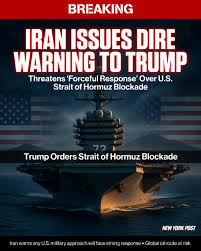
The Middle East has once again become the center of global attention as tensions between Iran and the United States continue to escalate. Reports of Iranian military warnings, increased naval deployments, and concerns surrounding the Strait of Hormuz have raised fears of a broader regional crisis. Markets are reacting nervously, governments are urging restraint, and military analysts are closely monitoring every movement in one of the world’s most strategically important waterways.
The latest developments come after renewed exchanges of warnings between Tehran and Washington. While the United States has reiterated its commitment to protecting freedom of navigation in international waters, Iran has signaled that it is prepared to respond forcefully to any perceived threat against its sovereignty or maritime interests.
The possibility of a disruption in the Strait of Hormuz has once again become a major concern for the global economy. Nearly one-fifth of the world’s oil supply passes through this narrow passage every day, making any instability in the region a matter of international significance.
Why the Strait of Hormuz Matters
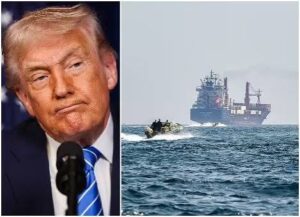
The Strait of Hormuz is one of the world’s most important maritime chokepoints. Located between Iran and Oman, it connects the Persian Gulf with the Gulf of Oman and the Arabian Sea.
Every day, millions of barrels of crude oil and liquefied natural gas travel through this waterway. Countries including Saudi Arabia, Iraq, Kuwait, the United Arab Emirates, and Qatar rely heavily on this route to export energy products to global markets.
A prolonged disruption would affect:
- Global oil supplies
- International shipping routes
- Energy prices
- Inflation worldwide
- Supply chains across Asia, Europe, and North America
Because of its strategic importance, even the possibility of military confrontation in the area often causes oil prices to rise and financial markets to react.
Iran’s Latest Warning
Iranian officials have continued to emphasize that they will defend the country’s territorial waters and national interests. Military commanders have stated that any foreign military action perceived as threatening Iran’s security would receive an appropriate response.
These statements have followed increased military activity in the region, including naval patrols and surveillance operations.
Iran has repeatedly argued that its military presence in the Persian Gulf is defensive in nature. At the same time, officials have criticized what they describe as growing foreign military deployments near Iranian waters.
Although rhetoric has intensified, official announcements have stopped short of confirming any immediate decision to block commercial shipping through the Strait of Hormuz.
US Navy Increases Vigilance
The United States has maintained a significant naval presence in the Middle East for decades.
Recent statements from American military officials emphasize continued operations aimed at ensuring freedom of navigation and protecting international shipping lanes.
US naval forces routinely conduct:
- Maritime security patrols
- Surveillance missions
- Escort operations
- Joint exercises with regional allies
American officials have stated that commercial vessels should continue operating normally while remaining aware of evolving security conditions.
The US has also reaffirmed its commitment to working with allies in maintaining stability across the Gulf region.
Trump Administration’s Position
Former President Donald Trump has remained outspoken regarding Iran, frequently calling for a strong response to what he describes as Iranian aggression.
His recent public remarks have renewed debate about future US policy toward Tehran should political leadership change.
Supporters argue that stronger deterrence is necessary to prevent attacks on commercial shipping and regional allies.
Critics, however, warn that increasingly aggressive rhetoric could contribute to further instability and reduce opportunities for diplomatic engagement.
Regardless of political differences, many security experts agree that preventing military escalation remains the highest priority.
Global Markets React
Financial markets closely monitor every development involving the Strait of Hormuz.
Whenever geopolitical tensions increase in the Gulf, investors often anticipate possible disruptions to global energy supplies.
Several sectors typically experience immediate reactions:
Oil Markets
Crude oil prices often rise when traders fear shipping interruptions.
Even rumors of possible disruptions can influence futures markets because supply uncertainty affects pricing expectations.
Shipping Industry
Commercial shipping companies may:
- Increase insurance coverage
- Adjust shipping routes
- Delay cargo movements
- Raise transportation costs
These additional expenses can eventually affect consumers worldwide.
Stock Markets
Energy companies sometimes experience gains during periods of rising oil prices, while industries heavily dependent on fuel—including airlines and transportation firms—may face increased costs.
Investors generally seek safer assets whenever geopolitical uncertainty increases.
Regional Allies Monitor the Situation
Countries across the Gulf continue coordinating closely with international partners.
Saudi Arabia, the United Arab Emirates, Bahrain, Qatar, Kuwait, and Oman all have significant economic interests tied to uninterrupted maritime trade.
Regional governments are carefully balancing security preparedness with diplomatic efforts designed to prevent further escalation.
International naval cooperation has also expanded over recent years to improve maritime awareness and reduce risks to commercial vessels operating in the Gulf.
International Calls for Restraint
Several governments and international organizations have urged all parties to avoid actions that could increase tensions.
Diplomatic officials continue encouraging dialogue while emphasizing the importance of protecting civilian shipping and maintaining regional stability.
Many analysts believe that open communication between military commanders remains essential for avoiding misunderstandings that could accidentally trigger broader conflict.
The international community generally supports peaceful resolution efforts while recognizing every nation’s right to protect legitimate security interests under international law.
Energy Security Becomes a Global Concern
Europe and Asia remain especially vulnerable to disruptions in Gulf energy exports.
Major importers—including China, India, Japan, and South Korea—depend heavily on oil shipments passing through the Strait of Hormuz.
Any prolonged interruption could force governments to:
- Release strategic petroleum reserves
- Seek alternative suppliers
- Increase domestic fuel prices
- Implement emergency energy measures
Such developments would likely affect industries far beyond the Middle East, demonstrating how regional tensions can quickly become global economic challenges.
Military Implications of a Hormuz Crisis
Military experts widely agree that any serious confrontation in the Strait of Hormuz would carry significant risks for all parties involved. The waterway is narrow, heavily trafficked, and closely monitored by regional and international naval forces.
Iran has invested for years in capabilities designed to defend its coastline, including fast attack boats, anti-ship missile systems, drones, and naval mines. These assets could complicate maritime operations during a crisis, even if a complete blockade proved difficult to sustain.
The United States, meanwhile, maintains advanced naval forces capable of conducting surveillance, mine-clearing operations, air defense, and escort missions. Cooperation with regional allies further strengthens maritime security across the Gulf.
Despite these military capabilities, analysts note that any direct confrontation would likely carry substantial economic and humanitarian costs, making de-escalation the preferred outcome for all sides.
Could the Strait of Hormuz Actually Be Blocked?
The idea of a complete blockade frequently appears during periods of heightened tension, but experts caution that such an operation would be extremely difficult to maintain.
Several factors make a prolonged closure challenging:
- Continuous international naval presence.
- Heavy dependence of Gulf economies on maritime exports.
- Potential diplomatic and economic consequences.
- Risks of broader regional escalation.
Instead of a complete shutdown, analysts often discuss the possibility of temporary disruptions, increased inspections, or isolated security incidents that could still affect shipping confidence and insurance costs.
Even without a full blockade, uncertainty alone can influence global energy markets.
Diplomatic Efforts Continue
While military preparations receive considerable media attention, diplomacy remains active behind the scenes.
International mediators continue encouraging dialogue between regional governments and major global powers. Diplomatic discussions generally focus on:
- Preventing accidental military incidents.
- Protecting commercial shipping.
- Reducing regional tensions.
- Preserving international trade.
- Encouraging confidence-building measures.
Many experts believe diplomacy offers the most sustainable path toward reducing instability in the Gulf.
Impact on Global Oil Prices
Oil markets react quickly whenever geopolitical risks increase in the Middle East.
If concerns over shipping routes intensify, traders often anticipate supply disruptions, resulting in higher crude prices.
Higher oil prices can affect consumers worldwide through:
- Increased fuel costs.
- Higher airline ticket prices.
- Rising shipping expenses.
- Increased manufacturing costs.
- Inflation across multiple sectors.
Countries that import large quantities of energy may experience additional economic pressure if instability persists.
Shipping Companies Face New Challenges
Commercial shipping firms constantly evaluate security conditions in the Gulf.
If tensions remain elevated, companies may:
- Adjust shipping schedules.
- Purchase additional insurance coverage.
- Employ private maritime security.
- Increase voyage planning.
- Accept higher transportation costs.
These additional expenses frequently filter through global supply chains, influencing the prices of everyday goods.
Regional Security Outlook
Neighboring Gulf states continue strengthening maritime cooperation while maintaining communication with international partners.
Many governments seek to balance deterrence with diplomacy, recognizing that prolonged instability could negatively affect investment, tourism, trade, and economic development.
Regional organizations continue supporting initiatives designed to reduce misunderstandings and improve maritime coordination.
Possible Scenarios Going Forward
1. Diplomatic De-escalation
The most optimistic outcome involves continued diplomatic engagement, reduced military rhetoric, and confidence-building measures that lower regional tensions.
2. Limited Maritime Incidents
Minor confrontations involving patrol vessels or commercial ships could temporarily disrupt shipping while stopping short of broader conflict.
3. Economic Pressure Without Conflict
Sanctions, political disagreements, and military posturing could continue without direct military confrontation, keeping markets volatile.
4. Wider Regional Escalation
Although considered the least desirable outcome, analysts acknowledge that miscalculations could increase the risk of broader conflict involving multiple regional actors.
What This Means for the Global Economy
The Strait of Hormuz remains one of the world’s most important energy corridors.
Extended instability could influence:
- Global inflation.
- Energy security.
- International investment.
- Financial market confidence.
- Manufacturing costs.
- Food transportation expenses.
- International trade flows.
Governments worldwide continue monitoring developments while preparing contingency plans to address potential disruptions.
International Response
Countries across Europe, Asia, and North America continue urging restraint from all parties.
Many governments emphasize the importance of:
- Respecting international maritime law.
- Protecting civilian shipping.
- Maintaining freedom of navigation.
- Preventing military escalation.
- Supporting diplomatic negotiations.
International organizations also continue encouraging peaceful dialogue while closely monitoring regional developments.
Expert Analysis
Security specialists generally agree that neither Iran nor the United States benefits from a prolonged military confrontation in the Gulf.
While political rhetoric often becomes more intense during periods of crisis, practical considerations—including economic stability, international trade, and regional security—create strong incentives for avoiding direct conflict.
Most analysts expect continued military vigilance alongside ongoing diplomatic engagement rather than an immediate large-scale confrontation.
Conclusion
The latest tensions surrounding Iran, the United States, and the Strait of Hormuz demonstrate how quickly geopolitical developments can affect the global economy.
Although military warnings and political statements have intensified, diplomatic efforts remain active. Markets continue watching developments closely, particularly regarding energy exports and commercial shipping through one of the world’s most strategic waterways.
Whether the situation ultimately leads to renewed negotiations or further confrontation will depend on decisions made by regional leaders and the international community in the coming weeks.
For now, governments, businesses, investors, and energy markets remain focused on maintaining stability while preparing for multiple possible outcomes.
Frequently Asked Questions (FAQs)
1. Why is the Strait of Hormuz so important?
The Strait of Hormuz is a critical maritime passage through which roughly one-fifth of the world’s oil supply is transported, making it essential for global energy markets.
2. Has Iran officially announced a complete blockade of the Strait of Hormuz?
As of the latest publicly available information, there has been no official confirmation of a complete blockade. While Iranian officials have issued strong warnings and emphasized their security interests, reports have largely centered on heightened tensions rather than an announced closure.
3. Why is the US Navy operating in the region?
The US Navy states that its mission includes protecting international shipping, supporting freedom of navigation, and working with allies to promote maritime security.
4. How could tensions affect oil prices?
Concerns about disruptions to shipping routes can reduce market confidence and lead traders to anticipate supply risks, often resulting in higher crude oil prices.
5. Could these tensions lead to a broader regional conflict?
While the risk of escalation exists, many governments and analysts continue to emphasize diplomacy and de-escalation as the preferred path to maintaining regional stability.
How useful was this post?
Click on a star to rate it!
Average rating 0 / 5. Vote count: 0
No votes so far! Be the first to rate this post.
About the Author

usa5911.com
Administrator
Hi, I’m Gurdeep Singh, a professional content writer from India with over 3 years of experience in the field. I specialize in covering U.S. politics, delivering timely and engaging content tailored specifically for an American audience. Along with my dedicated team, we track and report on all the latest political trends, news, and in-depth analysis shaping the United States today. Our goal is to provide clear, factual, and compelling content that keeps readers informed and engaged with the ever-changing political landscape.