Sen. John Kennedy: Iran Is Like An ‘OLD MAN WHO CAN’T AFFORD TO CATCH A COLD’
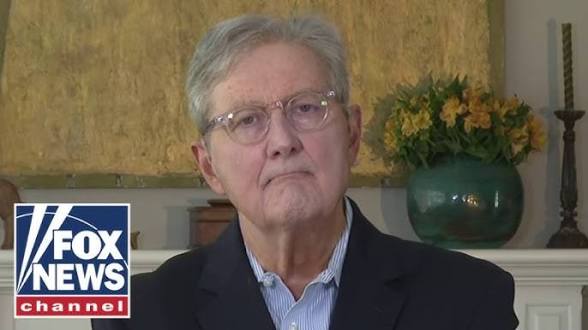
Senator John Kennedy of Louisiana is well known for his sharp, colorful political language and memorable analogies. In one of his most striking remarks about Iran, he described the country as being like an “old man who can’t afford to catch a cold.”
This metaphor, while simple on the surface, carries deeper political meaning. It reflects concerns about Iran’s economic fragility, its strained political system, and its vulnerability to external pressure, particularly from sanctions, military tensions, and global isolation.
In political discourse, such imagery is often used to simplify complex geopolitical realities for the public. But behind the quote lies a broader debate about Iran’s current standing in the Middle East and its long-term stability.
Understanding the Context Behind the Statement
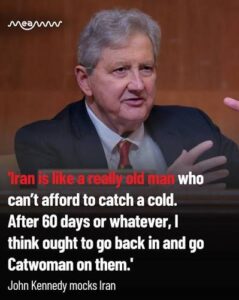
Sen. John Kennedy has frequently spoken on issues related to Iran, especially regarding:
- Nuclear negotiations
- U.S. sanctions
- Regional conflicts in the Middle East
- Iran’s relationship with global powers like Russia and China
- Energy markets and global oil supply disruptions
In related Senate remarks, Kennedy has described Iran’s government as weakened and under severe internal and external pressure. His “old man” analogy suggests a state that is already fragile and could face serious consequences from even minor shocks.
Historically, Kennedy has used similarly vivid language when discussing Iran’s leadership and military ambitions, often emphasizing the risks posed by its nuclear program and regional activities.
What Does the “Old Man Who Can’t Afford a Cold” Mean?
This metaphor is rooted in a simple idea:
- An “old man” represents a weak, aging, or fragile system
- A “cold” represents a relatively small external shock
- “Can’t afford” implies that even minor disruption could lead to major consequences
In geopolitical terms, Kennedy’s statement suggests:
- Iran’s economy is under strain
- Its political system is under pressure
- External shocks (sanctions, conflict, oil price shifts) can have amplified effects
It is a way of saying that Iran is not in a position to withstand additional stress without risking serious instability.
Iran’s Economic Pressure Points
To understand why such a metaphor is used, it is important to look at Iran’s economic situation.
1. Sanctions Pressure
Iran has faced years of international sanctions targeting:
- Oil exports
- Banking systems
- Military procurement
- International trade
These sanctions have significantly reduced Iran’s access to global markets.
2. Oil Dependency
Iran’s economy is heavily dependent on oil revenue. Any disruption in:
- Oil prices
- Export routes (such as the Strait of Hormuz)
- International buyers
can quickly create economic instability.
3. Inflation and Currency Weakness
Iran has experienced:
- High inflation
- Currency devaluation
- Rising unemployment in some sectors
These economic pressures contribute to internal dissatisfaction.
Political and Regional Challenges
Beyond economics, Iran also faces major geopolitical challenges.
1. Regional Tensions
Iran is deeply involved in regional power struggles across:
- Syria
- Iraq
- Yemen
- Lebanon
These engagements create both financial strain and military risk.
2. Relationship with Global Powers
Iran’s alliances with countries like Russia and China are often seen as strategic but limited in depth.
At the same time, its adversarial relationship with the United States and some European nations continues to shape sanctions and diplomatic isolation.
3. Nuclear Program Concerns
One of the most sensitive issues remains Iran’s nuclear ambitions.
U.S. lawmakers, including Kennedy, have repeatedly expressed concerns that Iran’s nuclear capabilities could destabilize global security if left unchecked.
Why Politicians Use Analogies Like This
Sen. Kennedy is known for using vivid, sometimes humorous metaphors to communicate policy concerns.
Purpose of such language:
- Make complex issues easier to understand
- Capture media attention
- Emphasize urgency
- Frame geopolitical risks in relatable terms
Instead of discussing technical economic indicators or military assessments, analogies allow politicians to communicate risk in a more accessible way.
Criticism and Debate Around the Statement
While such remarks are impactful, they also invite criticism.
1. Oversimplification
Critics argue that comparing a nation to an “old man” can:
- Oversimplify complex geopolitical realities
- Reduce nuanced diplomacy to slogans
- Encourage misunderstanding among the public
2. Diplomatic Sensitivity
Such metaphors may be seen as:
- Politically provocative
- Undermining diplomatic engagement
- Reinforcing hostile narratives
3. Strategic Messaging
Supporters, however, argue that:
- It highlights real vulnerabilities
- It reflects legitimate security concerns
- It communicates urgency in foreign policy debates
Broader U.S.–Iran Relations Context
The relationship between the United States and Iran has been shaped by decades of tension, including:
- The 1979 Iranian Revolution
- The U.S. embassy hostage crisis
- Sanctions regimes
- Nuclear negotiations (JCPOA and beyond)
- Regional proxy conflicts
These historical factors continue to influence how American lawmakers speak about Iran today.
As a result, statements like Kennedy’s are not isolated—they are part of a long-standing political narrative about containment and pressure strategies.
Geopolitical Implications of the “Fragile State” Narrative
When policymakers describe a country as fragile, it can have real-world implications:
1. Increased Pressure Policies
Such framing may justify:
- Stronger sanctions
- Military deterrence
- Diplomatic isolation
2. Market Reactions
Energy markets often react to:
- Iran-related tensions
- Oil supply risks
- Regional conflict fears
3. Strategic Calculations
Other global powers may adjust:
- Military deployments
- Trade partnerships
- Negotiation strategies
Is Iran Really as Fragile as Described?
This is where analysis becomes more complex.
Arguments supporting the claim:
- Economic sanctions continue to pressure the system
- Currency instability persists
- Regional conflicts drain resources
Arguments against the claim:
- Iran maintains significant military capacity
- It continues to exert regional influence
- It has survived decades of sanctions and isolation
So while the “old man” metaphor captures vulnerability, it does not necessarily reflect collapse-level weakness.
Conclusion: A Metaphor That Captures Attention, Not Full Reality
Sen. John Kennedy’s comparison of Iran to an “old man who can’t afford to catch a cold” is a powerful political metaphor designed to highlight perceived vulnerability and economic fragility.
However, like most political analogies, it simplifies a far more complex reality. Iran is simultaneously:
- Economically pressured
- Politically resilient
- Regionally influential
- Strategically significant
The truth lies somewhere between fragility and endurance.
What the statement ultimately reveals is not just Iran’s condition—but the tone of modern geopolitical debate, where vivid language often replaces technical analysis in shaping public understanding.
FAQs
1. What did Sen. John Kennedy mean by the Iran “old man” comment?
He was using a metaphor to suggest that Iran is economically and politically fragile and vulnerable to external shocks.
2. Is Iran economically weak right now?
Iran faces economic pressure from sanctions, inflation, and currency instability, but it still maintains key revenue streams like oil exports.
3. Why do politicians use such analogies?
To simplify complex geopolitical issues and make their message more relatable and memorable.
4. Does Iran still have geopolitical influence?
Yes. Iran remains influential in the Middle East through alliances and regional proxy relationships.
5. Is the U.S.–Iran relationship improving?
Relations remain tense, though diplomatic discussions occasionally occur around nuclear and regional security issues.
Statements like Kennedy’s do more than describe a situation—they actively shape how the public interprets international affairs.
When a senator uses a metaphor like “old man who can’t afford a cold,” it creates a mental shortcut:
- Iran = fragile
- Iran = overstretched
- Iran = vulnerable to pressure
This kind of framing influences how audiences interpret:
- Sanctions policy
- Military deterrence
- Nuclear negotiations
- Regional conflicts
Even without technical details, the emotional clarity of the phrase makes it stick.
Media Amplification and Viral Political Messaging
Modern political communication is heavily shaped by media ecosystems where short, sharp quotes outperform long policy explanations.
Kennedy’s style fits perfectly into this environment because:
- It is memorable
- It is easily quoted
- It translates well into headlines
- It spreads quickly on social media
A phrase like this often becomes:
- A headline hook
- A cable news soundbite
- A viral clip on platforms like X (Twitter)
This amplification can sometimes exaggerate the perceived meaning of the original statement, detaching it from its policy context.
Strategic Messaging: Deterrence Through Language
Beyond media impact, such rhetoric often serves a strategic purpose in foreign policy communication.
1. Signaling Strength
By describing Iran as fragile, U.S. lawmakers may be signaling:
- Confidence in U.S. pressure strategies
- Belief that sanctions are effective
- Willingness to maintain or increase pressure
2. Psychological Framing
Language can also function as psychological signaling in geopolitics:
- Allies perceive resolve
- Adversaries perceive vulnerability exposure
- Domestic audiences perceive control
Even without direct policy change, words can influence expectations.
Iran’s Likely Interpretation of Such Statements
From Iran’s perspective, rhetoric like Kennedy’s may be interpreted in several ways:
1. Propaganda Framing
Iranian officials often view such comments as:
- Political messaging for domestic U.S. audiences
- Attempts to justify sanctions or military posture
- Oversimplification of Iran’s resilience
2. Reinforcement of Resistance Narrative
Ironically, external pressure language can reinforce Iran’s internal political narrative:
- “We are under siege” framing
- National resistance identity
- Justification for defensive policies
This dynamic can sometimes strengthen internal cohesion rather than weaken it.
Economic Reality vs. Political Narrative
One of the most important analytical tensions is the gap between political language and economic reality.
Political Narrative (Kennedy’s framing):
- Iran is fragile
- Iran cannot sustain pressure
- Minor shocks could have large consequences
Economic Reality:
- Iran remains a major regional economy
- It continues oil exports despite sanctions
- It has adapted through alternative trade channels
- It has developed sanctions-evasion mechanisms
This contrast highlights why geopolitical analysis requires caution when interpreting rhetorical statements literally.
Energy Markets and Global Reactions
Iran is not just a regional actor—it is also a key variable in global energy markets.
Even the perception of instability can affect:
- Global oil prices
- Shipping insurance costs
- Energy futures markets
- Strategic reserves planning
When U.S. lawmakers make strong statements about Iran’s vulnerability or instability, markets often react not to policy changes—but to perceived risk escalation.
Military Dimension and Deterrence Balance
Another layer behind Kennedy’s metaphor relates to military deterrence.
Iran’s capabilities include:
- Ballistic missile programs
- Drone technology
- Naval activity in the Persian Gulf
- Regional proxy networks
At the same time, the United States and allied forces maintain:
- Significant regional military presence
- Advanced surveillance systems
- Strategic deterrence capabilities
This creates a mutual deterrence environment, where rhetoric often plays a signaling role as important as actual military movements.
Diplomatic Implications: Pressure vs. Negotiation
Statements framing Iran as weak or fragile can influence diplomatic dynamics in two competing directions:
1. Pressure Strategy
- Strengthens arguments for sanctions continuation
- Encourages hardline negotiating positions
- Reduces perceived urgency for concessions
2. Negotiation Barrier
- May reduce trust in diplomatic engagement
- Encourages adversarial framing
- Makes compromise politically difficult
Diplomacy often requires balancing both messaging strength and negotiation flexibility, which is why such statements can be controversial.
Historical Pattern of U.S. Political Language on Iran
Kennedy’s remark fits into a long history of U.S. political rhetoric about Iran, which has included descriptions such as:
- “rogue state”
- “regional destabilizer”
- “state sponsor of terrorism” (U.S. designation context)
- “existential threat”
Each era has produced its own language reflecting:
- Nuclear concerns
- Regional conflicts
- Hostage crises
- Proxy wars
- Sanctions regimes
The “old man” metaphor is simply a newer, more vivid variation of this longstanding rhetorical tradition.
Potential Future Scenarios for Iran
While metaphors simplify, real-world outcomes depend on multiple evolving factors.
Scenario 1: Managed Pressure Continuation
- Sanctions remain
- Iran adapts economically
- Tensions persist but remain controlled
Scenario 2: Diplomatic Re-engagement
- Limited nuclear negotiations resume
- Temporary sanction relief agreements
- Regional de-escalation efforts
Scenario 3: Escalation Cycle
- Regional proxy conflicts intensify
- Maritime or energy disruptions increase
- Global diplomatic intervention becomes necessary
None of these outcomes are predetermined, and each depends on decisions made by multiple actors beyond Iran and the U.S.
Why the “Cold” Metaphor Resonates Publicly
The effectiveness of Kennedy’s phrase lies in its simplicity.
“Old man who can’t afford a cold” works because it conveys:
- Fragility
- Risk
- Urgency
- Consequence of small disruptions
In communication terms, it compresses a complex geopolitical system into a relatable human image.
That is both its strength—and its limitation.
Conclusion: A Phrase That Reveals More About Messaging Than Mechanics
Sen. John Kennedy’s analogy is less a precise geopolitical assessment and more a communication device designed to highlight perceived Iranian vulnerability under economic and strategic pressure.
However, the reality of Iran’s position is more layered:
- It faces genuine economic constraints
- It maintains significant regional influence
- It continues to adapt under sanctions
- It remains central to global security discussions
Ultimately, the statement reflects not only Iran’s challenges but also the nature of modern political discourse—where vivid imagery often replaces detailed analysis in shaping public understanding.
How useful was this post?
Click on a star to rate it!
Average rating 0 / 5. Vote count: 0
No votes so far! Be the first to rate this post.
About the Author

usa5911.com
Administrator
Hi, I’m Gurdeep Singh, a professional content writer from India with over 3 years of experience in the field. I specialize in covering U.S. politics, delivering timely and engaging content tailored specifically for an American audience. Along with my dedicated team, we track and report on all the latest political trends, news, and in-depth analysis shaping the United States today. Our goal is to provide clear, factual, and compelling content that keeps readers informed and engaged with the ever-changing political landscape.