First-Hand Experience: Venezuelan Who Fled Socialist Rule Issues Stark Warning
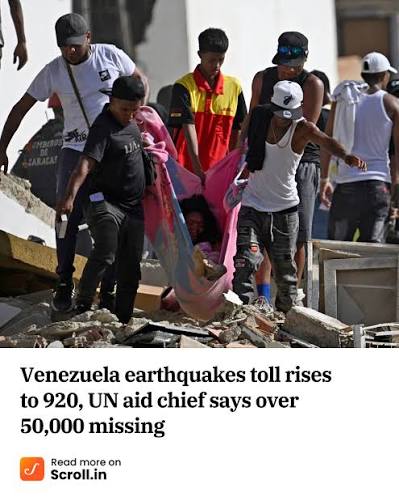
A Venezuelan who escaped years of political turmoil and economic hardship has delivered a powerful warning about the dangers of authoritarian governance and economic collapse. Speaking from personal experience, the refugee described how daily life changed under Venezuela’s socialist government, eventually forcing millions of citizens to leave their homeland in search of safety and opportunity.
The story has renewed international debate over Venezuela’s political history, the humanitarian crisis that unfolded over the past decade, and the lessons other nations can learn from the country’s experience. While opinions about the causes of Venezuela’s collapse differ among economists and political observers, firsthand testimonies from refugees continue to provide a deeply personal perspective on life inside the country.
A Personal Story That Resonates Worldwide
For many Venezuelans now living abroad, leaving home was never part of the plan.
Millions once believed their country’s immense oil wealth would provide lasting prosperity. Instead, years of economic instability, political conflict, hyperinflation, shortages of food and medicine, and growing insecurity pushed families to make heartbreaking decisions.
One refugee explained that everyday necessities gradually disappeared. Finding basic groceries became an hours-long task. Savings lost their value almost overnight as inflation surged. Businesses closed, employment opportunities vanished, and uncertainty became a constant reality.
According to multiple reports, political repression also played a role in convincing many citizens to flee. Opposition activists, journalists, and government critics frequently reported intimidation or feared arrest, prompting thousands to seek asylum abroad.
Venezuela’s Long Economic Crisis
Venezuela possesses some of the world’s largest proven oil reserves, yet its economy experienced one of the steepest peacetime declines in modern history.
Experts point to several contributing factors, including:
- Heavy dependence on oil revenues
- Government price and currency controls
- Falling global oil prices
- Corruption
- Weak institutions
- International sanctions
- Political instability
Economists continue to debate the relative impact of each factor. However, there is broad agreement that the crisis resulted from a combination of domestic policy failures and external pressures rather than any single cause alone.
Millions Forced to Leave
The United Nations estimates that millions of Venezuelans have left their homeland over the past decade, making it one of the largest displacement crises in the world.
Families became separated across continents.
Parents left children behind.
Young professionals searched for work in neighboring countries.
Students abandoned their education.
Doctors, engineers, teachers, and business owners all joined the growing Venezuelan diaspora.
Many refugees describe beginning entirely new lives with little more than a suitcase and hope for a better future.
First-Hand Warning About Socialism
The refugee’s warning has attracted widespread attention because it comes from lived experience rather than political theory.
According to the individual, economic decline did not happen overnight.
Instead, the changes occurred gradually:
- Businesses faced increasing regulations.
- Prices became unstable.
- Government control expanded.
- Public confidence weakened.
- Investment declined.
- Essential goods became scarce.
The refugee argues that many warning signs appeared years before the full economic collapse became visible.
This perspective reflects one personal account. Analysts continue to disagree on the extent to which socialist policies, governance failures, corruption, falling oil revenues, and sanctions each contributed to Venezuela’s crisis.
Hyperinflation Changed Everything
Perhaps no aspect of Venezuela’s collapse became more internationally recognized than hyperinflation.
As inflation accelerated:
- Paychecks rapidly lost purchasing power.
- Savings became nearly worthless.
- Businesses struggled to set prices.
- Basic necessities became increasingly expensive.
Many families found themselves unable to afford food, medicine, or transportation despite being employed.
These economic realities forced countless citizens to search for opportunities abroad.
Political Uncertainty Continues
Although Venezuela’s political landscape has shifted dramatically in recent months, uncertainty remains.
Following the removal of longtime leader Nicolás Maduro, many Venezuelans living overseas say they remain cautious about returning home. While some hope for democratic reforms, others believe meaningful institutional changes are still necessary before they can safely rebuild their lives in Venezuela.
Why This Story Is Gaining Attention
Stories from refugees often resonate because they provide a human perspective on complex political and economic debates.
Rather than discussing statistics alone, firsthand experiences illustrate how policy decisions can affect ordinary families, workers, students, and business owners.
The refugee emphasized that preserving democratic institutions, protecting civil liberties, and maintaining economic stability are essential for preventing similar crises elsewhere.
While economic statistics help explain the scale of Venezuela’s crisis, they cannot fully capture the personal suffering experienced by millions of citizens. For many families, daily life became a struggle to secure food, medicine, electricity, clean water, and reliable transportation.
The Venezuelan refugee who shared this first-hand experience explained that leaving home was one of the most difficult decisions imaginable. Family members were separated, careers were abandoned, and lifelong friendships were left behind. Starting over in another country meant adapting to a new culture, finding employment, and rebuilding a sense of stability from scratch.
Stories like these are echoed by many members of the Venezuelan diaspora, who continue to describe the emotional toll of displacement alongside the financial hardships they endured.
Lessons the Refugee Believes Other Nations Should Learn
One of the strongest messages from the refugee is that major national crises often develop gradually rather than overnight.
According to the individual’s account, warning signs included:
- Declining confidence in public institutions.
- Growing political polarization.
- Economic uncertainty.
- Increasing shortages of essential goods.
- Businesses struggling to operate.
- Rising emigration as people searched for better opportunities.
The refugee urged citizens everywhere to stay informed, participate in democratic processes, and remain engaged in public affairs. While opinions differ on the precise causes of Venezuela’s collapse, many observers agree that strong institutions, accountability, and sound economic management are important factors in long-term national stability.
Experts Continue to Debate the Causes
Venezuela’s experience remains the subject of extensive discussion among economists, historians, and political scientists.
Some analysts argue that socialist economic policies—including extensive price controls, nationalizations, and heavy state intervention—played a central role in weakening productivity and investment.
Others emphasize additional factors, including:
- Heavy dependence on oil exports.
- A sharp decline in global oil prices.
- Government corruption.
- Weak institutions.
- International sanctions.
- Political conflict.
Because these issues overlapped, many experts conclude that Venezuela’s crisis resulted from a combination of economic, political, and international pressures rather than a single cause. Understanding this complexity is essential when comparing Venezuela’s experience with that of other nations.
Why Many Venezuelans Have Not Returned
Political developments have raised hopes among some members of the Venezuelan diaspora, but many remain cautious about returning home.
Common concerns include:
- Uncertainty about long-term political stability.
- Employment opportunities.
- Access to healthcare.
- Public safety.
- Economic recovery.
- Rebuilding homes and businesses.
For families that have established new lives abroad, returning also involves difficult personal decisions regarding education, careers, and financial security.
As a result, many Venezuelans continue to monitor events from overseas while waiting for signs of lasting reform.
International Response
The Venezuelan humanitarian crisis has prompted responses from governments, international organizations, and humanitarian agencies around the world.
Neighboring countries have welcomed millions of migrants and refugees, often placing significant pressure on public services such as healthcare, housing, and education.
International organizations have provided humanitarian assistance, including:
- Emergency food support.
- Medical supplies.
- Shelter assistance.
- Educational programs.
- Support for displaced families.
Many governments have also called for peaceful political solutions that respect democratic principles and human rights while encouraging economic recovery.
Why First-Hand Stories Matter
Statistics provide valuable information, but personal experiences often help people better understand the human consequences of national crises.
The refugee’s account serves as a reminder that political and economic decisions affect real people with families, careers, and dreams.
Whether discussing inflation, shortages, migration, or governance, individual stories offer perspectives that numbers alone cannot provide. They also encourage broader conversations about democracy, accountability, and the resilience of communities facing extraordinary challenges.
Conclusion
The story of a Venezuelan who fled socialist rule highlights the profound impact that prolonged political and economic crises can have on individuals and families. While experts continue to debate the relative influence of government policies, corruption, oil dependence, sanctions, and other factors, there is broad agreement that Venezuela’s collapse created one of the largest displacement crises in the world.
The refugee’s warning is ultimately rooted in lived experience rather than ideology. It reflects years of adapting to economic hardship, witnessing institutional decline, and making the difficult decision to leave home in search of safety and opportunity.
As Venezuela continues its long path toward recovery, these first-hand accounts remain an important part of understanding both the country’s recent history and the challenges that still lie ahead.
Frequently Asked Questions (FAQs)
1. Why did many Venezuelans leave their country?
Millions left because of economic collapse, shortages of food and medicine, political instability, insecurity, and limited employment opportunities.
2. What is the Venezuelan refugee warning about?
The refugee warns that prolonged economic and political instability can have severe consequences for ordinary citizens and emphasizes the importance of accountable governance and strong democratic institutions.
3. Did socialism alone cause Venezuela’s crisis?
There is no universal consensus. Many experts cite a combination of socialist economic policies, dependence on oil revenues, corruption, weak institutions, falling oil prices, sanctions, and political conflict.
4. How many Venezuelans have left the country?
International organizations estimate that millions of Venezuelans have been displaced, making it one of the world’s largest migration crises.
5. Why haven’t all Venezuelans returned home?
Many remain concerned about political uncertainty, economic recovery, employment opportunities, healthcare, and long-term stability.
6. What role did hyperinflation play?
Hyperinflation sharply reduced the value of wages and savings, making it difficult for many families to afford basic necessities.
7. How has the international community responded?
Governments and humanitarian organizations have provided aid, supported refugees, and encouraged peaceful political and economic reforms.
8. What lessons can other countries learn from Venezuela?
Many observers emphasize the importance of maintaining strong institutions, economic stability, transparency, respect for democratic processes, and policies that promote long-term resilience.
9. Why are first-hand accounts important?
Personal stories help explain how large-scale political and economic events affect everyday life, providing context beyond statistics and policy debates.
10. What is the key takeaway from this story?
The refugee’s experience underscores the human impact of prolonged national crises and the value of informed civic engagement, accountable governance, and sustainable economic policies.
How useful was this post?
Click on a star to rate it!
Average rating 0 / 5. Vote count: 0
No votes so far! Be the first to rate this post.
About the Author

usa5911.com
Administrator
Hi, I’m Gurdeep Singh, a professional content writer from India with over 3 years of experience in the field. I specialize in covering U.S. politics, delivering timely and engaging content tailored specifically for an American audience. Along with my dedicated team, we track and report on all the latest political trends, news, and in-depth analysis shaping the United States today. Our goal is to provide clear, factual, and compelling content that keeps readers informed and engaged with the ever-changing political landscape.