Hopes for lasting peace in the Middle East suffered a major setback after a cargo ship was attacked while sailing through the strategically vital Strait of Hormuz. The incident occurred only days after a fragile ceasefire raised expectations that tensions between Iran and its adversaries would begin to ease.
Instead of signaling stability, the attack has renewed fears that the region remains on the brink of another dangerous escalation. Governments, military officials, shipping companies, and financial markets are closely monitoring developments as the world watches one of the most critical maritime corridors for global commerce.
The Strait of Hormuz is responsible for transporting roughly one-fifth of the world’s oil supply. Any disruption in this narrow waterway has the potential to impact fuel prices, international trade, and global economic stability. Consequently, the latest attack has become far more than a regional security issue—it is now an international concern.
In this article, we examine what happened, why the attack matters, how it threatens the ceasefire, and what the consequences could be for the global economy.
Cargo Ship Attacked Near Oman
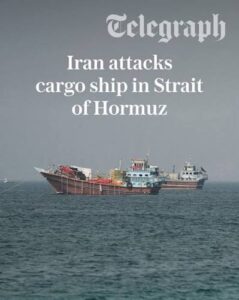
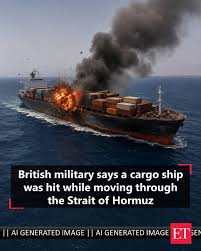
According to maritime security officials, the cargo vessel was struck by an unidentified projectile while sailing near the coast of Oman in the Strait of Hormuz.
The ship reportedly sustained damage to its bridge but continued its journey safely. Fortunately, there were no reports of crew injuries or fatalities. The British maritime security agency UKMTO immediately began monitoring the situation while regional authorities assessed the extent of the damage.
Soon after the incident, U.S. officials stated that preliminary intelligence indicated Iranian forces were responsible for the attack. Iran has not accepted responsibility but reiterated that commercial vessels should use only routes approved by Tehran for safe passage.
The timing of the incident has intensified international concern because it occurred shortly after a ceasefire agreement was announced.
Why the Strait of Hormuz Matters
The Strait of Hormuz connects the Persian Gulf with the Gulf of Oman and the Arabian Sea.
Although only a few dozen miles wide, it serves as one of the world’s most important maritime chokepoints.
Every day, millions of barrels of crude oil and liquefied natural gas pass through the strait, supplying major economies including:
- China
- India
- Japan
- South Korea
- European nations
Any interruption immediately affects:
- Global oil prices
- Shipping insurance costs
- Freight rates
- Supply chains
- Energy security
Because of its strategic importance, even isolated attacks often trigger worldwide economic concern.
Fragile Ceasefire Faces Its Biggest Challenge
The attack comes at a particularly sensitive moment.
Recent diplomatic efforts had raised hopes that hostilities involving Iran would gradually decline after months of military confrontation.
Although the ceasefire reduced direct military exchanges, experts repeatedly warned that the agreement remained fragile.
The latest attack now raises difficult questions:
- Is the ceasefire beginning to collapse?
- Are rogue military elements operating independently?
- Could retaliatory strikes restart broader conflict?
Security analysts caution that even if national leaders remain committed to diplomacy, isolated military incidents can quickly spiral into larger confrontations.
That uncertainty is exactly what international markets fear most.
United Nations Suspends Maritime Initiative
Following the attack, the United Nations’ International Maritime Organization (IMO) temporarily suspended its voluntary escort and evacuation operation through the Strait of Hormuz.
The program had been established only days earlier to help merchant vessels safely leave the Gulf using designated transit routes.
IMO officials explained that the suspension would remain in place while they reassess safety guarantees for participating ships.
The pause highlights how rapidly the regional security environment has changed.
Shipping companies that had hoped to resume normal operations must once again reconsider whether transit through the strait is safe.
Shipping Industry Responds With Caution
Commercial shipping companies have reacted cautiously.
Several operators delayed planned voyages while insurers reassessed maritime risks in the region.
Traffic through the Strait of Hormuz fell noticeably after the attack, reflecting concerns over crew safety and potential further incidents. Some tankers continued transits, but overall movement remained well below normal levels despite the ceasefire.
Industry experts note that uncertainty—not just physical damage—is often the biggest cost following geopolitical crises.
When shipowners believe risks are increasing, they may:
- Delay departures
- Change shipping routes
- Increase freight charges
- Purchase higher-cost insurance coverage
These measures ultimately increase costs throughout global supply chains.
International Reactions
Governments across the world have called for restraint.
Western officials stressed the importance of maintaining freedom of navigation through international waterways while urging all parties to avoid actions that could undermine diplomatic progress.
Iran, meanwhile, reaffirmed that it has the authority to regulate shipping routes in the Strait of Hormuz and warned that vessels operating outside approved channels would not be guaranteed safe passage.
Diplomatic discussions are expected to continue as world leaders seek to prevent further escalation.
The coming days will likely determine whether the ceasefire survives this latest test—or whether regional tensions begin rising once again.
About the Author