President Donald Trump has shifted his diplomatic focus from the Middle East to Eastern Europe, declaring that securing peace between Russia and Ukraine is now his administration’s next major objective. The announcement came shortly after Trump promoted a landmark agreement with Iran during the G7 Summit in Évian-les-Bains, France, where world leaders gathered to discuss some of the world’s most pressing geopolitical challenges.
Following days of negotiations surrounding the Iran agreement, Trump said his attention would now turn toward ending one of the longest-running and deadliest conflicts in Europe. His remarks immediately sparked renewed international discussion about whether fresh diplomatic momentum could finally lead to negotiations between Russia and Ukraine.
The development marks another significant chapter in Trump’s foreign policy agenda, which has increasingly emphasized negotiated settlements over prolonged military confrontations. However, experts caution that achieving peace in Ukraine will be substantially more difficult than reaching preliminary understandings in the Middle East due to the deeply entrenched positions held by both Moscow and Kyiv.
A Diplomatic Shift Following the Iran Agreement

Trump arrived at the G7 Summit with considerable attention already focused on his administration’s newly announced agreement with Iran. The framework seeks to reduce tensions in the Middle East by extending a ceasefire, reopening commercial shipping routes through the Strait of Hormuz, and creating a roadmap for additional negotiations over Iran’s nuclear activities.
Although many details of the agreement remain subject to future negotiations, the announcement was welcomed cautiously by several international leaders, who described it as an opportunity to stabilize an increasingly volatile region.
With that diplomatic milestone behind him, Trump wasted little time outlining what he described as his next foreign policy priority.
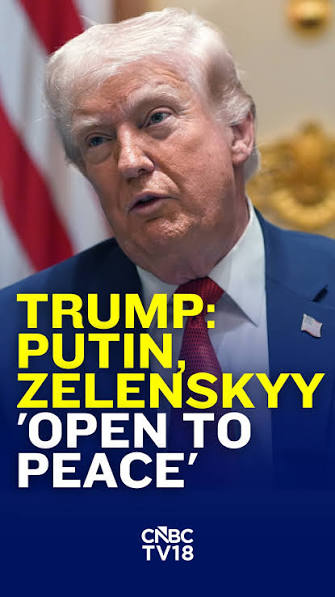
Speaking to reporters during the summit, the president said Russia should “make a peace deal” with Ukraine and indicated that the United States would continue encouraging negotiations aimed at ending the conflict. He also described his discussions with Ukrainian President Volodymyr Zelenskyy as “very good,” suggesting both sides maintained open lines of communication despite continuing battlefield challenges.
Why Ukraine Has Become the Next Focus
The Russia-Ukraine war continues to have enormous geopolitical and economic consequences across Europe and beyond.
Since fighting began, governments have spent billions supporting Ukraine while imposing sweeping sanctions on Russia. The conflict has disrupted energy markets, agricultural exports, and international trade while causing significant humanitarian suffering.
Trump argued that the war has lasted long enough and emphasized that diplomatic engagement should now become the priority.
According to reports from the summit, Trump stated that too many lives have been lost and that negotiations remain the best available path toward reducing casualties and restoring stability. While he did not reveal any new peace framework, his comments signaled a renewed American interest in encouraging direct dialogue between the two sides.
European leaders also used the summit to discuss continued military assistance for Ukraine while simultaneously exploring possible diplomatic avenues that could eventually support negotiations. However, they reiterated that any peace initiative must respect Ukraine’s sovereignty and territorial integrity.
The Importance of Trump’s Meeting with Zelenskyy
One of the most closely watched moments of the summit involved Trump’s meeting with Ukrainian President Volodymyr Zelenskyy.
Following the talks, Trump characterized the discussions as productive and positive. While neither leader announced a breakthrough, the meeting demonstrated that communication channels remain active between Washington and Kyiv despite ongoing military operations.
Zelenskyy reportedly continued urging stronger international pressure on Russia while requesting additional support for Ukraine’s defense capabilities. Meanwhile, Trump emphasized his desire to facilitate negotiations rather than prolong the conflict indefinitely.
The meeting attracted widespread international attention because many analysts believe U.S. leadership remains essential to any future diplomatic initiative involving Russia and Ukraine.
Can Peace Talks Actually Succeed?
Despite Trump’s optimistic tone, achieving peace in Ukraine remains extraordinarily challenging.
Several major issues continue to divide the parties, including:
- Territorial disputes.
- Security guarantees for Ukraine.
- Future NATO relations.
- Sanctions against Russia.
- Long-term reconstruction efforts.
- Prisoner exchanges and humanitarian concerns.
These issues have repeatedly complicated previous rounds of negotiations.
Diplomatic experts note that while political momentum can create opportunities for dialogue, converting high-level meetings into lasting agreements requires months—or even years—of sustained negotiations involving multiple international stakeholders.
The coming weeks are therefore expected to determine whether Trump’s renewed emphasis on diplomacy translates into concrete negotiations or remains primarily a political objective discussed during the G7 summit.
About the Author