NATO Alert: Russia Tensions, Military Pressure, Europe Reacts
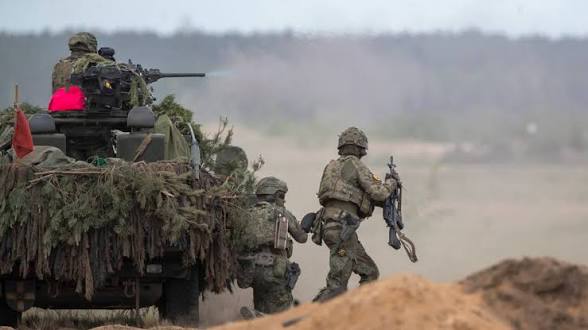
The security situation across Europe has entered another tense chapter as NATO countries respond to increasing pressure from Russia, rising military activity near alliance borders, and fears of broader instability linked to the war in Ukraine. From the Baltic region to the Arctic, European governments are strengthening defense cooperation, increasing military spending, and preparing for potential hybrid threats.
In 2026, NATO leaders, intelligence agencies, and European policymakers have repeatedly warned that Russia remains the most serious security concern facing the continent. Recent reports of airspace violations, drone incursions, cyberattacks, and military exercises have intensified public debate about Europe’s preparedness for future conflict.
As tensions grow, many Europeans are asking difficult questions. Could NATO face a direct confrontation with Russia? How is Europe preparing for potential military escalation? And what does this mean for global security and economic stability?
This article explains the latest NATO alert developments, Russia tensions, military pressure on Europe, and how governments across the continent are reacting.
Why NATO Is on High Alert
NATO has remained deeply involved in supporting Ukraine since Russia’s invasion began in 2022. The alliance continues to provide military assistance, training support, intelligence cooperation, and defensive coordination with member states.
However, the situation has become more complicated in 2026 due to several developments:
- Increased Russian military activity near NATO borders
- Drone incidents in Baltic airspace
- Hybrid warfare concerns
- Cybersecurity threats against European infrastructure
- Arctic military expansion
- Growing uncertainty about long-term transatlantic unity
European leaders now believe that security risks extend beyond Ukraine itself. Intelligence agencies increasingly warn about “gray-zone warfare,” where sabotage, cyberattacks, disinformation, and infrastructure disruption occur below the threshold of formal war.
According to defense analysts, NATO’s challenge is no longer only preventing a traditional invasion. The alliance must also defend against covert operations designed to weaken political unity and public confidence.
Russia’s Military Strategy and European Concerns
Security experts believe Russia is reshaping its long-term military strategy after years of conflict in Ukraine. Reports from European intelligence agencies suggest Moscow continues preparing for broader geopolitical confrontation with the West.
Analysts argue that Russia’s strategy includes several major objectives:
1. Testing NATO Unity
Russia has frequently challenged NATO politically and militarily through rhetoric, military exercises, cyber campaigns, and pressure operations. Some experts believe Moscow hopes to exploit divisions inside Europe and between Europe and the United States.
2. Expanding Hybrid Warfare
Hybrid warfare combines military pressure with cyberattacks, propaganda, energy disruption, and political destabilization. European security officials increasingly warn that critical infrastructure such as power grids, undersea cables, transportation systems, and communication networks could become targets.
3. Pressure on NATO’s Eastern Flank
Countries near Russia and Belarus, including Poland, Latvia, Lithuania, Estonia, and Finland, remain especially concerned about border security. NATO’s eastern members continue demanding stronger air defense systems and faster military deployment capabilities.
4. Arctic Expansion
The Arctic region has emerged as another major security concern. NATO launched expanded Arctic defense coordination in response to growing Russian and Chinese activity in northern waters.
Baltic States Face Rising Security Pressure
The Baltic region has become one of the most sensitive security zones in Europe.
Recent incidents involving drones entering NATO airspace have alarmed governments across Latvia, Estonia, Lithuania, and Finland. Several drones connected to the Ukraine-Russia conflict reportedly crossed into NATO territory during operations targeting Russian infrastructure.
These events raised serious questions:
- How prepared are Baltic air defenses?
- Could accidental escalation occur?
- How quickly can NATO respond to unexpected incidents?
At a recent meeting in Bucharest, leaders from NATO’s eastern flank called for stronger air and missile defense systems after repeated Russian airspace violations.
The situation became even more politically sensitive after Latvia’s government collapsed amid internal disagreements linked to drone incursions and national security management.
For many Europeans, the Baltic incidents highlighted how easily the Ukraine conflict could affect neighboring NATO members.
NATO Strengthens Military Defenses
In response to rising tensions, NATO countries are significantly increasing defense readiness.
Key measures include:
Expanded Air Defense
Eastern NATO members are requesting more missile defense systems, radar networks, and fighter patrols to protect against drone and missile threats.
Increased Military Spending
Many European governments have announced higher defense budgets. NATO members continue discussing targets for military spending as concerns about long-term security intensify.
Arctic Operations
NATO’s growing Arctic mission reflects concerns about Russian military infrastructure and strategic competition in northern waters.
Cybersecurity Preparation
European governments are investing heavily in cyber defense after warnings about attacks targeting infrastructure and energy systems.
Rapid Deployment Planning
Military planners are reviewing how quickly NATO forces could respond to limited incursions or hybrid attacks along the alliance’s borders.
Europe Reacts With Urgency
Across Europe, public debate about defense and security has intensified.
Several European leaders now openly discuss the possibility that Europe may need to become more strategically independent if political divisions weaken transatlantic cooperation.
This has produced major shifts in European policy:
- Germany increasing military investment
- Nordic countries expanding defense cooperation
- Finland and Sweden strengthening NATO integration
- Eastern Europe demanding stronger deterrence measures
- EU leaders discussing long-term security restructuring
The growing concern is not necessarily that a large-scale NATO-Russia war is imminent. Instead, many experts believe Europe faces a prolonged period of instability, hybrid pressure, and regional confrontation.
The Ukraine War Remains Central
The war in Ukraine remains the primary driver of current NATO-Russia tensions.
NATO continues emphasizing support for Ukraine’s self-defense capabilities while warning against further Russian escalation.
Meanwhile, Ukrainian President Volodymyr Zelenskyy recently warned that Russia could potentially use Belarusian territory for future operations targeting either Ukraine or NATO states bordering Belarus.
Belarus remains strategically important because:
- Russian troops operate there
- Russian tactical nuclear weapons are reportedly present
- It borders multiple NATO countries
- It provides military access toward northeastern Europe
These developments continue fueling security concerns throughout the alliance.
Could NATO and Russia Enter Direct Conflict?
Most analysts still believe a direct large-scale NATO-Russia war remains unlikely because both sides understand the catastrophic consequences.
However, experts increasingly warn about limited confrontations or “gray-zone” scenarios, including:
- Cyberattacks
- Border incidents
- Airspace violations
- Sabotage operations
- Proxy conflicts
- Maritime disputes
- Infrastructure attacks
Some defense reports suggest Russia could attempt smaller-scale operations designed to test NATO’s political unity rather than launch a massive invasion.
Security specialists argue that NATO’s biggest challenge may be responding quickly enough to ambiguous threats that fall below the threshold of conventional war.
Economic Impact Across Europe
The security crisis is also affecting Europe economically.
Higher defense spending means governments must balance military investment with domestic priorities such as healthcare, education, and energy affordability.
Critics argue that Europe risks entering a prolonged arms buildup. Recently, religious leaders and peace advocates criticized growing military budgets across the continent.
At the same time, supporters of stronger defense policies argue that deterrence is necessary to prevent future aggression.
The economic consequences include:
- Increased military procurement
- Energy market uncertainty
- Supply chain concerns
- Higher cybersecurity costs
- Infrastructure protection spending
Businesses across Europe are also monitoring geopolitical risk more closely than at any point in recent decades.
NATO’s Internal Challenges
While NATO remains united publicly, internal political tensions continue shaping alliance strategy.
Key questions include:
- How much military support should continue flowing to Ukraine?
- How dependent should Europe remain on U.S. defense capabilities?
- Can Europe develop stronger independent defense systems?
- How should NATO respond to hybrid warfare?
Recent political debates inside Europe and the United States have intensified these discussions.
Some European leaders fear uncertainty in transatlantic politics could complicate long-term defense planning.
Public Opinion Across Europe
European public opinion is evolving rapidly.
In many countries, citizens increasingly support stronger defense measures due to concerns about regional security. However, there are also worries about:
- Escalation risks
- Economic pressure
- Military spending increases
- Diplomatic breakdowns
Governments are attempting to balance deterrence with diplomacy.
Public attention toward NATO, military readiness, and national security has grown substantially since the start of the Ukraine conflict, and the issue now dominates many European political discussions.
The Future of European Security
The current NATO alert environment reflects a broader transformation in European security strategy.
For decades after the Cold War, many European countries reduced military spending and focused more heavily on economic integration. Today, that trend is reversing rapidly.
Experts increasingly describe Europe as entering a new era characterized by:
- Strategic competition
- Military modernization
- Hybrid warfare preparation
- Cyber defense expansion
- Arctic security concerns
- Long-term geopolitical rivalry
The coming years may determine whether Europe achieves stronger collective defense coordination or faces deeper political divisions.
Conclusion
NATO’s growing alert status reflects the most serious security tensions Europe has faced in years. Rising Russia tensions, military pressure near NATO borders, hybrid warfare threats, and instability linked to Ukraine have pushed European governments toward stronger defense coordination and higher military readiness.
While most experts do not predict an immediate large-scale war between NATO and Russia, the risks of regional escalation, cyber conflict, and gray-zone confrontation remain significant. European leaders are responding by strengthening air defenses, increasing military spending, expanding Arctic operations, and preparing for long-term geopolitical competition.
As Europe reacts to these challenges, the future of NATO unity, transatlantic cooperation, and regional security will remain central issues shaping global politics in 2026.
FAQs
What is causing NATO and Russia tensions in 2026?
The tensions are largely linked to the ongoing Ukraine conflict, Russian military activity near NATO borders, drone incidents, cyber threats, and concerns about hybrid warfare targeting Europe.
Is NATO preparing for war with Russia?
NATO says its actions are defensive and aimed at deterrence. The alliance is strengthening military readiness, air defense, and cybersecurity to prevent escalation and protect member states.
Why are Baltic countries concerned?
Baltic nations border Russia and Belarus and have experienced increased airspace violations, drone incidents, and regional military pressure.
What is hybrid warfare?
Hybrid warfare includes cyberattacks, disinformation campaigns, sabotage, infrastructure disruption, and covert operations designed to weaken opponents without traditional warfare.
How is Europe responding to NATO security concerns?
European governments are increasing defense spending, expanding military cooperation, strengthening cyber defenses, and improving rapid response capabilities.
Could the Ukraine war spread into NATO territory?
Most experts believe a full NATO-Russia war remains unlikely, but accidental escalation or limited regional incidents remain possible concerns.
Why is the Arctic becoming important for NATO?
The Arctic has growing strategic importance due to military positioning, shipping routes, energy resources, and increased Russian activity in the region.
Is NATO still supporting Ukraine?
Yes. NATO members continue providing military aid, training, and logistical support to Ukraine while emphasizing Ukraine’s right to self-defense.
How useful was this post?
Click on a star to rate it!
Average rating 0 / 5. Vote count: 0
No votes so far! Be the first to rate this post.
About the Author

usa5911.com
Administrator
Hi, I’m Gurdeep Singh, a professional content writer from India with over 3 years of experience in the field. I specialize in covering U.S. politics, delivering timely and engaging content tailored specifically for an American audience. Along with my dedicated team, we track and report on all the latest political trends, news, and in-depth analysis shaping the United States today. Our goal is to provide clear, factual, and compelling content that keeps readers informed and engaged with the ever-changing political landscape.