Glioblastoma Research: Brain Cancer Breakthrough, Treatment Hope, Public Attention
Glioblastoma research is gaining unprecedented public attention as scientists, doctors, and biotech companies push forward with groundbreaking treatments for one of the world’s deadliest brain cancers. Known medically as glioblastoma multiforme (GBM), this aggressive cancer has long been associated with poor survival rates and limited treatment options. However, recent advances in immunotherapy, gene therapy, targeted medicine, artificial intelligence, and clinical trials are changing the conversation around brain cancer treatment.
For years, glioblastoma remained one of the most difficult cancers to treat because of its rapid growth and ability to resist traditional therapies. Standard treatment typically involves surgery, radiation therapy, and chemotherapy. Despite these interventions, recurrence rates remain extremely high. Yet the latest glioblastoma research is providing new optimism as researchers identify innovative approaches capable of improving patient survival and quality of life.
Public attention surrounding brain cancer breakthroughs has increased dramatically in 2025 and 2026 due to promising clinical trial data, emerging immunotherapy technologies, and growing awareness campaigns. Families affected by glioblastoma are closely watching every development, hoping science may finally deliver longer-lasting and more effective treatment solutions.
Understanding Glioblastoma
Glioblastoma is the most aggressive form of primary brain cancer in adults. It develops from glial cells in the brain and spreads quickly into surrounding tissue. Because the tumor infiltrates healthy brain structures, complete surgical removal is extremely difficult.
Symptoms of glioblastoma often include:
- Persistent headaches
- Memory problems
- Speech difficulties
- Seizures
- Vision disturbances
- Personality changes
- Weakness or numbness
The exact cause of glioblastoma remains unclear, although researchers continue investigating genetic mutations, environmental triggers, and immune system factors linked to the disease.
According to ongoing medical research, glioblastoma’s complexity stems from its ability to adapt rapidly to treatment. Scientists say tumor cells communicate with their environment in ways that help them survive chemotherapy and radiation.
Why Glioblastoma Is So Difficult to Treat
One major challenge in glioblastoma treatment is the blood-brain barrier. This protective shield prevents harmful substances from entering the brain, but it also blocks many cancer drugs from reaching tumors effectively.
Another difficulty involves tumor heterogeneity. Glioblastoma cells can vary significantly within the same tumor, making a single treatment strategy less effective. Some cells may respond to therapy while others survive and continue growing.
Researchers also note that glioblastoma creates an immunosuppressive environment that weakens the body’s natural immune response against cancer cells.
Because of these factors, traditional treatment methods often slow tumor progression temporarily rather than eliminate the disease entirely.
New Hope Through Immunotherapy
One of the biggest glioblastoma research breakthroughs involves immunotherapy. Scientists are developing treatments that help the immune system recognize and attack cancer cells more effectively.
Recent studies have shown encouraging progress using engineered immune cells, cancer vaccines, checkpoint inhibitors, and virus-based therapies.
A 2026 clinical report highlighted promising survival results from a combination immunotherapy regimen involving natural killer cell therapy, IL-15 agonists, and tumor treating fields. Researchers reported that many patients in the trial remained alive beyond expected survival timelines.
Another major area of focus is checkpoint inhibitor therapy. Drugs such as pembrolizumab and nivolumab are being studied in recurrent glioblastoma cases to determine whether immune activation can improve outcomes.
Scientists are also exploring personalized vaccines designed to target unique tumor mutations. Early-stage trials suggest these vaccines may stimulate stronger immune responses in some patients.
Virus-Based Therapy Shows Promise
Virus-based therapies are emerging as another exciting development in brain cancer treatment. Researchers are engineering viruses capable of selectively infecting and destroying glioblastoma cells while stimulating immune responses.
In 2026, researchers reported encouraging findings involving an engineered cancer-targeting virus called Delta-24-RGD. Scientists identified biomarkers that could predict which patients may benefit most from this therapy.
Experts believe oncolytic viruses may eventually become an important part of combination treatment strategies for aggressive brain tumors.
Gene Therapy and RNA Research
Gene therapy is becoming a major frontier in glioblastoma research. Scientists are investigating methods to modify tumor genes, repair cellular pathways, or deliver therapeutic genetic material directly into cancer cells.
A pioneering gene therapy approach scheduled for clinical testing in 2026 aims to use viral vectors and synthetic enhancers to attack glioblastoma more precisely.
Meanwhile, RNA-targeting therapies are also generating excitement among researchers. Some experimental treatments focus on disrupting the molecular instructions that cancer cells use to survive and multiply.
Research organizations say RNA-focused therapies could eventually create entirely new treatment pathways for patients facing recurrent glioblastoma.
Focused Ultrasound and Blood-Brain Barrier Innovation
Another major challenge in brain cancer treatment has been delivering medicine effectively into tumors. New focused ultrasound technologies may help solve this problem.
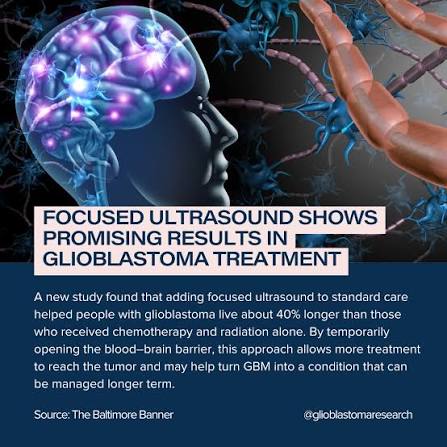
In recent clinical studies, researchers successfully used focused ultrasound to temporarily open the blood-brain barrier, allowing chemotherapy drugs to reach tumors more effectively.
Scientists believe this technology could dramatically improve the effectiveness of future glioblastoma therapies.
Laser heat therapy combined with immunotherapy has also shown promising results in early trials. Researchers say the approach may enhance immune system activation while simultaneously disrupting tumor tissue.
Artificial Intelligence Transforming Brain Cancer Research
Artificial intelligence is increasingly playing a major role in glioblastoma research. AI systems can analyze medical imaging, genetic data, and treatment outcomes faster than traditional methods.
Researchers are developing radiogenomic models capable of identifying immune signatures and predicting how patients may respond to immunotherapy.
AI-driven tumor modeling may also help doctors personalize radiation therapy and surgical planning. A recent computational platform called PREDICT-GBM demonstrated the potential for individualized treatment strategies based on patient-specific tumor behavior.
These technologies could eventually improve survival rates by helping physicians tailor therapies more precisely for each patient.
Clinical Trials Expanding Worldwide
The number of glioblastoma clinical trials has expanded significantly across major research institutions worldwide.
Universities and cancer centers are investigating:
- CAR-T cell therapies
- Targeted drug therapies
- Combination immunotherapies
- Tumor vaccines
- Novel chemotherapy agents
- Personalized medicine approaches
Research centers including UCSF, UCLA, and UC San Diego are currently studying multiple experimental therapies for recurrent and newly diagnosed glioblastoma patients.
Clinical trials are critical because they provide patients access to innovative therapies before broader approval becomes available.
Personalized Medicine Could Change Everything
One of the most important shifts in glioblastoma research involves personalized medicine. Instead of treating all tumors identically, researchers now aim to tailor therapies according to genetic mutations, biomarkers, and immune characteristics unique to each patient.
This strategy could significantly improve treatment precision and reduce unnecessary side effects.
Scientists believe future glioblastoma care may involve combining several personalized therapies simultaneously, including immunotherapy, targeted medicine, surgery, radiation, and AI-guided treatment planning.
Public Awareness and Advocacy Continue Growing
Public attention surrounding glioblastoma has intensified due to high-profile cases, advocacy campaigns, and increased media coverage of research breakthroughs.
Brain cancer organizations continue funding research initiatives while helping patients connect with clinical trials and support resources.
Advocacy groups stress the importance of increased funding because glioblastoma research historically received less attention compared to some other cancers despite its devastating impact.
Many experts believe rising public awareness is helping accelerate scientific progress and collaboration across the medical community.
Challenges Still Remain
Despite encouraging breakthroughs, experts caution that glioblastoma remains one of the most difficult cancers to cure completely.
Many experimental therapies still require larger clinical trials before becoming standard treatment options. Researchers must also overcome issues involving tumor resistance, treatment safety, and long-term effectiveness.
Additionally, some advanced therapies may initially carry high costs or limited availability.
Still, medical researchers remain optimistic that combining multiple emerging technologies could eventually transform glioblastoma from a deadly diagnosis into a more manageable disease.
The Future of Glioblastoma Research
The future of glioblastoma treatment appears increasingly focused on combination therapy strategies. Researchers believe the best results may come from integrating several advanced approaches simultaneously rather than relying on a single treatment.
Future therapies may include:
- Personalized cancer vaccines
- AI-guided precision medicine
- Gene editing technologies
- Enhanced immunotherapy combinations
- Advanced drug delivery systems
- Biomarker-driven treatment plans
- Tumor-targeting viruses
- Blood-brain barrier disruption technologies
Scientists are also working toward earlier diagnosis methods using imaging, liquid biopsies, and genetic screening tools.
As research accelerates, many experts believe survival outcomes for glioblastoma patients could improve significantly over the next decade.
Why Glioblastoma Research Matters Globally
Glioblastoma affects thousands of families worldwide every year. Because the disease progresses rapidly and often impacts cognitive function, the emotional and financial burden on patients and caregivers can be overwhelming.
Every breakthrough in brain cancer research carries enormous significance for patients searching for hope.
The growing momentum behind glioblastoma research demonstrates how innovation, collaboration, and public awareness can drive medical progress even against extremely challenging diseases.
While there is still no definitive cure for glioblastoma today, the latest scientific developments suggest the future may look very different from the past.
Conclusion
Glioblastoma research is entering a transformative era marked by scientific breakthroughs, innovative clinical trials, and expanding public attention. From immunotherapy and gene therapy to AI-driven diagnostics and focused ultrasound technologies, researchers are making important progress against one of the deadliest forms of brain cancer.
Although major challenges remain, recent studies and treatment advances are offering patients and families renewed optimism. The rapid pace of research suggests that more effective and personalized glioblastoma therapies could emerge in the coming years.
As scientists continue exploring new frontiers in brain cancer treatment, public support, clinical trial participation, and medical innovation will remain essential in the fight against glioblastoma.
FAQs
What is glioblastoma?
Glioblastoma is an aggressive form of brain cancer that grows rapidly and is difficult to treat due to its ability to invade surrounding brain tissue.
What are the current treatments for glioblastoma?
Current standard treatments include surgery, radiation therapy, and chemotherapy. Researchers are also studying immunotherapy, gene therapy, and targeted treatments.
Why is glioblastoma so hard to cure?
Glioblastoma is difficult to cure because it spreads quickly, resists treatment, and creates an immunosuppressive environment that helps tumor cells survive.
What is the latest breakthrough in glioblastoma research?
Recent breakthroughs include advanced immunotherapy combinations, virus-based therapies, focused ultrasound drug delivery systems, and personalized cancer vaccines.
Can immunotherapy help glioblastoma patients?
Researchers believe immunotherapy may improve survival in some glioblastoma patients, especially when combined with other advanced treatments. Multiple clinical trials are currently underway.
Are there ongoing clinical trials for glioblastoma?
Yes. Major research centers worldwide are conducting clinical trials involving immunotherapy, gene therapy, CAR-T cells, and targeted medicines.
Is there hope for a glioblastoma cure?
While there is currently no complete cure, ongoing breakthroughs in research are creating new hope for improved survival rates and more effective treatments in the future.
How useful was this post?
Click on a star to rate it!
Average rating 0 / 5. Vote count: 0
No votes so far! Be the first to rate this post.
About the Author

usa5911.com
Administrator
Hi, I’m Gurdeep Singh, a professional content writer from India with over 3 years of experience in the field. I specialize in covering U.S. politics, delivering timely and engaging content tailored specifically for an American audience. Along with my dedicated team, we track and report on all the latest political trends, news, and in-depth analysis shaping the United States today. Our goal is to provide clear, factual, and compelling content that keeps readers informed and engaged with the ever-changing political landscape.