White House Move: Immigration Plan, States Revolt

The action, detailed in a State Department memo, directs officials to deny visas to any applicants who engage in ‘censorship’. Today we will discuss about White House Move: Immigration Plan, States Revolt
White House Move: Immigration Plan, States Revolt
In 2025, the White House under Donald J. Trump launched a sweeping, hardline immigration policy aimed at overturning much of the previous administration’s more lenient framework. On January 20, through an executive order titled “Protecting the American People Against Invasion”, the White House formally revoked key immigration-related prior executive orders and reinstated a strict enforcement regime under the Department of Homeland Security (DHS) and U.S. Immigration and Customs Enforcement (ICE).
The policy declares that the United States will “faithfully execute” immigration laws against “all inadmissible and removable aliens,” with priority given to removing undocumented immigrants. This directive includes a broad interpretation of who qualifies as an asylum-seeker or “alien,” and expands the powers of immigration agencies to detain and deport individuals they deem unauthorized, with fewer protections than before.
In May 2025, the administration expanded its pressure by threatening to cut off billions in federal grant funding — including money meant for infrastructure, disaster relief, emergency preparedness, and transportation — to states and localities that refuse to cooperate with federal immigration enforcement. The policy effectively treats cooperation with federal immigration authorities as a requirement for receiving federal funds, making state compliance a condition tied to critical public programs.
In addition, the federal government has reactivated and mobilized enforcement operations targeting undocumented immigrants. The renewed deportation efforts have been packaged as national-security and public-safety measures, with emphasis on dismantling criminal networks, human-trafficking rings, and unlawful migration.
In short: the White House’s new immigration plan is aggressive, comprehensive, and designed to reassert federal authority over immigration — even if that means challenging or overriding state-level resistance.
The Pushback: States, Cities, and Attorneys General React
The response from many U.S. states — especially those led by Democrats or home to so-called “sanctuary cities” — has been forceful. A coalition of 20 states’ attorneys general filed lawsuits in May 2025 challenging the administration’s threats to withhold federal funds if states do not cooperate with immigration enforcement.
The lawsuits argue that conditioning essential grant and infrastructure funding on compliance with immigration policies violates the Constitution. Specifically, critics say that the executive branch is overstepping its authority: Congress, not the presidency, controls federal spending.
According to state attorneys general, the administration is essentially demanding states act as de facto immigration enforcers — a demand that misuses federal grants as leverage and undermines state autonomy in public safety, disaster preparedness, and other state-level responsibilities.
One of the lead voices in the opposition, Rob Bonta — Attorney General of California — described the funding threats as “blatantly illegal,” arguing that vital services such as emergency response, infrastructure maintenance, and disaster relief are being held hostage to politics.
In short: what the White House frames as policy enforcement is being viewed by many states as coercive, unconstitutional, and a dangerous overreach of federal power.
Crackdowns in Practice: Enforcement Sweeps and Sanctuary City Flashpoints
The White House plan is not only theoretical — it’s already being enacted on the ground. Two major enforcement operations stand out:
Operation Midway Blitz (Chicago, 2025)
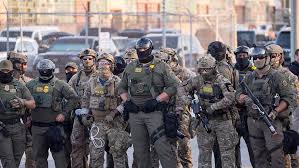
Launched in September 2025, this operation by ICE and DHS marked a new phase in urban immigration enforcement targeting undocumented immigrants — especially in states and cities that had previously resisted cooperation. The operation reportedly involved ICE, the U.S. Marshals Service, the Drug Enforcement Administration, and other federal agencies.
Initial reports indicated that hundreds of people were detained in and around Chicago. Some detainees were reportedly transferred to detention centers in neighboring states, raising concerns about due process and the fates of individuals separated from their communities.
Religious organizations and immigrant-rights groups in the region mobilized to provide legal aid, but for many residents — especially Latinos — the raids triggered fear, uncertainty, and an atmosphere of distrust.
Sanctuary Cities & Anti-Deportation Protests
In several cities — including those with large immigrant populations — the federal pushback on sanctuary policies has triggered protests, legal pushback, and community resistance. The state-level lawsuits reflect deeper political and constitutional fault-lines: whether states can protect immigrants under local or state law, or whether federal priorities override those protections.
In parallel, enforcement operations and threats to withhold funding have escalated tensions. Critics argue that some operations target individuals with no criminal record, undermining trust in law enforcement and civil rights.
Thus — while the White House frames the measures as necessary for national security — many cities, states, and civil-rights groups view them as heavy-handed, coercive, and an assault on state sovereignty and immigrant protections.
Constitutional Questions & Legal Pushback
At the heart of this conflict lies a profound constitutional and legal question: Who controls immigration enforcement — the federal government or the states? The Trump administration contends that federal law is supreme, and that states must cooperate. The 2025 executive order reasserts the primacy of federal immigration law and removes protections afforded by prior administrations.
But opponents argue that linking federal funds to immigration cooperation is a form of coercion: the executive branch is effectively punishing states that insist on upholding their own laws and policies. According to the lawsuits filed by 20 states, those funding threats amount to “blackmail” and violate constitutional limits on executive power.
Supporters of the challenge — like Rob Bonta — warn that using federal grants as a lever turns essential state and local services into bargaining chips, undermining public safety, disaster preparedness, and infrastructure planning.
Additionally, critics argue that many enforcement raids — including ones under Operation Midway Blitz — have targeted immigrants with little to no criminal history, raising concerns about due process, racial profiling, and civil rights violations.
The legal friction reflects a deeper ideological divide: one side views national security and strict immigration enforcement as vital; the other sees federal overreach, misuse of funds, and civil-liberties erosion.
What Does This Mean for Immigrants and Sanctuary Cities?
For immigrants — both documented and undocumented — the new White House plan has created heightened uncertainty, fear, and instability. Key consequences include:
Increased risk of detention and deportation, even in cities previously considered safe or “sanctuary.”
Growing reluctance among immigrant communities to engage with institutions, access legal aid, or seek assistance, due to fear of enforcement sweeps.
Disruption of daily life: arrests, raids, and community panic may lead to job losses, family separations, and increased social stress.
For sanctuary cities and states that historically resisted cooperation with federal immigration enforcement, the stakes are also high:
Their budgets — previously used for public services, infrastructure, disaster relief, and community programs — may be threatened if they refuse to comply.
They face legal pressure and possible loss of critical federal grants, undermining essential public services.
They are forced to navigate an increasingly narrow path: uphold local values and laws, or risk losing federal support.
For ordinary American citizens — especially taxpayers, social-services beneficiaries, or communities reliant on federal grants — the clash raises broader questions: will public safety and essential services be held hostage to a federal immigration agenda?
Broader Implications: Federalism, Social Cohesion, and National Identity
The standoff over immigration enforcement goes beyond law enforcement — it speaks to deeper issues of federalism, identity, and the nature of American governance.
Federal vs. State Power
The legal battle underscores a core constitutional tension: while immigration law is federally mandated, states have traditionally held broad power over public safety, infrastructure, education, and welfare. By tying immigration cooperation to federal funds, the White House challenges that balance — effectively demanding states subordinate state priorities to federal demands.
If this approach succeeds, it could reshape the federal–state relationship: grant funding becomes another lever through which the federal government can enforce national policy — even when states disagree. That raises long-term concerns for the autonomy of states and the separation of powers built into the U.S. constitutional system.
Social Impact and Civil Rights
Aggressive immigration enforcement — especially in urban “sanctuary” areas — may exacerbate community fear, weaken social cohesion, and erode trust in law enforcement. Immigrant communities may feel targeted and vulnerable; families may face separation; workers may lose jobs.
Moreover, civil rights and due process may come under pressure if detentions and deportations proceed with limited oversight or inadequate legal protections, especially for asylum seekers and families. The risk of racial profiling, wrongful detentions, and wrongful deportations increases.
Political Polarization and Identity Politics
The confrontation plays into broader political polarization in the United States — between those demanding stricter immigration controls for national security and resource-safeguarding, and those advocating for immigrant rights, social inclusion, and pluralistic values.
For many states pushing back — often those with large immigrant populations — the fight symbolizes defense of diversity, local autonomy, humanitarian values, and civil rights. For the administration, it represents law enforcement, national identity, and prioritization of citizens’ interests. The stakes — social, political, legal — remain high.
What Happens Next?
As of mid-2025, the conflict shows no sign of abating — indeed, it may intensify.
The 20-state lawsuits challenging the funding-threats remain pending in federal courts; their outcome could define whether a president can legally link public grants to immigration compliance.
Federal enforcement operations — like Operation Midway Blitz — are likely to continue and possibly expand to other major cities.
States and cities may ramp up legal and legislative efforts to safeguard immigrant protections, sanctuary policies, or limit cooperation with ICE and DHS.
Sanctuary cities may pursue independent oversight measures — such as truth and accountability portals, independent commissions, and legal aid networks — to protect residents and monitor immigrant-enforcement activity.
For immigrant communities: heightened vigilance, greater demand for legal support, and possibly increased migration — either internal or external — may follow.
The struggle is likely to shape U.S. immigration policy and the balance of power between federal and state governments for years to come.
Conclusion
The 2025 push by the White House through a sweeping immigration plan has ignited a fierce and consequential backlash from states, cities, civil-rights groups, and immigrant communities. By tying federal funds to immigration compliance and unleashing enforcement sweeps in sanctuary areas, the administration has forced a reckoning over the boundaries of federal authority — and whether states have the right to protect immigrants under local laws.
This conflict is not just about immigration; it’s about who controls public resources, who defines community safety, and what it means to belong in a modern, pluralistic America. As courts weigh the legality of funding threats, and as enforcement operations continue, the outcomes may redefine the contours of federalism, social justice, and American identity in the years ahead.
How useful was this post?
Click on a star to rate it!
Average rating 0 / 5. Vote count: 0
No votes so far! Be the first to rate this post.
About the Author

usa5911.com
Administrator
Hi, I’m Gurdeep Singh, a professional content writer from India with over 3 years of experience in the field. I specialize in covering U.S. politics, delivering timely and engaging content tailored specifically for an American audience. Along with my dedicated team, we track and report on all the latest political trends, news, and in-depth analysis shaping the United States today. Our goal is to provide clear, factual, and compelling content that keeps readers informed and engaged with the ever-changing political landscape.