Usha Vance: Rising Legal Star or Political Power
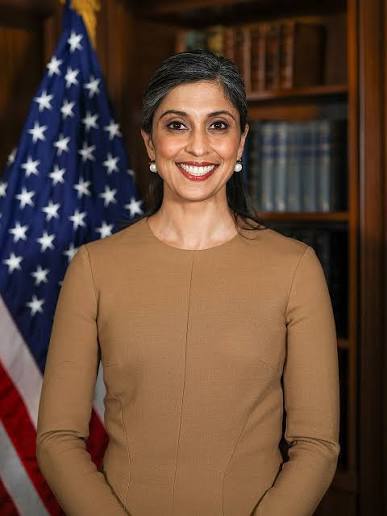
Usha Vance’s own political views have been the subject of much speculation. While her husband has often been critical of her “woke” views. Today we will discuss about Usha Vance: Rising Legal Star or Political Power
Usha Vance: Rising Legal Star or Political Power
Usha Bala Chilukuri Vance has emerged as one of the most compelling figures in modern American public life. Known for her exceptional legal credentials, academic excellence, and current role as the Second Lady of the United States, Usha Vance occupies a unique position at the intersection of law, politics, and cultural identity. Her rise prompts a critical question: Is Usha Vance primarily a rising legal star, or is she becoming a political power in her own right? The answer lies in understanding her journey, achievements, and growing influence.
Early Life and Family Background
Usha Vance was born on January 6, 1986, in San Diego County, California, to Indian-American parents of Telugu heritage. Her family roots trace back to Andhra Pradesh, India. Raised in a household that valued education, discipline, and intellectual curiosity, she benefited from an environment that encouraged academic excellence from an early age.
Her father worked as an aerospace engineer, while her mother held a senior administrative position in higher education. These professional influences helped shape Usha’s worldview, instilling both analytical thinking and respect for institutional systems. Raised as a practicing Hindu, she grew up navigating multiple cultural identities—an experience that would later shape her public role in American society.
Academic Excellence: A Foundation of Leadership
Usha Vance’s academic career is widely regarded as extraordinary. She attended Yale University, where she graduated summa cum laude with a degree in history. Her academic work demonstrated deep analytical ability, historical insight, and a disciplined approach to complex ideas.
She later earned a prestigious Gates Cambridge Scholarship, which allowed her to pursue a master’s degree in early modern history at the University of Cambridge. There, she further refined her research and critical writing skills, building an intellectual foundation that would later distinguish her legal work.
After Cambridge, Usha returned to Yale to attend Yale Law School—one of the most competitive legal institutions in the world. During her time at Yale Law, she served in editorial leadership roles and participated in advanced legal research and constitutional studies, reinforcing her reputation as a scholar of exceptional caliber.
Legal Career: An Elite Path to Influence
Usha Vance’s legal career places her among the most accomplished attorneys of her generation. After graduating from Yale Law School, she secured a series of elite judicial clerkships—positions that are often reserved for the top fraction of law graduates nationwide.
She clerked for a federal district court judge, followed by service on the U.S. Court of Appeals. Her legal ascent culminated in a clerkship with the Chief Justice of the United States Supreme Court, a role that provided unparalleled exposure to constitutional law, federal governance, and the judicial decision-making process.
These clerkships positioned her at the heart of the American legal system, allowing her to work directly on landmark cases and constitutional questions. Colleagues and legal observers consistently describe her as meticulous, intellectually rigorous, and deeply thoughtful.
Following her clerkships, Usha joined a prestigious national law firm, where she worked on complex civil litigation involving higher education, government regulation, media law, and corporate disputes. Her practice reflected both technical excellence and strategic judgment—hallmarks of a rising legal star.
Marriage to J.D. Vance: A Strategic Partnership
Usha Vance met her future husband, J.D. Vance, while both were students at Yale Law School. Their relationship grew out of shared intellectual curiosity, debate, and mutual respect. They married in 2014, forming a partnership that would later attract national attention.
J.D. Vance has publicly credited Usha with providing emotional stability, intellectual grounding, and perspective during his transition from a working-class background to elite academic and political spaces. Her influence on his development—both personal and professional—has been widely acknowledged.
The couple has three children and maintains an interfaith household. While Usha practices Hinduism, her husband is Catholic, and they have approached family life with an emphasis on mutual respect and cultural understanding. This balance has become part of their public narrative.
Becoming Second Lady of the United States
Usha Vance entered a new chapter of public life when her husband assumed office as Vice President of the United States in January 2025. As Second Lady, she made history as the first Indian-American and first practicing Hindu to hold the role.
Unlike traditional political spouses who focus primarily on ceremonial duties, Usha’s background gives her a more substantive presence. She brings legal expertise, academic insight, and cultural awareness to her public engagements.
She has participated in diplomatic visits, cultural initiatives, and institutional leadership roles. Her appointment to prominent cultural and civic boards reflects growing trust in her judgment and leadership abilities.
Despite increased visibility, Usha Vance has maintained a relatively low public profile, avoiding overt political rhetoric while still shaping conversations behind the scenes. This approach has fueled speculation about the extent of her influence.
Political Identity: Independent Thinker or Strategic Ally?
Usha Vance’s political views have evolved over time, reflecting intellectual independence rather than rigid ideology. Earlier in her life, she expressed support for a range of political perspectives and maintained an analytical distance from partisan labels.
As her husband’s political career advanced, her public alignment naturally shifted toward unity and support. However, those familiar with her describe her as thoughtful, measured, and privately opinionated—qualities that suggest she is more than a passive political spouse.
Observers believe her legal training enables her to serve as a trusted advisor, offering strategic insight on policy, judicial appointments, and constitutional matters. While she rarely speaks publicly on political issues, her influence is widely regarded as significant.
Public Controversies and Cultural Debate
Usha Vance’s prominence has also attracted controversy. As a woman of color and a practicing Hindu in a highly polarized political environment, she has faced criticism and discriminatory rhetoric from extremist voices.
Her religious identity, in particular, has sparked debate in media and online spaces. Supporters view her presence as a powerful symbol of American pluralism, while critics have used her faith as a political talking point.
These controversies highlight broader societal tensions around diversity, nationalism, and inclusion. Usha Vance’s response—measured, dignified, and largely silent—has earned respect across ideological lines.
Cultural Significance and Representation
Beyond law and politics, Usha Vance holds immense cultural significance. Her rise reflects the growing visibility of Indian-Americans and South Asian communities in U.S. leadership roles.
She represents a version of the American dream rooted in education, merit, and perseverance. For many, her story challenges outdated assumptions about who belongs in positions of power.
Her presence in national life also contributes to global diplomacy, particularly in strengthening cultural understanding between the United States and South Asia.
Rising Legal Star or Political Power?
The question at the heart of Usha Vance’s story remains compelling. As a legal professional, her credentials alone would place her among the most accomplished attorneys in the country. Her clerkships, academic achievements, and litigation experience define her as a legal star of the highest order.
As a political figure, her influence is quieter but no less impactful. She shapes conversations through intellect rather than slogans, strategy rather than spectacle. Her power lies not in holding office, but in shaping ideas, advising leadership, and symbolizing modern American identity.
Conclusion: A Defining Figure of Modern America
Usha Vance cannot be confined to a single role. She is a legal scholar, cultural representative, advisor, spouse, and public figure—all at once. Her journey reflects the evolving nature of leadership in the United States, where influence extends beyond titles and visibility.
Whether viewed as a rising legal star or an emerging political power, one truth is clear: Usha Vance is shaping the present—and potentially the future—of American public life.
Her story is still unfolding, and its impact is likely to extend far beyond the role she holds today.
How useful was this post?
Click on a star to rate it!
Average rating 0 / 5. Vote count: 0
No votes so far! Be the first to rate this post.
About the Author

usa5911.com
Administrator
Hi, I’m Gurdeep Singh, a professional content writer from India with over 3 years of experience in the field. I specialize in covering U.S. politics, delivering timely and engaging content tailored specifically for an American audience. Along with my dedicated team, we track and report on all the latest political trends, news, and in-depth analysis shaping the United States today. Our goal is to provide clear, factual, and compelling content that keeps readers informed and engaged with the ever-changing political landscape.