US Visa Freeze : immigrant visa processing paused for 75 countries, global shock
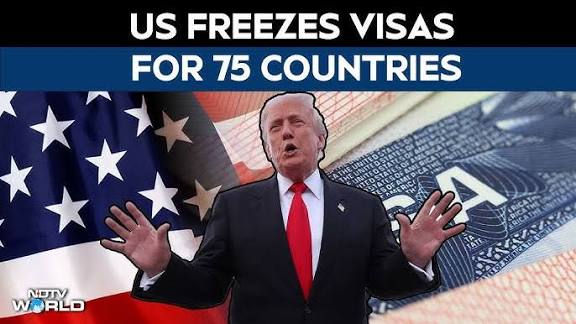
The US State Department will stop issuing immigrant visas to 75 countries, including Brazil, Somalia and Iran. Today we will discuss about US Visa Freeze : immigrant visa processing paused for 75 countries, global shock
US Visa Freeze : immigrant visa processing paused for 75 countries, global shock
In a sweeping and unprecedented move that has jolted governments, immigrant communities, legal professionals, and global media alike, the United States government announced the indefinite suspension of immigrant visa processing for nationals of 75 countries. This policy, which takes effect on January 21, 2026, was unveiled by the U.S. State Department amid a broader intensification of immigration restrictions. The decision — widely referred to as the US Visa Freeze — has ignited global debate, raised human rights concerns, and thrown long‑awaited family reunions, employment relocations, and life‑changing opportunities into uncertainty.
What Is the US Visa Freeze?

The recent announcement pertains specifically to immigrant visas — legal authorizations for foreign nationals to live permanently in the United States, commonly through family‑based or employment‑based routes. Under the new directive, processing for such visas from 75 countries will be paused indefinitely pending a reassessment of screening protocols and eligibility assessments. This pause means that applicants from the affected nations will be unable to receive approval or issuance of new immigrant visas until further notice.
Importantly, the freeze does not extend to non‑immigrant visas — such as tourist visas, student visas, or temporary work permits — which will continue to be processed, albeit with potentially enhanced scrutiny.
The Stated Rationale: Public Charge Concerns
In a statement shared by the U.S. Department of State, officials explained that the pause targets countries whose nationals, according to government data, are disproportionately likely to become a “public charge” — a term in U.S. immigration law used to describe individuals deemed likely to become primarily dependent on public benefits or welfare. The administration framed the move as necessary to prevent foreign nationals from “extracting wealth from the American people” and to ensure that incoming immigrants are financially self‑sufficient.
The policy leverages existing statutory authority that allows visa officers to refuse entry based on public charge determinations. However, its sweeping application to entire countries — and the indefinite suspension of visas — marks a significant escalation in the use of this provision.
Which Countries Are Affected?
The list of affected nations spans all global regions, including Africa, Asia, the Middle East, Eastern Europe, Latin America, and the Caribbean. While official U.S. government sources have not publicly released the full list, multiple credible reports have identified countries said to be included. These encompass:
Asia: Pakistan, Bangladesh, Nepal, Cambodia, Laos, Mongolia
Africa: Somalia, Nigeria, Eritrea, Ethiopia, Congo, Ghana
Middle East: Iran, Iraq, Syria, Yemen, Lebanon, Jordan
Latin America & Caribbean: Brazil, Colombia, Haiti, Dominica, Barbados
Eastern Europe & Balkans: Albania, Belarus, Bosnia, Kosovo, Moldova, Macedonia
This extensive roster reflects a broad application strategy, rather than a narrow focus on conflict zones or failed states.
What the Freeze Means in Practice
Under the new policy:
Visa issuance is halted: Consular officers at U.S. embassies and consulates worldwide have been instructed not to approve or issue new immigrant visas for the nationals of the affected countries.
Applicants may still be interviewed: Many individuals may still attend visa interviews and submit supporting documents, but no visas will be granted until the freeze is lifted.
Dual nationals may have exceptions: People holding dual citizenship with a passport from a country not on the restricted list might be eligible to apply using the unaffected passport.
Non‑immigrant visas stay active: Temporary visas such as tourist (B‑1/B‑2), student (F‑1), and work visas (H‑1B, L‑1, etc.) are not included in the freeze and continue to be processed.
No set end date: There is currently no announced timeline for reassessment or lifting of the suspension, making the pause effectively indefinite.
Policy Context: A Broader Immigration Crackdown
The immigrant visa pause is just the latest in a series of hardline immigration measures pursued by the administration since returning to office in January 2025. Alongside this freeze, the U.S. has expanded travel bans affecting dozens of countries, tightened asylum procedures, and reduced refugee admissions to historically low levels.
Critics note that these policies, collectively, mark one of the most restrictive periods in modern U.S. immigration history, drastically narrowing legal pathways and raising barriers for would‑be immigrants.
International and Domestic Reaction
The announcement of this visa freeze has reverberated around the globe and sparked intense reactions from governments, civil society, legal experts, and immigrant communities.
Affected governments have expressed concern or condemnation, emphasizing the hardship such policies impose on families, workers, and long-term residents awaiting reunification or employment-based immigration. Many of these nations have sought clarification from U.S. diplomatic missions regarding the scope and duration of the freeze.
Human rights organizations argue that the public charge rationale is being used to justify discriminatory practices against nationals of developing countries, undermining principles of humanitarianism and fairness. They warn of severe social and economic impacts on millions of families with ties to the United States.
Legal advocates also contend that the broad application may raise constitutional and statutory challenges in U.S. courts, especially if future enforcement appears arbitrary or inconsistent with established immigration law. Some lawsuits are reportedly being prepared by immigration rights groups.
Economic and Social Implications
The potential fallout from an immigrant visa freeze of this scale is profound:
For Individuals and Families
Delayed family reunification: Many families with approved or pending petitions for spouses, children, or parents will face indefinite delays.
Career interruption: Skilled workers with employment-based immigration petitions may find their career trajectories and relocation plans disrupted.
Financial strain: Visa applicants often invest significant resources in application fees, travel, and relocation — costs now at risk with uncertain outcomes.
For the U.S. Economy
While proponents of the freeze argue it protects American taxpayers, economists warn that restricting immigrant inflows, particularly in sectors facing labor shortages, could slow economic growth. Immigrants contribute significantly to entrepreneurship, workforce diversity, and innovation — elements that critics of the policy say risk being undermined.
For Global Mobility and Diplomacy
This policy shift complicates diplomatic relations with many countries now facing travel and immigration barriers. Some allied nations have expressed diplomatic concerns privately, noting that visa restrictions can affect bilateral cooperation in areas like security, trade, and education.
Criticism of the Public Charge Argument
Experts have pointed out that the “public charge” standard, while longstanding in U.S. immigration law, has historically been applied narrowly and on an individual basis. Broadly applying this concept to entire nations risks oversimplifying complex socio-economic realities.
Studies have shown that immigrants, on average, contribute less to welfare systems than native-born populations and often pay more in taxes relative to benefits received. Critics argue that the new policy ignores these nuanced findings.
What’s Next? Legal and Policy Uncertainty
At present, there is no official end date or clear criteria for when the visa pause might be lifted. The State Department has said it will continue to reassess its immigrant visa screening procedures to better identify applicants considered at risk of public charge status.
Legal challenges or shifts in political leadership could also influence the fate of the policy. Many observers are watching how U.S. courts might address constitutional or statutory challenges, especially if the freeze remains in place long term.
Conclusion
The US Visa Freeze — a bold suspension of immigrant visa processing for 75 countries — represents one of the most dramatic shifts in U.S. immigration policy in recent history. Its impacts are already being felt by individuals and families around the world, and its reverberations extend through international relations, economic prospects, and debates over the future of global mobility.
While the stated goal is to protect American taxpayers and ensure self-sufficiency among immigrants, critics argue that the broad application of these standards will cause undue hardship and disrupt lives without clear evidence that such measures serve the broader public interest.
As the world watches this policy unfold, the ultimate question remains: Will this visa freeze reshape immigration policy fundamentally, or will it be reined in through legal, diplomatic, or political pressures? Only time will tell.
How useful was this post?
Click on a star to rate it!
Average rating 0 / 5. Vote count: 0
No votes so far! Be the first to rate this post.
About the Author

usa5911.com
Administrator
Hi, I’m Gurdeep Singh, a professional content writer from India with over 3 years of experience in the field. I specialize in covering U.S. politics, delivering timely and engaging content tailored specifically for an American audience. Along with my dedicated team, we track and report on all the latest political trends, news, and in-depth analysis shaping the United States today. Our goal is to provide clear, factual, and compelling content that keeps readers informed and engaged with the ever-changing political landscape.