US Visa Freeze Explodes: 19 Nations Hit Hard
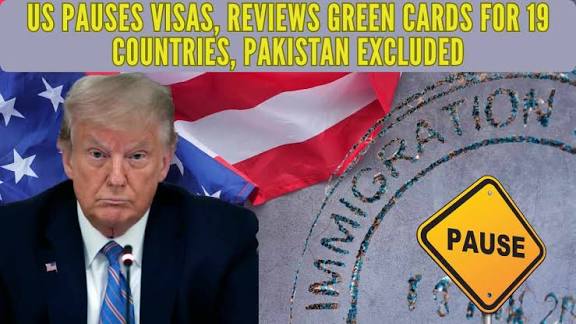
The US government announced that the issuance of visas to citizens of 19 countries has been suspended. Today we will discuss about US Visa Freeze Explodes: 19 Nations Hit Hard
US Visa Freeze Explodes: 19 Nations Hit Hard
In December 2025, the United States initiated one of the most sweeping immigration shutdowns in modern history. A policy that began earlier in the year as a selective travel restriction suddenly escalated into a full-scale freeze on immigration applications from 19 nations — affecting everything from student visas to green-card processing and even naturalization ceremonies.
This move stunned families, disrupted international education plans, halted asylum procedures, and sent shockwaves through the global immigration landscape. What was once a slow tightening of policy has now become an explosive freeze with massive humanitarian, economic, and geopolitical consequences.
This article offers a comprehensive breakdown of what happened, who is affected, why it occurred, and the far-reaching effects that will shape global mobility for years to come.
What Exactly Happened?
A Freeze That Goes Beyond Travel Bans
The immigration pause did not come out of nowhere. In June 2025, a presidential proclamation imposed visa restrictions on nationals from 19 countries — primarily in Africa, the Middle East, and parts of Latin America and Asia. These restrictions categorized the countries into two groups:
12 countries with a full suspension of most immigrant and non-immigrant visas.
7 countries with partial restrictions, affecting immigrant visas and certain non-immigrant categories such as student or visitor visas.
However, the situation escalated dramatically at the start of December 2025. U.S. immigration authorities announced that all immigration applications from citizens of these 19 countries would be paused, including:
Pending green-card approvals
Citizenship (naturalization) applications
Asylum requests
Visa renewals
Family-reunification cases
Student and work visas
Even applicants who had waited years, completed interviews, or were steps away from approval saw their cases abruptly frozen.
This was unprecedented — not a temporary slowdown, but a sweeping, indefinite halt.
The 19 Affected Countries
While the official government documents list them precisely, the general breakdown is:
Full Freeze Countries (12 nations)
Afghanistan, Burma (Myanmar), Chad, Republic of the Congo, Equatorial Guinea, Eritrea, Haiti, Iran, Libya, Somalia, Sudan, Yemen.
Partial Freeze Countries (7 nations)
Burundi, Cuba, Laos, Sierra Leone, Togo, Turkmenistan, Venezuela.
Together, these countries represent tens of thousands of active U.S. immigration cases — all now on hold.
Why Did the U.S. Freeze Immigration?
The Trigger: A Security Incident
Authorities justified the freeze by citing a high-profile security incident involving a fatal shooting in Washington, D.C., allegedly by an individual of Afghan origin. This event sparked immediate calls for enhanced vetting and national-security reviews.
In response, the administration ordered:
A re-review of all pending applications from nationals of the 19 countries.
Additional background checks.
Possible re-interviews for applicants who had completed their process.
Supporters argue that the government is prioritizing national security. Critics counter that the policy equates nationality with risk, punishing millions for the actions of one person.
Political Pressure and Immigration Hard-Lining
Beyond security concerns, the freeze aligns with a broader political strategy of restricting immigration from certain regions.
Supporters view it as a strong stance against perceived security threats.
Opponents see a discriminatory pattern aimed largely at non-Western nations, particularly those with lower GDP or ongoing conflicts.
The freeze effectively shifts U.S. immigration policy into mass nationality-based restriction, something rarely seen at this scale.
Who Is Hit the Hardest?
1. Immigrants Awaiting Green Cards
Thousands of families are now in limbo. Applicants who:
Completed biometric checks
Attended interviews
Were awaiting final approval
…have all had their cases frozen. Some had waited more than a decade. Now they face indefinite uncertainty.
2. Citizens Seeking Naturalization
Naturalization ceremonies have been canceled for applicants from the 19 countries — even those who have lived lawfully in the U.S. for years.
3. Students and Academics
Perhaps one of the biggest global consequences is on education:
Student visas are suspended for several nations.
Enrollment projections show dramatic drops.
Some universities are reporting millions in potential financial losses due to lost tuition revenue.
Many students already admitted for Spring 2026 may no longer be able to attend.
4. Refugees and Asylum Seekers
For individuals fleeing war, persecution, or political violence, the freeze is devastating.
Even existing asylum applications are now stalled. Humanitarian organizations warn that many people will be trapped in dangerous conditions, unable to seek lawful refuge in the U.S.
5. Families Struggling for Reunification
Spouses, children, and parents of U.S. citizens are among the hardest hit. Many had planned moves, sold homes, or left jobs in preparation for relocation — all now on indefinite hold.
Immediate Real-World Consequences
1. Canceled Interviews and Oath Ceremonies
Applicants report last-minute cancellations of:
Naturalization ceremonies
Green-card interviews
Consulate appointments abroad
Visa renewals
Some only learned of the cancellations upon arriving for their scheduled appointments.
2. International Education Disruption
Universities are bracing for a significant drop in enrollment from affected countries. Scholarships, research partnerships, and exchange programs are all at risk.
This could reshape global academic mobility — with students choosing friendlier destinations like Canada, the UK, Australia, or Germany.
3. Economic Shockwaves
The freeze has deeply disrupted:
Travel and tourism
Hospitality industries
Airlines dependent on Middle Eastern and African routes
Recruitment agencies
Nonprofit immigration-support organizations
The U.S. economy relies heavily on international visitors, students, and skilled workers — and many sectors are preparing for substantial losses.
4. Diplomatic Strain
Countries on the banned list have expressed anger and confusion. The decision threatens to strain relations, especially with nations already dealing with conflict or economic instability.
Criticism and Controversy
1. Accusations of Collective Punishment
Critics argue that the freeze treats entire nations as homogenous risks — ignoring individual histories, security checks, and personal merit.
Under U.S. immigration law, applicants already undergo extensive vetting. Freezing them without cause is seen by many as unfair and discriminatory.
2. Humanitarian Concerns
Refugee and asylum organizations warn that the freeze could endanger lives. Individuals escaping war or persecution now face stalled protections.
Some may be forced into unsafe migration routes, increasing risks of trafficking and violence.
3. Unpredictability and Chaos
Perhaps the most universally criticized aspect is the uncertainty:
No timeline for resumption
No clarity on processing
No guidance for applicants
No guarantees that completed steps remain valid
The unpredictability undermines trust in the system and destabilizes the long-term plans of families, students, and workers.
4. Potential Legal Challenges
Civil-rights groups and immigration lawyers are preparing lawsuits, arguing that:
Nationality-based bans violate constitutional equality principles
The freeze breaches due-process rights
Many applicants were near approval and should not be re-screened without cause
The legal battles could last months — or years.
Long-Term Implications
1. Global Migration Patterns Will Shift
The U.S. has traditionally been a global magnet for:
Highly skilled workers
Students
Refugees
Innovation-driven talent
Family-based migrants
The freeze jeopardizes that reputation.
Other countries with more predictable immigration systems are likely to attract talent the U.S. once benefited from.
2. Universities May Turn to Other Regions
If international students avoid the U.S. due to unpredictability or fear of bans, universities will pivot to recruit from countries not affected — or build stronger partnerships internationally.
3. Diplomatic and Geopolitical Consequences
Relationships with African, Middle Eastern, and Latin American nations may sour. Affected countries may retaliate by:
Imposing reciprocal restrictions
Reducing cooperation with U.S. initiatives
Strengthening alliances with rival global powers
Immigration policies often echo far beyond borders — creating long-term diplomatic ripple effects.
4. Domestic Political Impact
The freeze energizes certain political bases while provoking strong opposition from immigrant communities and human-rights advocates.
As a result, immigration is destined to become an even more contentious issue in upcoming political cycles.
What Should Affected Individuals Do?
1. Consult Qualified Immigration Attorneys
Many cases may still qualify for exemptions. Legal professionals can guide applicants through the fast-changing landscape.
2. Maintain Detailed Documentation
Applicants should preserve all:
Receipts
Approval notices
Communication records
Interview letters
Employment history
Travel records
These may be crucial when the freeze lifts.
3. Avoid Making Major Travel Commitments
Until further notice, applicants should postpone:
Major relocations
One-way flights
Housing changes
Job resignations
4. Monitor Official Government Announcements
Policy details are evolving. Staying informed through official channels is essential.
5. Universities and Employers Should Prepare
Institutions relying on international students or workers should:
Create contingency plans
Offer deferment options
Provide counseling support
Explore alternative recruitment pipelines
Ethical and Humanitarian Questions
The visa freeze raises major moral concerns:
Is nationality a fair basis for exclusion?
Many argue that individuals deserve evaluation based on personal merit, not broad categories.
Does this undermine refugee protection?
People fleeing war now face closed doors, despite meeting international criteria for refuge.
Does it harm American values?
The U.S. has long been seen as a beacon for opportunity, safety, and freedom. Critics say this freeze contradicts that legacy.
What precedent does this set?
If nationality determines immigration eligibility, other countries may adopt similar measures, leading to a fractured global mobility system.
The Road Ahead: Key Questions
Will the freeze be temporary — or long-term?
Will additional countries be added to the list?
Will courts intervene to stop or modify the policy?
Will exemptions be introduced for students, workers, or families?
How long will processing delays last?
Will the freeze deepen global inequality and migration divides?
The answers remain uncertain — and the consequences will be far-reaching.
Conclusion
The U.S. visa freeze affecting 19 nations represents a historic turning point in global migration. What began as a security measure has expanded into a sweeping shutdown that impacts students, families, workers, asylum seekers, and long-term residents.
Beyond the immediate disruption, this policy challenges foundational ideas about fairness, humanitarian responsibility, and the American identity as a nation of immigrants.
As the world watches and affected communities endure uncertainty, one thing is clear: the freeze will shape global mobility, U.S. immigration policy, and international relations for years to come.
How useful was this post?
Click on a star to rate it!
Average rating 0 / 5. Vote count: 0
No votes so far! Be the first to rate this post.
About the Author

usa5911.com
Administrator
Hi, I’m Gurdeep Singh, a professional content writer from India with over 3 years of experience in the field. I specialize in covering U.S. politics, delivering timely and engaging content tailored specifically for an American audience. Along with my dedicated team, we track and report on all the latest political trends, news, and in-depth analysis shaping the United States today. Our goal is to provide clear, factual, and compelling content that keeps readers informed and engaged with the ever-changing political landscape.