Submarine Strike : US torpedo sinks Iran warship, naval war surge
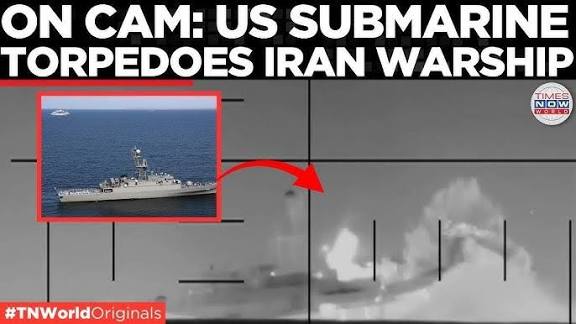
The modern battlefield is no longer limited to land or air. Beneath the world’s oceans, silent submarines can decide the fate of entire fleets. A dramatic new chapter in global naval warfare unfolded when a United States submarine launched a torpedo strike that sank the Iranian frigate IRIS Dena in the Indian Ocean.
The attack shocked the international community, as it marked the first time in decades that a U.S. submarine sank an enemy warship in combat. The incident has intensified tensions between Washington and Tehran and sparked fears of a broader maritime conflict.
This article explores what happened during the submarine strike, why the attack occurred, and how it could reshape naval warfare and global security.
The Submarine Strike That Changed the War
On March 4, 2026, a stealth attack by the U.S. Navy took place off the southern coast of Galle, deep in the Indian Ocean.
According to U.S. officials, a nuclear-powered attack submarine—USS Charlotte (SSN-766)—tracked an Iranian warship traveling through international waters. After confirming its identity, the submarine launched a heavy torpedo that struck the vessel below the waterline.
The target was IRIS Dena, a modern Iranian Navy frigate commissioned in 2021. The ship had recently participated in an international naval exercise in India before heading back toward Iran.
The torpedo detonated under the ship’s stern, causing catastrophic damage that quickly sank the vessel. Rescue operations later recovered dozens of bodies while some survivors were pulled from the water.
Iran later claimed that more than 100 sailors were killed in the attack.
Why the United States Launched the Strike
The submarine strike came amid escalating military tensions between the United States, Israel, and Iran.
In recent weeks, the region had seen missile attacks, drone strikes, and naval confrontations. The U.S. government argued that the Iranian navy was supporting hostile operations across the Middle East and threatening international shipping routes.
Officials described the torpedo attack as a preemptive military action intended to weaken Iran’s naval capabilities.
According to U.S. defense officials:
The warship was operating in a zone where hostilities were already underway.
Intelligence suggested it could support Iranian military actions.
Destroying the vessel would limit Iran’s ability to project naval power.
Critics, however, argue the ship may not have posed an immediate threat, sparking debate about whether the attack was legally justified under international law.
The Technology Behind the Attack
Submarines are among the most powerful stealth weapons in modern warfare. The strike on the Iranian frigate demonstrated the devastating effectiveness of underwater combat.
The weapon used was reportedly the Mark 48 torpedo, a high-tech torpedo designed to destroy large ships and submarines.
Key features of the Mark 48 torpedo include:
Advanced acoustic homing systems
High-speed propulsion
Massive explosive warhead
Ability to detonate beneath ships for maximum damage
The torpedo is designed to explode under a vessel, creating a massive pressure wave that can break the hull in half.
In the case of the Iranian frigate, the explosion reportedly tore through the ship’s rear section, causing rapid flooding.
A Historic Moment in Naval Warfare
Military analysts say the sinking of the Iranian warship represents a rare modern example of submarine-to-surface combat.
The last time a submarine sank an enemy surface vessel in wartime occurred during the Falklands War, when the British submarine ARA General Belgrano was sunk.
For the United States Navy, the incident is even more significant. It marks the first time an American submarine sank an enemy ship in combat since World War II.
Naval historians say this moment could signal a return to large-scale submarine warfare in modern conflicts.
Human Cost of the Attack
While military strategists discuss tactics and technology, the attack also had a severe human toll.
Rescue teams from Sri Lanka responded to distress calls from the sinking warship.
Reports indicate:
Dozens of sailors were rescued from the sea
Many crew members remained missing
Over 80 bodies were recovered during search operations
The Iranian government condemned the strike as an act of aggression and vowed retaliation.
Families of the sailors held funerals and memorial services across Iran, turning the incident into a powerful symbol of national mourning.
Expansion of the Naval War
The submarine strike did not occur in isolation. Instead, it reflects a wider escalation of the ongoing conflict.
Several developments have followed the sinking:
1. Increased Naval Deployments
Both the United States and Iran have expanded naval patrols in the Indian Ocean and Persian Gulf.
2. Threats to Shipping Routes
The conflict has already disrupted major maritime corridors, including the Strait of Hormuz.
This waterway carries roughly one-fifth of the world’s oil shipments.
3. Missile and Drone Strikes
Iran has reportedly launched retaliatory attacks using missiles and drones against military targets in the region.
These developments raise concerns that the conflict could spread across multiple regions.
Global Reactions to the Submarine Strike
Governments worldwide have reacted cautiously to the sinking of the Iranian warship.
United States
American officials defended the operation as a necessary military response to threats posed by Iranian forces.
Iran
Iran’s leadership condemned the attack and warned that retaliation could come in various forms.
International Community
Several countries urged restraint, fearing the conflict could spiral into a broader regional war.
Diplomatic discussions are now underway at international forums, including the United Nations.
Why Submarines Are Dominating Modern Naval Warfare
The submarine strike highlights why submarines remain one of the most feared weapons in naval combat.
Stealth
Submarines can remain hidden for weeks or months underwater.
Surprise
Enemies often cannot detect a submarine until it launches its attack.
Precision
Modern torpedoes and missiles allow submarines to strike targets hundreds of kilometers away.
Strategic Deterrence
Many submarines carry nuclear weapons, making them a central element of global deterrence strategies.
Because of these capabilities, naval analysts believe submarine warfare will play an increasingly important role in future conflicts.
Could This Trigger a Wider War?
The biggest question now facing global leaders is whether the submarine strike will trigger a broader war.
Several factors could determine the outcome:
Iran’s military response
The involvement of regional powers
Diplomatic negotiations
Control of critical shipping routes
Some experts warn the situation could escalate into a large-scale naval conflict across the Middle East and Indian Ocean.
Others believe diplomatic pressure may prevent further escalation.
Strategic Importance of the Indian Ocean
The location of the attack is also significant.
The Indian Ocean is one of the world’s most important maritime regions because it connects:
Europe
The Middle East
Asia
Africa
Major trade routes and energy shipments pass through these waters every day.
A conflict in this region could disrupt global trade and energy supplies.
What Happens Next?
The sinking of the Iranian frigate may mark only the beginning of a new phase in the conflict.
Military analysts are watching several developments closely:
Additional submarine deployments
Iranian naval responses
Possible attacks on shipping
Diplomatic negotiations
If tensions continue to escalate, naval confrontations could become more frequent.
Conclusion
The submarine strike that sank the Iranian warship represents one of the most dramatic naval incidents in recent years.
A stealth attack by a U.S. submarine destroyed IRIS Dena, killed dozens of sailors, and expanded the scope of an already volatile conflict.
Beyond the immediate tragedy, the event highlights the growing importance of submarine warfare in modern geopolitics.
Whether the incident becomes a turning point toward peace or a step toward wider war remains uncertain. What is clear is that the world’s oceans have once again become a critical battlefield.
FAQs
What happened in the submarine strike?
A U.S. Navy submarine fired a torpedo that sank the Iranian warship IRIS Dena in the Indian Ocean in March 2026.
Where did the attack occur?
The attack took place in international waters near Galle, Sri Lanka.
What weapon was used in the strike?
The submarine reportedly fired a Mark 48 heavyweight torpedo designed to destroy large ships.
How many people died in the attack?
Reports indicate that more than 80 sailors were killed, with some estimates exceeding 100.
Why did the United States attack the Iranian ship?
U.S. officials said the strike was part of military operations targeting Iranian forces during escalating regional conflict.
Is this the first submarine sinking in modern warfare?
It is the first time a U.S. submarine has sunk an enemy ship in combat since World War II.
How useful was this post?
Click on a star to rate it!
Average rating 0 / 5. Vote count: 0
No votes so far! Be the first to rate this post.
About the Author

usa5911.com
Administrator
Hi, I’m Gurdeep Singh, a professional content writer from India with over 3 years of experience in the field. I specialize in covering U.S. politics, delivering timely and engaging content tailored specifically for an American audience. Along with my dedicated team, we track and report on all the latest political trends, news, and in-depth analysis shaping the United States today. Our goal is to provide clear, factual, and compelling content that keeps readers informed and engaged with the ever-changing political landscape.