US Strikes Back Hard : Syria Bombed Again , Global Tensions Rise
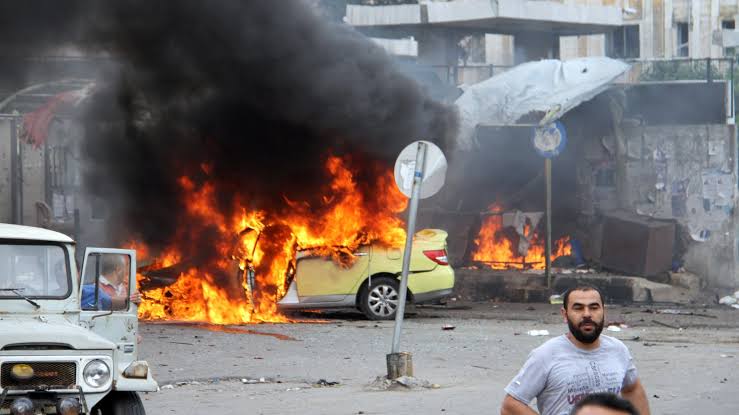
US says it struck dozens of targets across Syria in response to Islamic State’s deadly attack on US forces in Syria last week. Today we will discuss about US Strikes Back Hard : Syria Bombed Again , Global Tensions Rise
US Strikes Back Hard : Syria Bombed Again , Global Tensions Rise
The Middle East once again finds itself at the center of global attention as the United States launches fresh airstrikes in Syria, reigniting fears of wider conflict and escalating international tensions. The latest military action, carried out in mid-December 2025, marks one of the most forceful U.S. responses in the region in recent years and underscores Washington’s renewed readiness to use hard power in response to threats against its personnel and interests.
The strikes, aimed at militant targets linked to the Islamic State group, followed the killing of American troops in a deadly ambush. While U.S. officials described the operation as a necessary act of self-defense, critics around the world warned that the renewed bombing campaign risks destabilizing an already fragile region and drawing global powers into deeper confrontation.
As Syria remains scarred by more than a decade of war, the U.S. decision to strike again raises urgent questions about security, sovereignty, international law, and the future balance of power in the Middle East.
Why the US Struck Syria Again
The immediate trigger for the latest strikes was a deadly attack on U.S. forces operating in central Syria. American officials confirmed that two U.S. soldiers and a civilian interpreter were killed during an ambush attributed to Islamic State operatives. The attack was seen in Washington as a direct challenge to U.S. military presence and a reminder that extremist networks remain active despite years of counter-terrorism operations.
In response, the U.S. military launched a large-scale retaliatory operation targeting militant infrastructure, weapons depots, training camps, and command centers spread across multiple Syrian regions. Defense officials emphasized that the objective was not regime change or territorial control, but the degradation of militant capabilities that continue to threaten U.S. forces and regional stability.
The strikes were swift, intense, and carefully coordinated, signaling what U.S. leaders described as a clear message: attacks on American personnel will be met with overwhelming force.
Operation Overview: Scope and Firepower
The U.S. operation involved a wide range of military assets, including fighter jets, ground-attack aircraft, helicopters, and long-range rocket systems. Precision-guided munitions were used to strike dozens of locations believed to be linked to militant activity.
Military planners described the operation as one of the most concentrated anti-terror strikes in Syria in years. The scale of the bombardment was intended not only to neutralize immediate threats but also to disrupt militant networks that rely on mobility, secrecy, and desert terrain to survive.
According to U.S. officials, all targets were selected after extensive intelligence review, with the aim of minimizing civilian casualties. However, independent verification remains difficult due to restricted access to the affected areas.
Syria’s Complex Response
In a surprising turn, Syria’s current leadership did not strongly condemn the U.S. strikes. Instead, officials acknowledged the ongoing threat posed by extremist groups and reiterated their own commitment to combating terrorism.
This reaction reflects shifting political realities in Damascus following recent changes in leadership and alliances. While Syria has long opposed U.S. military operations on its soil, the continued presence of militant groups has created areas of overlapping interest between former adversaries.
Nevertheless, the issue of sovereignty remains sensitive. Many Syrians continue to view foreign military operations as violations of national independence, regardless of their stated objectives.
Global Reactions: Support, Condemnation, and Alarm
The international response to the U.S. strikes has been deeply divided.
Several Western allies expressed support for Washington’s right to defend its forces, emphasizing the persistent danger posed by extremist organizations. They framed the strikes as a legitimate counter-terrorism action rather than an escalation toward broader war.
In contrast, major global powers such as China and Iran sharply criticized the operation. They accused the United States of undermining international law and warned that unilateral military actions could destabilize the region further. Calls were made for restraint, dialogue, and greater reliance on diplomatic mechanisms.
At the United Nations, the strikes reignited long-standing debates over the legality of military interventions without explicit international authorization. Once again, the Security Council found itself divided, unable to reach consensus on how to address the unfolding crisis.
The Legal Debate: Self-Defense or Sovereignty Violation?
At the heart of the controversy lies a fundamental legal question: does the United States have the right to strike targets inside another sovereign country without its consent?
U.S. officials argue that the strikes fall under the inherent right of self-defense, especially when armed groups operating from foreign territory attack American forces. They maintain that international law allows such actions when there is an imminent or ongoing threat.
Critics counter that repeated military operations without clear international approval erode the foundations of global order. They warn that normalizing unilateral strikes could encourage other nations to bypass diplomacy and use force whenever they feel threatened.
This legal ambiguity has become a defining feature of modern conflicts involving non-state actors, where traditional rules of war struggle to keep pace with evolving security challenges.
Why Syria Still Matters Strategically
Despite years of war and shifting global priorities, Syria remains a crucial strategic arena.
Its geographic location places it at the crossroads of Middle Eastern power struggles, linking Iran, Iraq, Turkey, Israel, and Lebanon. Control and influence in Syria affect regional supply routes, security dynamics, and political alliances.
For the United States, maintaining a limited military presence in Syria is seen as essential to preventing a resurgence of extremist groups and countering rival influence. For adversaries, U.S. involvement represents continued interference in regional affairs.
The latest strikes highlight how Syria, even after years of devastation, remains a flashpoint capable of triggering international crises.
Risk of Wider Escalation
One of the greatest concerns following the U.S. strikes is the risk of escalation.
Militant groups may attempt retaliation through asymmetric attacks, targeting U.S. forces or allies elsewhere in the region. Regional powers could also become drawn into tit-for-tat confrontations, either directly or through proxy forces.
History shows that limited military actions can quickly spiral beyond their original scope, especially in environments crowded with armed actors and competing interests. Each strike, no matter how precise, carries the risk of miscalculation.
Global markets, already sensitive to geopolitical instability, reacted nervously to the news, reflecting fears that prolonged conflict could disrupt energy supplies and economic recovery.
Humanitarian Impact on the Ground
For ordinary Syrians, renewed bombing brings fear, displacement, and uncertainty.
Years of conflict have already destroyed infrastructure, crippled healthcare systems, and displaced millions. Any new military action, even when targeting militants, adds to the suffering of civilians who remain caught between armed forces.
Humanitarian organizations warn that continued instability makes reconstruction nearly impossible. Without lasting security, displaced families are unlikely to return, and aid efforts remain constrained by access and funding challenges.
The human cost of renewed violence often fades from headlines, but for those living in affected regions, its impact is immediate and enduring.
What This Means for US Foreign Policy
The strikes signal a broader shift in U.S. foreign policy tone.
After years of debate over military restraint and overseas commitments, Washington appears determined to reassert deterrence through decisive action. Officials have made it clear that attacks on American forces will not be tolerated, regardless of location.
However, balancing military strength with diplomatic engagement remains a challenge. Excessive reliance on force risks alienating partners, strengthening adversaries’ narratives, and entangling the U.S. in prolonged conflicts.
The Syria strikes may serve as a test case for how the United States navigates this balance in an increasingly multipolar world.
A World on Edge
The bombing of Syria once again underscores how interconnected global security has become. A single ambush in a remote region can trigger international reactions, diplomatic crises, and military responses felt far beyond national borders.
As tensions rise, the world watches closely to see whether restraint or retaliation will define the next chapter. The choices made by global powers in the coming weeks will shape not only the future of Syria but also the broader rules governing conflict in the modern era.
Conclusion: A Dangerous Moment with Lasting Consequences
The latest U.S. strikes in Syria represent more than a military response—they are a reflection of a world struggling to manage insecurity, terrorism, and power rivalry at the same time.
While Washington insists the operation was necessary and justified, the broader consequences remain uncertain. Each strike deepens divisions over international law, sovereignty, and the acceptable limits of force.
As Syria is bombed once again, global tensions rise, and the risk of wider confrontation grows. Whether this moment leads to renewed deterrence or deeper instability will depend on the actions taken next—by the United States, by its rivals, and by the international community as a whole.
How useful was this post?
Click on a star to rate it!
Average rating 0 / 5. Vote count: 0
No votes so far! Be the first to rate this post.
About the Author

usa5911.com
Administrator
Hi, I’m Gurdeep Singh, a professional content writer from India with over 3 years of experience in the field. I specialize in covering U.S. politics, delivering timely and engaging content tailored specifically for an American audience. Along with my dedicated team, we track and report on all the latest political trends, news, and in-depth analysis shaping the United States today. Our goal is to provide clear, factual, and compelling content that keeps readers informed and engaged with the ever-changing political landscape.