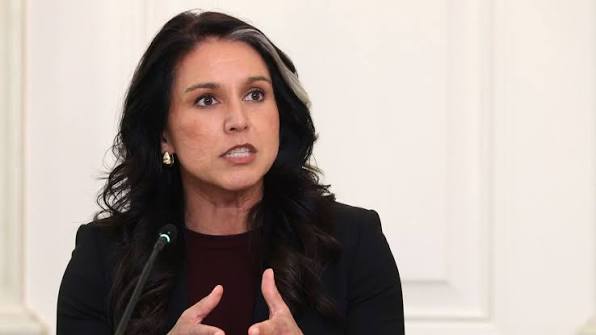
The national intelligence director said she facilitated a phone call from Trump to the agents carrying out a search warrant at the Fulton. Today we will discuss about Tulsi Gabbard : FBI Raid, Trump Request, Election Storm.
Tulsi Gabbard : FBI Raid, Trump Request, Election Storm
Introduction

The United States political landscape has been roiled by a fresh controversy involving Tulsi Gabbard, the Director of National Intelligence (DNI), her presence at a high-profile FBI raid, and a request from President Donald Trump that thrust her into the center of an ongoing election storm. What began as a routine federal search for potential election materials has snowballed into one of the most politically charged moments of 2026 — raising constitutional questions, congressional scrutiny, and intense public debate.
At the heart of the debate is Gabbard’s unusual participation in an FBI operation tied to claims about the 2020 presidential election — an episode that has sparked outrage, bipartisan concerns, and questions about the proper roles of national intelligence and domestic law enforcement. This article breaks down the facts, the reactions, and the broader implications for U.S. politics.
The FBI Raid in Fulton County: What Happened
Background of the Raid
In late January 2026, FBI agents executed a search warrant at the Fulton County Election Hub and Operation Centerin Georgia — a county known for its pivotal role in the 2020 presidential election. Federal authorities seized hundreds of boxes of documents, including ballots and election records, as part of a broader federal inquiry tied to allegations surrounding that highly contested election.
The warrant and raid itself were notable not only for their scope but for the political backdrop: former President Donald Trump has repeatedly pursued claims that the 2020 election was stolen, despite widespread rejection of those claims by judicial rulings, state certifications, and nonpartisan audits.
Gabbard’s Unusual Presence
What truly ignited the political firestorm was the presence of Tulsi Gabbard — the current Director of National Intelligence — at the scene of the FBI operation. Traditionally, the Office of the Director of National Intelligence (ODNI) focuses on foreign intelligence threats and cybersecurity, not domestic law enforcement.
In a letter to congressional leaders, Gabbard confirmed that President Donald Trump requested her presence at the raid, and that she attended for a brief period. She said she was observing the execution of the warrant and stressed that her actions were legally grounded in her mandate to safeguard election security, which includes counterintelligence and other threats.
Gabbard also acknowledged facilitating a brief phone call between Trump and FBI agents at the Atlanta field office — a move that legal experts described as unconventional, given the separation between the executive branch and active law enforcement actions.
Why Gabbard’s Role Is Controversial
Domestic Law Enforcement vs. Intelligence
The crux of the controversy lies in the role expectations for someone in Gabbard’s position. Traditionally, the DNI’s primary focus is on foreign intelligence — threats emanating from outside the U.S. — and not a domestic criminal investigation led by the FBI.
Lawmakers from both parties noted that her participation in a domestic search, especially one grounded in politically sensitive terrain like a 2020 election probe, was highly unusual and arguably outside the normal scope of ODNI functions. Critics argue that this blurs the lines between domestic law enforcement and intelligence oversight — raising questions about legal authority and potential overreach.
Political and Legal Reactions
Democratic Pushback
Several Democratic lawmakers, particularly from Georgia, where the raid occurred, expressed strong concern. They have called for formal inquiries into Gabbard’s presence, questioning whether a legitimate foreign intelligence threat justified her involvement in a domestic operation.
Senator Raphael Warnock and others demanded a congressional briefing to explain why an intelligence official would be at a federal search of an election office. They also highlighted broader concerns about what they view as the politicization of federal authority.
Legal Experts Weigh In
Some legal analysts have underscored that Gabbard’s statutory authority to safeguard election “security” could extend to issues like vulnerabilities in electronic voting systems, foreign influence, and cybersecurity — but that does not normally justify direct involvement in an active FBI raid.
This legal gray area has been a flashpoint among constitutional scholars, with some arguing that this sets a potentially dangerous precedent for mixing political directives with national security and law enforcement operations. Others say the optics, at the very least, demand clearer guidance from Congress or the courts.
Trump’s Request and Presidential Involvement
President Donald Trump has defended Gabbard’s presence, framing it as part of an effort to “keep the election safe” and secure against both foreign and domestic threats. According to some sources, the president specifically directed Gabbard to attend the raid — a command she relayed in her letter to lawmakers.
This presidential involvement has fueled debate about the broader political context. Republicans aligned with Trump have lauded Gabbard’s efforts as part of heightened election security measures. Meanwhile, Democrats view it as political manipulation of federal agencies tied to unfounded election fraud claims.
Broader Implications for U.S. Elections
Election Integrity and Public Trust
The episode has intensified national discourse around election integrity — a subject already divisive following years of debate rooted in the 2020 outcome. For many voters, Gabbard’s participation in an FBI action against voter records could erode confidence in nonpartisan institutions that oversee elections and law enforcement.
The controversy has also brought fresh scrutiny to claims that the 2020 election was fraudulent — narratives that courts, state officials, and electoral audits have consistently dismissed.
Congressional Oversight and Accountability
Gabbard’s actions have prompted calls from lawmakers on both sides of the aisle for increased oversight. Some Democrats have urged investigations into whether her involvement overstepped legal boundaries or politicized national security roles.
At the same time, Republicans supportive of Gabbard are pushing for broader inspections of election security vulnerabilities — arguing that federal intelligence and law enforcement should collaborate more intensely in safeguarding election infrastructure. These political tensions reflect a deeper divide over how elections should be protected and who should lead those efforts.
Public Reaction and the Media Narrative
The media landscape has responded with intense coverage, ranging from straight reporting of facts to more partisan interpretations. Outlets focused on legal norms questioned the appropriateness of Gabbard’s role; others supportive of Trump framed her presence as a proactive measure against perceived threats to election integrity.
On social media and forums, commentary has spanned the full spectrum — from staunch defense of government transparency to sharp criticism of both Trump and Gabbard’s approaches. While many discussions veer into opinion and speculation, the core facts — Gabbard’s attendance at the raid and the ensuing political dispute — remain central to any accurate account.
Looking Ahead: What Comes Next?
As Congress intensifies hearings and public scrutiny grows, several potential outcomes loom:
Congressional Briefings: Lawmakers may demand testimony from Gabbard to clarify the scope and legality of her role.
Formal Inquiries: Some Republicans and Democrats alike have intimated that formal investigations into election security protocols and ODNI authority might be necessary.
Judicial Review: Given the constitutional questions raised, courts could eventually weigh in on whether Gabbard’s actions were within legal bounds.
One thing is certain: this episode will likely influence how federal agencies, intelligence authorities, and election officials interact — particularly when high-stakes political narratives are at play.
Frequently Asked Questions (FAQs)
1. Why was Tulsi Gabbard present at the FBI raid?
Tulsi Gabbard said she attended the Fulton County FBI search at the request of President Trump and that her presence was justified under her authority to coordinate election security intelligence.
2. What was the FBI searching for in Fulton County?
Federal agents executed a warrant to seize election records and related documents tied to inquiries about the 2020 presidential election in Georgia.
3. Is Gabbard’s role normal for the Director of National Intelligence?
No. Gabbard’s involvement in a domestic law enforcement action is unprecedented and has raised questions about the traditional separation between intelligence and law enforcement duties.
4. What legal concerns have been raised?
Legal experts have expressed concern about mixing intelligence roles with active FBI operations, which traditionally fall under the Department of Justice and FBI jurisdiction.
5. What are the political implications of this episode?
The incident has heightened partisan tensions over election integrity, federal authority, and the proper roles of intelligence and law enforcement agencies, potentially shaping future oversight and policy debates.
About the Author