TSA Chaos : airport security lines surge, US travel de
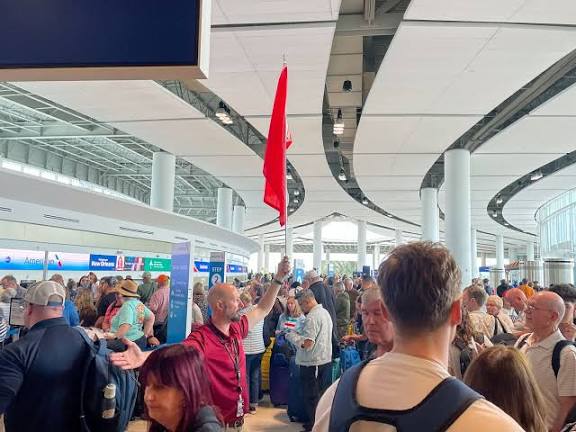
Airport travel across the United States has entered a turbulent phase as Transportation Security Administration (TSA) checkpoints experience record delays. From Houston to New Orleans and Atlanta, travelers are reporting security lines stretching for hours, missed flights, and overcrowded terminals.
The situation—now widely described as “TSA chaos”—has emerged due to a combination of factors including staff shortages, a partial government shutdown, rising passenger numbers, and the spring break travel surge.
Reports from multiple U.S. airports show wait times exceeding two to three hours, forcing travelers to arrive far earlier than usual to avoid missing their flights.
This growing crisis has sparked debate among airlines, lawmakers, and airport authorities about the future of airport security operations in the United States.
TSA Chaos at U.S. Airports: What’s Happening?
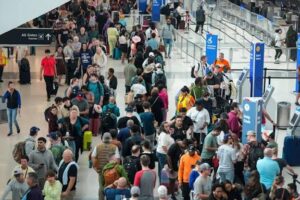
The current wave of delays has taken many travelers by surprise. Airports that usually handle heavy traffic smoothly are now facing unprecedented security bottlenecks.
At Houston’s William P. Hobby Airport, security lines reportedly stretched up to three hours, with crowds extending outside the terminal building.
Meanwhile, airports such as New Orleans’ Louis Armstrong International Airport experienced similar congestion, leaving passengers stranded in lines and scrambling to reschedule flights.
Travelers across the country described the scene as chaotic:
Long lines snaking through terminals
Families waiting hours before flights
Delayed boarding times
Passengers missing departures despite arriving early
The situation has forced airports and airlines to issue urgent advisories urging passengers to arrive three to four hours before departure.
The Government Shutdown Behind the Crisis
One of the primary causes of the TSA chaos is the partial shutdown of the U.S. Department of Homeland Security (DHS).
The shutdown began in mid-February after lawmakers failed to reach a funding agreement related to immigration policy and border security legislation.
Because the TSA operates under DHS, the shutdown directly affects airport security operations.
Impact on TSA Workers
During the shutdown:
Thousands of TSA agents are working without pay
Staff absenteeism has increased
Some screening lanes have been closed due to lack of personnel
Reports indicate that over 61,000 TSA agents have missed paychecks, creating financial pressure and morale problems within the workforce.
As absentee rates rise, fewer officers are available to screen passengers, leading to longer queues and slower processing.
Spring Break Travel Surge Worsens TSA Lines
The timing of the shutdown could not have been worse.
Spring break travel has pushed airport passenger numbers to seasonal highs. Airlines estimate over 170 million travelers are expected to pass through U.S. airports during this period—around 4% more than last year.
Higher passenger volume combined with fewer TSA officers has created the perfect storm.
Typical airport security wait times normally range between 15 and 30 minutes, but during peak travel periods they can exceed an hour.
In the current crisis, wait times have stretched far beyond that range.
Airports Hit Hardest by TSA Chaos
While delays are affecting airports nationwide, some locations are experiencing particularly severe disruptions.
1. Houston Hobby Airport
Houston’s secondary airport has become the epicenter of the TSA crisis.
Passengers reported waiting three hours or more just to reach security checkpoints.
2. New Orleans Airport
Security delays of up to two hours were reported during the travel surge.
3. Hartsfield-Jackson Atlanta International Airport
One of the world’s busiest airports has also experienced long lines due to staff shortages.
4. Charlotte Douglas International Airport
Passengers reported extended waits during peak travel hours.
However, not all airports are struggling. Some smaller airports such as San Antonio International Airport have reported wait times under 10 minutes, highlighting how staffing levels and passenger volumes differ across regions.
How TSA PreCheck Is Helping Some Travelers
One of the few bright spots amid the chaos is the TSA PreCheck program, which allows pre-approved travelers to pass through expedited security lanes.
Passengers enrolled in PreCheck often experience dramatically shorter wait times because they do not have to:
Remove shoes
Remove laptops from bags
Remove light jackets
At airports experiencing long lines, PreCheck wait times were reportedly as low as nine minutes, offering relief to frequent travelers.
However, enrollment in expedited programs remains relatively limited compared with overall passenger numbers, meaning the majority of travelers still rely on standard security lanes.
Why TSA Lines Are So Long
Several underlying factors contribute to long security lines even outside shutdown periods.
1. Rising Passenger Numbers
Air travel demand continues to increase every year, with millions more Americans flying annually.
2. Staffing Shortages
Fewer security officers mean slower processing times and closed screening lanes.
3. More Carry-On Luggage
Because airlines charge fees for checked baggage, many passengers bring larger carry-on bags, which require additional scanning and inspections.
4. Enhanced Security Procedures
Stricter screening measures can slow down passenger throughput.
Combined, these factors often create bottlenecks even during normal travel periods.
Airlines and Industry Groups Sound the Alarm
Airlines and industry groups are urging the federal government to resolve the shutdown quickly.
The trade association Airlines for America warned that prolonged delays could disrupt the entire aviation system and damage traveler confidence.
Airlines are already dealing with:
Increased flight delays
Passenger complaints
Operational costs from rebooking travelers
Industry leaders say prolonged TSA chaos could impact tourism, airline profits, and airport operations.
Economic Impact of Airport Security Delays
Airport delays don’t just inconvenience passengers—they also carry major economic consequences.
Tourism Losses
Travel disruptions discourage both domestic and international tourists.
Airline Costs
Airlines must compensate passengers for delays and missed connections.
Airport Revenue Decline
Passengers stuck in security lines spend less time shopping or dining inside terminals.
Previous government shutdowns have cost the travel industry billions of dollars, highlighting how sensitive the aviation sector is to operational disruptions.
What Travelers Should Do During TSA Chaos
If you are traveling through U.S. airports during this period, experts recommend several strategies.
1. Arrive Earlier Than Usual
Airports are advising passengers to arrive three to four hours before departure.
2. Enroll in TSA PreCheck
Frequent travelers may benefit from faster screening lanes.
3. Check Airport Wait Times
Many airports publish real-time security wait times online.
4. Travel During Off-Peak Hours
Early morning or late evening flights often have shorter lines.
5. Pack Smart
Organizing electronics and liquids ahead of time can speed up screening.
Could the TSA Crisis Get Worse?
Unfortunately, aviation experts warn that conditions could deteriorate further if the government shutdown continues.
Longer shutdowns historically lead to:
Increased worker absenteeism
Reduced morale among federal employees
Operational disruptions across airports
Security delays could also worsen as summer travel season approaches, traditionally the busiest period for U.S. aviation.
Without a political agreement in Washington, travelers may face ongoing disruptions for weeks or even months.
The Future of Airport Security in the U.S.
The current crisis has sparked renewed debate about how airport security should be managed.
Some policymakers argue for:
Increasing TSA staffing levels
Expanding automated security technology
Allowing private security contractors at more airports
Expanding trusted traveler programs
Others say the crisis demonstrates the need for long-term funding stability for aviation security operations.
As air travel demand continues to rise, experts believe the United States must modernize its airport infrastructure to avoid future crises.
Conclusion
The recent surge in airport security delays highlights the fragile balance between air travel demand, government funding, and security staffing.
With a partial DHS shutdown, rising passenger numbers, and staff shortages, the U.S. aviation system is facing one of its most challenging periods in years.
For travelers, the reality is simple: airport security lines may remain long until the political and operational issues behind the TSA chaos are resolved.
Until then, planning ahead and arriving early remain the best strategies for navigating the turbulent travel environment.
FAQs
What is causing TSA chaos at U.S. airports?
The main causes include a Department of Homeland Security funding shutdown, TSA staffing shortages, and a surge in spring break travel.
How long are TSA wait times right now?
At some major airports, security wait times have reached two to three hours, significantly longer than the typical 15–30 minute average.
Which airports are experiencing the worst delays?
Houston Hobby Airport, New Orleans Airport, Atlanta, and Charlotte have reported some of the longest security lines.
Can TSA PreCheck help avoid long lines?
Yes. Travelers enrolled in TSA PreCheck often use expedited lanes and experience much shorter wait times.
How early should I arrive at the airport during TSA delays?
Airport officials recommend arriving three to four hours before your flight during peak travel periods.
How useful was this post?
Click on a star to rate it!
Average rating 0 / 5. Vote count: 0
No votes so far! Be the first to rate this post.
About the Author

usa5911.com
Administrator
Hi, I’m Gurdeep Singh, a professional content writer from India with over 3 years of experience in the field. I specialize in covering U.S. politics, delivering timely and engaging content tailored specifically for an American audience. Along with my dedicated team, we track and report on all the latest political trends, news, and in-depth analysis shaping the United States today. Our goal is to provide clear, factual, and compelling content that keeps readers informed and engaged with the ever-changing political landscape.