TRUMP’S REVENGE: Colorado Water Cut Off, Veto Punishes State Over Tina Peters Case
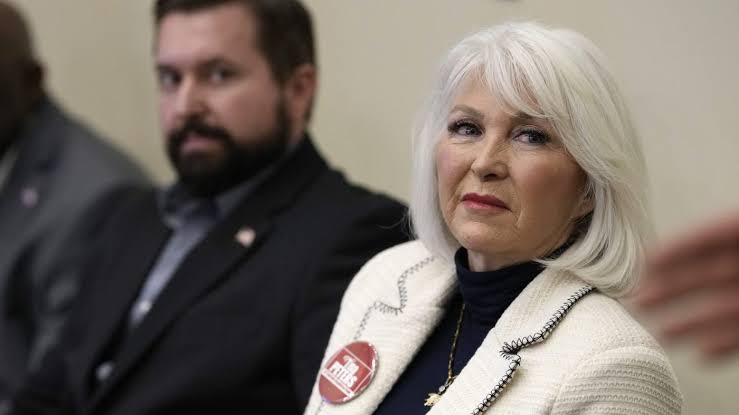
The title refers to recent events where President Trump vetoed funding for Colorado’s Arkansas Valley Conduit, a major water project. Today we will discuss about TRUMP’S REVENGE: Colorado Water Cut Off, Veto Punishes State Over Tina Peters Case
TRUMP’S REVENGE: Colorado Water Cut Off, Veto Punishes State Over Tina Peters Case
In a dramatic and highly controversial political decision, President Donald J. Trump has vetoed a bipartisan water infrastructure bill meant to deliver clean drinking water to dozens of rural Colorado communities. The move has ignited a national debate, with critics accusing Trump of using federal power as a tool of political retaliation. At the heart of the controversy lies the ongoing legal saga of Tina Peters, a former Colorado elections official whose imprisonment has become a rallying point for Trump and his supporters.
The veto has not only delayed a vital public-health project but has also intensified tensions between the federal government and the state of Colorado, raising profound questions about federalism, executive authority, and the politicization of essential infrastructure.
The Veto That Shocked Colorado

On December 30, President Trump vetoed the Finish the Arkansas Valley Conduit Act, legislation that had passed both chambers of Congress with strong bipartisan backing. The bill was designed to complete the Arkansas Valley Conduit, a long-planned water pipeline project intended to supply clean, treated drinking water to 39 rural communities in southeastern Colorado.
Many of these communities currently rely on groundwater sources that contain high levels of salinity and other contaminants. For residents, the pipeline represented not just convenience, but safety, health, and economic survival.
Trump justified his veto by citing concerns about federal spending and taxpayer burden. However, the timing and political context of the decision immediately sparked accusations that the veto was less about fiscal responsibility and more about political punishment.
Why the Arkansas Valley Conduit Matters
The Arkansas Valley Conduit has been discussed for decades as a solution to chronic water quality issues in southeastern Colorado. Construction began in phases, but federal support was crucial to completing the full pipeline system.
If completed, the project would:
Deliver safe drinking water to thousands of residents
Reduce long-term health risks from contaminated water
Support agriculture and livestock operations
Strengthen local economies in rural areas
Provide resilience during drought conditions
Local officials argue that delaying or halting the project puts lives and livelihoods at risk. For them, the veto is not an abstract political act — it is a tangible setback with real-world consequences.
The Tina Peters Case: A Political Flashpoint
The veto cannot be separated from the broader political backdrop, particularly Trump’s vocal support for Tina Peters, a former county elections clerk in Colorado.
Who Is Tina Peters?
Tina Peters gained national attention after she was accused of facilitating unauthorized access to election equipment following the 2020 presidential election. Prosecutors argued that she enabled breaches of secure voting systems and mishandled sensitive election data.
A Colorado jury later convicted Peters on multiple state charges, including election equipment tampering. She was sentenced to nine years in state prison, a punishment that Trump and his allies have repeatedly described as excessive and politically motivated.
To Trump’s supporters, Peters is a whistleblower and a victim of partisan persecution. To Colorado officials and election security experts, she represents a clear violation of election integrity laws.
Trump’s Pardon Claim and Legal Limits
In December, Trump announced that he had issued a full pardon for Tina Peters. However, Colorado officials quickly responded that presidential pardons do not apply to state-level convictions, making the gesture legally unenforceable.
Despite this, Peters’ legal team has filed motions seeking her release, arguing that the pardon should carry constitutional weight or force federal intervention. Legal experts widely regard this argument as weak, noting that presidential pardon power has historically been limited to federal crimes.
The dispute has created a constitutional standoff, with Trump framing the issue as federal injustice and Colorado asserting its authority to enforce state law without interference from Washington.
Accusations of Political Retaliation
Critics argue that Trump’s veto of the water bill is a form of revenge politics — punishment aimed at Colorado for refusing to release Tina Peters or recognize Trump’s claimed pardon.
Colorado lawmakers, including members of both parties, have publicly condemned the veto. They argue that tying essential infrastructure funding to an unrelated criminal case sets a dangerous precedent.
Some lawmakers have described the veto as:
An abuse of executive power
A threat to cooperative federal-state governance
A politicization of public health infrastructure
Trump’s allies reject these accusations, insisting that the veto reflects legitimate budgetary priorities and a commitment to exposing what they see as injustice within the legal system.
Federal Power vs State Authority
The controversy has reignited long-standing debates about the balance of power between the federal government and the states.
Infrastructure as Leverage
Using federal funding as leverage over state actions is not new, but critics warn that linking infrastructure dollars to political loyalty or legal outcomes could erode trust between states and Washington.
If federal resources can be withheld to influence state criminal justice decisions, opponents argue, it could fundamentally alter the nature of American federalism.
Limits of Presidential Authority
The Tina Peters pardon dispute also highlights the legal boundaries of presidential power. While the Constitution grants the president authority to issue pardons, that power has traditionally stopped at federal offenses.
Courts may eventually be forced to clarify whether any extraordinary circumstances allow federal intervention in state convictions — though most legal scholars believe such a ruling is unlikely.
Impact on Colorado Communities
For residents of southeastern Colorado, the political battle feels distant but deeply personal.
Many communities affected by the veto are small, rural, and economically vulnerable. For them, access to clean water is not a political statement — it is a basic necessity.
Local leaders warn that continued delays could:
Increase public health risks
Raise household water costs
Discourage business investment
Accelerate population decline in rural areas
The sense of being caught in the crossfire of national politics has fueled frustration and resentment among residents who feel their needs are being sacrificed for ideological battles.
Can Congress Override the Veto?
Overriding a presidential veto requires a two-thirds majority in both the House and the Senate — a high bar that is rarely met.
Although the water bill originally enjoyed bipartisan support, political realities make an override uncertain. Some lawmakers are reluctant to challenge Trump directly, while others fear escalating tensions between the White House and the states.
If the veto stands, Colorado may be forced to seek alternative funding sources, scale back the project, or delay completion indefinitely.
A Broader Political Strategy?
Observers note that Trump’s actions fit into a broader pattern of confrontational governance. By positioning himself as a defender of those he claims are victims of political persecution, Trump continues to energize his base while forcing opponents into defensive positions.
The Colorado water veto sends a clear signal: resistance to Trump’s demands may come at a cost. Whether this strategy strengthens or weakens his political standing remains an open question.
The Road Ahead
As legal battles over Tina Peters continue and Colorado scrambles to protect its water infrastructure plans, the situation remains fluid.
Several possible outcomes lie ahead:
Courts reject all efforts to apply the pardon to Peters’ state conviction
Congress attempts, but fails, to override the veto
Colorado seeks alternative funding or legal remedies
The dispute escalates into a broader constitutional confrontation
What is clear is that the consequences of this decision extend far beyond a single water project or criminal case.
Conclusion: Power, Punishment, and Precedent
The veto of Colorado’s water funding has transformed a routine infrastructure bill into a symbol of modern American political conflict. It reflects a growing trend where policy decisions are inseparable from personal, legal, and ideological battles.
For Colorado, the immediate concern is clean water. For the nation, the larger issue is whether essential public resources can be weaponized in political disputes.
As the struggle between Trump, Colorado officials, and the courts continues, one thing is certain: TRUMP’S REVENGE is no longer just a headline — it is a case study in how power is exercised, challenged, and contested in America today.
How useful was this post?
Click on a star to rate it!
Average rating 0 / 5. Vote count: 0
No votes so far! Be the first to rate this post.
About the Author

usa5911.com
Administrator
Hi, I’m Gurdeep Singh, a professional content writer from India with over 3 years of experience in the field. I specialize in covering U.S. politics, delivering timely and engaging content tailored specifically for an American audience. Along with my dedicated team, we track and report on all the latest political trends, news, and in-depth analysis shaping the United States today. Our goal is to provide clear, factual, and compelling content that keeps readers informed and engaged with the ever-changing political landscape.