Trump Zelenskyy talks explode : 20‑point peace plan, Donbas dispute, US pressure
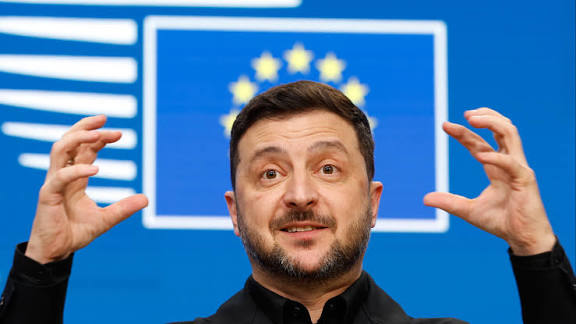
Zelensky told reporters on Friday that the 20-point draft proposal discussed by negotiators is “about 90% ready” – a figure shows. Today we will discuss about Trump Zelenskyy talks explode : 20‑point peace plan, Donbas dispute, US pressure
Trump Zelenskyy talks explode : 20‑point peace plan, Donbas dispute, US pressure
In late December 2025, global attention turned to Florida, where U.S. President Donald Trump and Ukrainian President Volodymyr Zelenskyy met for high-stakes peace negotiations aimed at ending nearly four years of devastating conflict between Ukraine and Russia. The meeting — rooted in a contentious and evolving peace proposal — has rapidly become one of the most polarizing diplomatic episodes in the war’s recent history. At the heart of this drama are three central themes:
The emerging 20‑point peace plan, a U.S.-backed framework to halt the war,
Territorial disputes over the Donbas region, and
Growing U.S. pressure on Kyiv to accept terms that many in Ukraine view as compromising sovereignty.
What appeared to be another routine diplomatic engagement has instead exploded into controversy, shaping global strategic alignments and testing the resilience of Western support for Ukraine.
Origins of the Trump‑Zelenskyy Talks
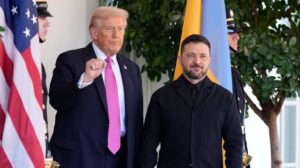
As the Russia-Ukraine war entered its fourth year, both sides faced stagnation on the battlefield and dwindling war appetite among Western audiences. In response, Washington began pushing for a negotiated end, proposing a comprehensive peace framework. Initial meetings between U.S. envoys and Ukrainian officials produced a controversial draft plan, widely criticized in Kyiv and Europe for favoring Russian territorial interests. Ukrainian negotiators then edited this draft, ultimately settling on a 20‑point peace proposal they present as fairer and more practical.
President Trump’s office described the document as a possible foundation for peace, with elements reminiscent of security guarantees and ceasefire mechanisms. Still, the plan’s reception has been uneven, polarized, and fraught with diplomatic pitfalls.
What Is the 20‑Point Peace Plan?
The revised 20‑point peace plan represents the latest effort by U.S. mediators and Ukrainian officials to construct a viable roadmap to end the war. Although full text has not been publicly released, reporting reveals core concepts:
Key Proposals Under Discussion
Ceasefire and freeze of active hostilities along current battle lines.
Security guarantees for Ukraine, potentially modeled on NATO’s Article 5, which would commit partners to collective defense in the event of renewed aggression.
Demilitarized zones or buffer regions in contested areas, particularly in parts of eastern Ukraine including Donbas, as mechanisms to reduce frontline violence.
Prisoner exchanges, humanitarian access, and reconstruction financing.
International oversight and peacekeeping mechanisms where necessary.
Economic recovery plans for war-torn regions.
This new plan emerged after weeks of negotiation and significant criticism of the original draft, which had called for broader Ukrainian concessions, including limits on its military and restrictions on NATO aspirations — elements now removed or softened in the 20‑point version.
Supporters of the plan argue that it could finally open a door to negotiating with Moscow, creating a ceasefire framework that preserves Ukraine’s statehood and offers binding security guarantees. Critics, however, emphasize that without clear enforcement mechanisms or Russia’s formal buy-in, the proposal may amount to little more than a diplomatic paper exercise.
Donbas: The Central Dispute
The Donbas region — comprising Donetsk and Luhansk provinces — has been the war’s most bitterly contested territory since 2014. Russia claims sovereign rights over the area, demanding recognition of full control. Ukraine insists on territorial integrity and rejects any notion of ceding sovereign land without broad political consent.
Even within the 20‑point peace proposal, Donbas continues to be the thorniest issue, with opposing visions:
Russia’s Position
Moscow continues to demand recognition of its annexation claims and Ukrainian withdrawal from vast swathes of the urban Donbas heartland. This position has been central to Russian negotiating strategy and reflects broader territorial ambitions in eastern Ukraine.
Ukraine’s Position
Zelenskyy has consistently insisted Ukraine will not give up territory as part of any peace deal. He emphasizes that it would be illegal under Ukrainian constitutional law, morally indefensible, and politically unacceptable to the Ukrainian people.
U.S. and Western Proposals
The United States has floated compromise concepts, such as establishing a demilitarized economic zone in parts of Donbas. In this scenario, Ukrainian troops would pull back, and the territory would be neutralized under international monitoring, but Ukraine would retain legal sovereignty. While intended as middle ground, this approach has drawn skepticism — especially among Ukrainians who fear it could ultimately benefit Russian interests.
Beyond these regional disputes, control of the Zaporizhzhia nuclear power plant and surrounding territories has emerged as another sensitive flashpoint.
Intensifying U.S. Pressure and Diplomatic Strains
A defining feature of these talks has been growing pressure from the United States on Ukraine to accept specific terms of the peace framework — pressure that Kyiv perceives as disproportionate compared to U.S. engagement with Moscow.
Allegations of Unequal Pressure
Ukrainian officials have suggested that the U.S. has leaned harder on Zelenskyy to accept elements perceived as favoring Russian interests. Trump himself has publicly underscored his central role in finalizing any deal. He asserted that nothing will be agreed upon unless he personally approves it, effectively reinforcing his position as the ultimate arbiter.
Tensions Between Leaders
In media appearances, Trump appeared publicly impatient with Zelenskyy, at one point suggesting the Ukrainian leader had not even read the peace proposal despite its importance to the process. This was seen as a stark diplomatic rebuke.
Meanwhile, Zelenskyy has sought to rally broader international support to counterbalance pressure from Washington. He has highlighted Europe’s role and emphasized that any territorial discussions must reflect Ukrainian democratic consent — including possible referenda.
Russia’s Role and Response
Despite the U.S. and Ukrainian efforts, Moscow’s engagement with the 20‑point plan has been lukewarm at best. Russia has not publicly approved the latest proposal and remains committed to its maximalist territorial demands. Russian forces have also continued military operations — including renewed missile and drone assaults around Kyiv — signaling that Moscow sees strategic value in maintaining pressure amid diplomacy.
Some analysts argue that Russia’s low engagement in these talks is intentional; by staying on the sidelines while the West negotiates with Ukraine, Moscow may be attempting to divide its adversaries and weaken Ukraine’s international backing.
European Allies and Global Reactions
Europe remains a critical but cautious partner. Leaders in London, Paris, and Berlin have repeatedly emphasized the need for any peace agreement to prioritize Ukrainian sovereignty and comprehensive security guarantees. They have also called on the U.S. to ensure that concessions do not undermine Ukraine’s strategic position.
Recent European measures include enhanced sanctions targeting Russia, additional military aid to Kyiv, and diplomatic engagement to keep the peace process anchored in international law.
While European and Ukrainian interlocutors broadly agree that peace is essential, there is significant skepticism around the details of the U.S.-backed peace framework — especially concerning territorial concessions and the security guarantee mechanisms.
Public Opinion and Ukrainian Sentiment
Within Ukraine itself, attitudes toward the peace negotiations are divided but generally skeptical of territorial compromise. Many Ukrainians view any suggestion of letting go of Donbas or limiting NATO aspirations as unacceptable given the massive human and material costs of the war.
Public referenda — already discussed by Zelenskyy as a means of legitimizing decisions — reflect a broader desire to ensure that Ukrainian voices guide any final settlement.
What’s at Stake
The Trump‑Zelenskyy talks have significant implications:
For Ukraine
Continued sovereignty and territorial integrity.
The shape of future security guarantees.
Public opinion and political legitimacy for the Zelenskyy administration.
For the United States
Leadership credibility on international peace efforts.
Its role as a mediator between conflicting global powers.
Long-term strategic relationships with Ukraine and NATO allies.
For Russia
Territorial gains and influence over eastern Ukraine.
Strategic leverage in global diplomacy.
Ability to exploit divisions between the U.S., Europe, and Ukraine.
Conclusion: A Precarious Path to Peace
The Trump‑Zelenskyy peace discussions — centered around the evolving 20‑point plan — have exposed deep disagreements on territorial boundaries, security frameworks, and international pressure dynamics. Ukraine remains firmly opposed to ceding territory, while the United States seeks compromises that can secure a ceasefire but risk appearing to yield to Russian demands. Moscow, for its part, continues military operations with limited diplomatic concessions.
As the world watches, the outcome of this diplomatic crisis could redefine the future of Eastern Europe, NATO’s posture, and global norms on sovereignty and conflict resolution. Peace may be the explicit goal, but without careful balance, the talks could just as easily deepen the war’s fractures as end them.
How useful was this post?
Click on a star to rate it!
Average rating 0 / 5. Vote count: 0
No votes so far! Be the first to rate this post.
About the Author

usa5911.com
Administrator
Hi, I’m Gurdeep Singh, a professional content writer from India with over 3 years of experience in the field. I specialize in covering U.S. politics, delivering timely and engaging content tailored specifically for an American audience. Along with my dedicated team, we track and report on all the latest political trends, news, and in-depth analysis shaping the United States today. Our goal is to provide clear, factual, and compelling content that keeps readers informed and engaged with the ever-changing political landscape.