Trump Sues BBC for $10B, Jan. 6 Drama, Media War Ignites
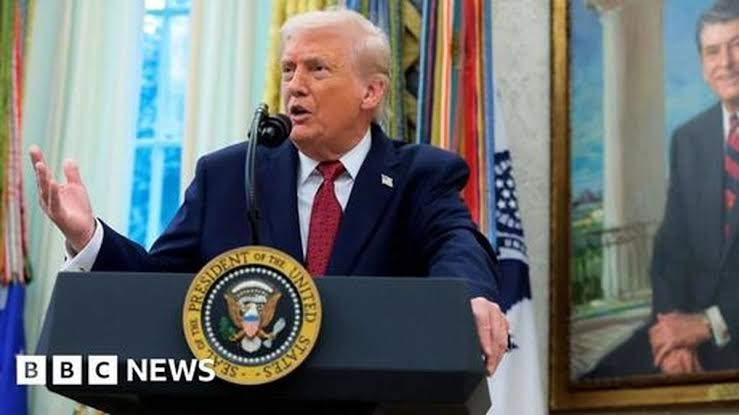
While Donald Trump has a history of being sued over alleged slights and factual inaccuracies. Today we will discuss about Trump Sues BBC for $10B, Jan. 6 Drama, Media War Ignites
Trump Sues BBC for $10B, Jan. 6 Drama, Media War Ignites
In a dramatic escalation of tensions between political power and global media, former U.S. President Donald Trump has filed a $10 billion lawsuit against the British Broadcasting Corporation (BBC), accusing the world-renowned broadcaster of defamation and deliberate manipulation. The lawsuit, centered on the BBC’s handling of Trump’s January 6, 2021 speech, has reignited fierce debates over media ethics, free speech, political accountability, and international jurisdiction.
What began as a controversial documentary edit has now exploded into a full-scale media war, drawing attention far beyond the United States and the United Kingdom. At stake are not only billions of dollars, but also fundamental questions about how history is portrayed, who controls political narratives, and how powerful leaders confront institutions that shape public opinion.
The Controversial Documentary at the Heart of the Case
The lawsuit stems from a BBC documentary aired in late 2024 that revisited Trump’s political career and his influence following the events of January 6. The program included excerpts from Trump’s speech delivered on the morning of that day, shortly before thousands of his supporters marched toward the U.S. Capitol.
Trump alleges that the BBC selectively edited and rearranged portions of his speech, creating the impression that he directly encouraged violence and lawlessness. According to the complaint, statements calling for peace and lawful protest were either removed or minimized, while emotionally charged phrases were emphasized without context.
Trump’s legal team argues that this editing amounted to a deliberate distortion, portraying him as an instigator of chaos rather than a political leader addressing supporters within constitutional bounds. The documentary, they claim, crossed the line from journalism into political propaganda.
BBC Response and Internal Fallout
Following public criticism, the BBC acknowledged that the documentary’s editing created a misleading impression. The broadcaster issued an apology, admitting that the presentation did not meet its editorial standards. The controversy led to significant internal consequences, including the resignation of senior executives responsible for news oversight.
Despite the apology, the BBC has rejected allegations of defamation and insists that the lawsuit is legally unfounded. The organization maintains that editorial decisions were made in good faith and that the documentary did not intentionally misrepresent Trump’s words or intentions.
The BBC has vowed to defend itself aggressively, arguing that allowing such lawsuits to succeed would threaten press freedom worldwide.
Inside the $10 Billion Lawsuit
Trump’s lawsuit seeks an unprecedented $10 billion in damages, divided between defamation claims and allegations of unfair and deceptive trade practices. The complaint describes the documentary as “false, malicious, misleading, and politically motivated.”
According to Trump, the BBC’s portrayal caused substantial harm to his reputation, damaged his political standing, and influenced public opinion during a sensitive electoral period. The lawsuit also claims that the documentary was designed to interfere in American democratic processes by shaping voter perceptions ahead of elections.
Trump himself has characterized the BBC’s actions as part of a broader pattern of hostile media behavior, arguing that international broadcasters should not be allowed to distort U.S. political discourse without accountability.
Jurisdictional and Legal Challenges
One of the most complex aspects of the case is jurisdiction. The BBC is a British public broadcaster, funded by license fees and governed under U.K. law. The documentary in question was not formally broadcast on American television networks.
However, Trump’s legal team argues that the content was accessible to U.S. audiences through streaming platforms and digital distribution, making it subject to American defamation law.
Legal experts note that defamation cases involving public figures face a very high legal threshold. Trump must prove “actual malice,” meaning the BBC knowingly published false information or acted with reckless disregard for the truth. This standard exists to protect free speech and investigative journalism.
Many analysts believe the case could be dismissed at an early stage on jurisdictional or constitutional grounds, while others argue that the BBC’s admission of editorial error could complicate its defense.
Media Freedom vs. Media Accountability
The lawsuit has sparked a global debate about where journalism ends and political influence begins. Supporters of Trump argue that powerful media organizations must be held accountable when they distort facts, especially on matters of national and historical significance.
They contend that selective editing can be as misleading as outright falsehoods, and that apologies alone are insufficient when reputational damage is severe.
Critics of the lawsuit warn that such legal actions could chill press freedom, encouraging self-censorship and discouraging investigative reporting. They argue that journalism often involves interpretation and editorial judgment, and that criminalizing such decisions could weaken democratic oversight.
This clash reflects a broader crisis of trust between political leaders and media institutions, particularly in an era of polarized audiences and digital misinformation.
The Political Weight of January 6
January 6 remains one of the most divisive moments in modern American history. For Trump supporters, the event has been framed as a protest that spiraled out of control. For critics, it represents a direct threat to democratic institutions.
Media coverage of January 6 has played a crucial role in shaping public memory of the event. Trump’s lawsuit challenges not only the BBC’s editing choices but also the broader narrative that has dominated global reporting.
By targeting the BBC, Trump is signaling that he intends to contest the historical record, not just in political speeches but through legal channels.
International Reactions and Global Impact
The lawsuit has attracted international attention, with reactions spanning political, legal, and journalistic circles. Some foreign leaders have expressed support for Trump’s challenge, framing it as a stand against biased Western media.
In the United Kingdom, the case has triggered intense debate about the BBC’s role, funding model, and editorial oversight. Defenders of the broadcaster emphasize its long history of independence, while critics argue that the controversy exposes systemic weaknesses.
Globally, media organizations are watching closely. A ruling in Trump’s favor could encourage similar lawsuits by powerful figures worldwide, potentially reshaping how international news outlets cover controversial leaders.
Trump’s Broader Legal Strategy Against Media
The BBC lawsuit fits into a larger pattern of Trump using legal action to confront media organizations. Over recent years, he has pursued multiple defamation cases and settlements, positioning himself as a challenger to what he describes as “unfair and dishonest media.”
Supporters view this strategy as a necessary corrective to media excesses. Critics see it as an attempt to intimidate journalists and control narratives through financial pressure.
Regardless of interpretation, Trump’s approach has forced news organizations to re-examine editorial practices, legal risk, and the balance between aggressive reporting and potential litigation.
What Happens Next
The immediate future of the case will involve motions to dismiss, jurisdictional arguments, and legal maneuvering. If the lawsuit survives early challenges, it could proceed into discovery, potentially exposing internal editorial communications and decision-making processes.
Such a scenario would be unprecedented for a global public broadcaster and could have far-reaching implications beyond this single case.
Politically, the lawsuit will likely remain a talking point, reinforcing divisions over media trust, political accountability, and the legacy of January 6.
Conclusion
Donald Trump’s $10 billion lawsuit against the BBC is more than a legal battle — it is a symbolic confrontation between political power and global media influence. At its core lies a struggle over truth, narrative control, and the responsibility of journalism in shaping history.
Whether the case succeeds or fails, it has already intensified scrutiny of media practices and highlighted the fragile relationship between leaders and institutions in the modern information age. As courts, journalists, and the public watch closely, the outcome may redefine how political speech, media accountability, and free expression intersect in the years ahead.
How useful was this post?
Click on a star to rate it!
Average rating 0 / 5. Vote count: 0
No votes so far! Be the first to rate this post.
About the Author

usa5911.com
Administrator
Hi, I’m Gurdeep Singh, a professional content writer from India with over 3 years of experience in the field. I specialize in covering U.S. politics, delivering timely and engaging content tailored specifically for an American audience. Along with my dedicated team, we track and report on all the latest political trends, news, and in-depth analysis shaping the United States today. Our goal is to provide clear, factual, and compelling content that keeps readers informed and engaged with the ever-changing political landscape.