Trump Immigration Shock: Policy Leak Surfaces, Media or DOJ Behind the Heat
An emergency protest broke out in Charlotte, N.C., on Saturday following the arrival and heavy presence of Trump’s Border Patrol agents. Today we will discuss about
Trump Immigration Shock: Policy Leak Surfaces, Media or DOJ Behind the Heat
https://youtu.be/7_mcPC-rCfw?si=iWYguRYkzHz8BjN2
In late 2025, the United States entered a new era of immigration enforcement under the Trump administration. What began as a campaign promise to restore border security has escalated into a sprawling crackdown that includes raids, denaturalization efforts, policy drafts restricting public benefits, and a flurry of internal leaks that reveal the thinking inside the Department of Justice (DOJ) and the Department of Homeland Security (DHS).
The country now finds itself in a heated debate over who is driving the narrative of this crackdown:
Are these leaks an intentional strategy by government insiders, or the result of media networks shaping public opinion for political gain?
The veil has been lifted on internal memos, draft executive orders, and communications that many believe were never intended to see daylight. The resulting “immigration shock” has exposed a deeper struggle over transparency, legality, and control of the national immigration conversation.
This article breaks down the enforcement actions, the leaked materials, the political motives, and the consequences for millions of immigrants — and for American democracy.
1. On-the-Ground Reality: The Enforcement Surge
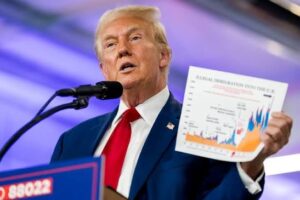
Mass Raids Across Cities
Across 2025, immigration enforcement operations intensified in multiple U.S. cities. Areas like New Orleans became epicenters of sweeping raids, with federal agents targeting undocumented immigrants and individuals released under local sanctuary-style policies. Residents described panic as agents conducted workplace checks, street-level operations, and neighborhood sweeps.
Although these efforts were promoted as “criminal-targeted operations,” reports from community groups and residents indicated that many of those arrested had no criminal background beyond civil immigration violations. Local businesses, community centers, and schools noted noticeable declines in attendance as residents stayed indoors to avoid being swept up in the operations.
The strategy expanded to cities including Los Angeles, Chicago, and Washington, D.C., all viewed politically as strongholds of opposition to Trump’s immigration agenda. Critics argue that the operations were designed not only to enforce immigration law but also to send a political message.
Shifts in Policy Behind the Scenes
The enforcement wave coincided with new internal policy directives. DOJ memos surfaced outlining plans to prioritize denaturalization cases — meaning the government could revoke citizenship from naturalized Americans if misrepresentation or past errors were discovered in their immigration process. Although legally possible, the scale and speed suggested an unusual shift toward aggressively scrutinizing even long-standing citizens.
Another leaked draft policy — not yet implemented but heavily discussed — proposed restricting access to public benefits such as food assistance, health insurance subsidies, and tax credits for many legally residing immigrants. Critics warned that such policies would create a chilling effect, causing immigrant families to avoid essential services out of fear of future immigration consequences.
Together, these measures signaled a significant expansion of immigration enforcement beyond undocumented immigrants to include legal residents and even naturalized citizens.
2. The Leaks: What They Reveal and Why They Matter
A History of Immigration Status Leaks
The Trump administration has long been accused of leaking sensitive immigration information to the media, especially conservative outlets. Past documents revealed that DHS officials shared confidential details about individuals’ immigration status to generate negative portrayals of immigrants in high-profile criminal cases.
These leaks raised concerns not only about privacy violations but also about the political use of federal agencies to shape public sentiment.
New DOJ Leaks Add Fuel to the Fire
In 2025, newly released communications from DOJ lawyers revealed messages suggesting that attorneys were encouraged to circumvent court orders that could slow deportations. Some exchanges included explicit language indicating a willingness to dismiss judicial intervention as a barrier rather than a constitutional check.
One case involved an individual wrongly deported despite a court order protecting him; internal messages suggested attempts to obscure the mistake. These revelations heightened fears about the erosion of due process and the weaponization of immigration courts.
The leaks suggest a coordinated internal strategy to fast-track deportations, centralize legal authority, and minimize external oversight — raising questions about how far the administration is willing to go to enforce its vision of immigration control.
3. Why Leak Now? Motive, Strategy, and Political Gains
Reinforcing the Narrative of “Dangerous Immigrants”
The leaks often showcase extreme or violent cases involving noncitizens, reinforcing the narrative that undocumented immigrants pose widespread threats. Even when these cases are outliers, they generate national headlines that support political messaging around strict enforcement.
By releasing or failing to protect sensitive immigrant data, officials can flood the media pipeline with stories that justify harsher policies.
Legal Expediency and Avoiding Accountability
DOJ memos hint that leaks may also serve a strategic purpose: by publicizing enforcement plans or raids, the administration shapes the legal environment before courts intervene. Public pressure can make judges more cautious about halting enforcement actions, and rapid media cycles can drown out dissenting viewpoints.
This strategy of “act fast, explain later” mirrors earlier immigration actions like the 2018 family separation policy, which unfolded rapidly before legal and public backlash forced revisions.
Creating a Climate of Fear
For undocumented immigrants, leaks about raids, policy shifts and deportation priorities create intense anxiety. But fear itself may be a desired outcome. Officials in past administrations suggested that “fear-based deterrence” could reduce migrant flows by making life in the U.S. feel unstable or dangerous for those without permanent legal status.
The result is self-deportation, reduced service usage, and greater vulnerability — a policy outcome without the political or logistical cost of physically deporting millions.
4. Fallout: Legal, Human, and Institutional Consequences
Legal Challenges Mount
Civil liberties groups have started preparing lawsuits challenging the legality of mass raids, use of wartime statutes to justify deportations, and potential misuse of denaturalization powers. Courts have historically pushed back on aggressive immigration enforcement, especially where due process is threatened.
The question now is whether the judicial system will uphold its independence in the face of the administration’s attempts to sidestep it.
Humanitarian Impact on Immigrant Communities
The effects on immigrant families — including mixed-status households — have been severe. Many individuals fear leaving home for work, medical appointments, or school. Emotional distress has increased, particularly among children who worry that parents might not come home.
Even legal residents worry that a paperwork mistake or decade-old misrepresentation could lead to denaturalization. This environment creates lasting trauma and disrupts community stability.
Erosion of Government Credibility
Perhaps the most profound consequence is the damage to institutional trust. When federal agencies appear to manipulate information, leak private data, or attempt to avoid judicial oversight, it undermines public faith in the rule of law.
This erosion leaves lasting scars on federal agencies whose credibility is essential for national security and civil liberties.
5. Who Is Behind the Heat — Media or DOJ?
A Dual-Pressure Strategy
Evidence suggests that the immigration “shock” is not driven solely by media or solely by government action, but by a coordinated strategy:
Media outlets amplify selected narratives portraying immigrants as criminals or threats.
DOJ and DHS insiders leak sensitive information that shapes these narratives.
Political operatives use this environment to justify expanding enforcement authority.
The result is a feedback loop:
leak → media coverage → public reaction → policy justification → further leaks.
This dynamic allows the administration to maintain pressure on immigrant communities while building political momentum.
Political Timing
The timing appears strategic. As political cycles turn, immigration becomes a potent motivator for certain voter demographics. Dramatic stories of raids, deportations, or crimes linked (accurately or not) to immigrants can energize political bases.
In this context, leaks are not accidents — they are political tools.
6. Contradictions and Unanswered Questions
Despite the intensity of enforcement and messaging, many inconsistencies remain:
Deportation numbers sometimes do not match public claims, suggesting exaggeration or data manipulation.
Legal justification for using obscure or wartime statutes is questionable, inviting eventual court intervention.
If denaturalization expands, how will the government prevent abuse or ensure due process?
Are leaks being used to build support for policies before those policies face legal challenges?
These open questions signal a long and contentious road ahead.
7. Implications for Immigrants, America, and the World
For Immigrants
The current environment creates instability for every immigrant — from undocumented workers to naturalized citizens. The threat of raids, denaturalization, benefit restrictions, and public shaming leaves millions feeling unsafe.
For American Democracy
The overlap of leaks, media influence, and legal maneuvering suggests a blurring of lines between law enforcement, political messaging, and public manipulation. This has long-term implications for constitutional checks and balances.
For Global Perception
As the U.S. imposes harsher rules, other nations observe. America’s reputation as a safe haven for immigrants and refugees may suffer, affecting diplomatic relations and global perceptions of U.S. leadership.
8. What Comes Next?
Key areas to watch:
Will courts block some of the enforcement strategies?
Will more leaks expose deeper coordination?
Will public backlash force policy revisions?
Will immigrant advocacy groups mobilize mass resistance?
The political fight is far from over.
Conclusion: Shock-and-Awe — But at What Price?
The Trump administration’s immigration crackdown reflects more than a shift in enforcement priorities — it represents a coordinated campaign merging legal strategies, media narratives, and internal leaks. The result is an environment of fear for immigrants and a test of American democratic institutions.
Whether these tactics succeed or backfire will define not only immigration policy but also the future of transparency, due process, and government accountability in the United States.
How useful was this post?
Click on a star to rate it!
Average rating 0 / 5. Vote count: 0
No votes so far! Be the first to rate this post.
About the Author

usa5911.com
Administrator
Hi, I’m Gurdeep Singh, a professional content writer from India with over 3 years of experience in the field. I specialize in covering U.S. politics, delivering timely and engaging content tailored specifically for an American audience. Along with my dedicated team, we track and report on all the latest political trends, news, and in-depth analysis shaping the United States today. Our goal is to provide clear, factual, and compelling content that keeps readers informed and engaged with the ever-changing political landscape.