Ted Cruz : judges impeachment push, Senate power play, GOP agenda
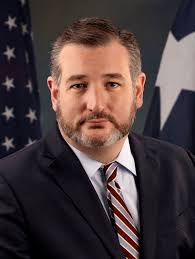
Ted Cruz is leading a Senate Judiciary Committee hearing on ‘holding rogue judges accountable’. Today we will discuss about Ted Cruz : judges impeachment push, Senate power play, GOP agenda
Ted Cruz : judges impeachment push, Senate power play, GOP agenda
Senator Ted Cruz of Texas, a leading figure in the Republican Party and chairman of the Senate Judiciary Subcommittee on Federal Courts, has recently placed a spotlight on federal judges through a politically charged campaign to hold “rogue” jurists accountable — including calls to pursue impeachment against them for issuing rulings that diverge from conservative priorities. His actions have ignited fierce debate across the U.S. political landscape, touching on constitutional law, judicial independence, partisan strategy, and the future of the Republican Party’s agenda.
This article explores why Cruz is pushing for impeachment of judges, how the Senate hearing unfolded, what goals the GOP hopes to achieve, and the broader implications for American governance.
1. The Emergence of an Impeachment Push

In early January 2026, Senator Cruz led a Republican‑backed Senate Judiciary Subcommittee hearing titled “Impeachment: Holding Rogue Judges Accountable,” focusing on the alleged misconduct of two federal judges: Chief Judge James Boasberg of the U.S. District Court for the District of Columbia and Judge Deborah Boardman of the U.S. District Court for the District of Maryland.
At the heart of Cruz’s argument is the claim that these judges committed abuses of power warranting impeachment — a constitutional mechanism traditionally reserved for serious misconduct, not mere disagreement with judicial rulings.
2. Who Are the Judges at Issue?
James Boasberg
Judge Boasberg has drawn Republican ire for rulings connected to federal investigations, including subpoenas that affected Republican lawmakers’ communications in connection with the January 6, 2021, Capitol attack. Cruz and GOP allies argue that Boasberg improperly authorized certain orders and nondisclosure requirements that targeted or affected congressional communications, asserting this reflects “judicial overreach” and a breach of separation of powers.
Deborah Boardman
Judge Boardman became a focus of controversy over her sentencing in the case of Nicholas (Sophie) Roske, who attempted to assassinate Supreme Court Justice Brett Kavanaugh in 2022. Boardman sentenced Roske to eight years in prison — significantly below the 30‑year recommendation by federal prosecutors. Critics, including Cruz, allege that the sentence was improperly influenced by considerations of Roske’s gender identity and thus represented a failure to uphold judicial responsibility, meriting impeachment.
3. Cruz’s Constitutional Argument
Cruz frames his push not as retaliation against unfavorable rulings, but as a defense of constitutional norms.
Judicial Independence vs. Accountability
Central to the controversy is the balance between judicial independence and accountability. Cruz asserts that judges who exceed their authority, infringe on other branches of government, or undermine constitutional protections should face impeachment — even if their actions are not criminal. In his view, impeachment is not only a tool for addressing clear abuses but also a safeguard against what he calls “judicial lawfare,” where judges hinder elected officials’ agendas through expansive interpretations of judicial power.
He often cites historical perspectives that impeachment serves as a check on judges who fail to exhibit “good behaviour” — a broad standard that he argues encompasses more than strictly illegal conduct. This interpretation challenges the modern norm that impeachment should be reserved for serious malfeasance like criminal wrongdoing or ethical violations.
Arguments from Republican Colleagues
Cruz isn’t alone. Other GOP senators have supported the notion that judges can be impeached for behaviors perceived as undermining legislative authority or ignoring constitutional boundaries — even absent traditional criminal conduct.
4. Democratic and Legal Opposition
Cruz’s impeachment campaign has been sharply criticized by Democrats and legal experts from across the ideological spectrum.
Threats to Judicial Independence
Democrats argue that impeachment should not be used to punish judges for rulings with which policymakers disagree and emphasize that established remedies for disagreeable judicial decisions include appeals — not impeachment. They underscore that using impeachment this way could erode the independence of the judiciary, a cornerstone of the U.S. constitutional system.
Legal scholars present similar reservations, warning that expanding impeachment beyond egregious misconduct to cover substantive judicial decisions risks turning federal judges into political actors subject to removal whenever partisan majorities disagree with their rulings.
Historical and Constitutional Context
Throughout U.S. history, judicial impeachment has been rare — and until now mostly centered on judges with documented criminal conduct or personal scandals. The U.S. Constitution envisioned impeachment for “high Crimes and Misdemeanors,” but its historical use for judges has typically focused on clear ethical transgressions, not policy disagreements or contentious sentencing decisions. This historical context fuels concerns that Cruz’s strategy could set a troubling precedent.
5. The Senate Hearing: Power Play or Constitutional Review?
The January 7, 2026 hearing marked a critical moment in Cruz’s campaign. While Republicans framed the session as a necessary check on problematic judiciary behavior, Democrats saw it as politically motivated judicial intimidation.
Republican Messaging
Senators on Cruz’s side repeatedly characterized the judges as acting outside the bounds of their judicial roles and argued that the House should act on impeachment resolutions against Boasberg and Boardman — both of which had already been introduced by House Republicans.
Cruz and allies stressed that impeachment is not just for criminal acts but also for violations of constitutional order, a position that departs from recent practice but that they claim has clear constitutional grounding.
Democratic Pushback
Democrats countered that impeachment based on disagreement with judicial decisions destabilizes the separation of powers. They pointed out that the judiciary is designed to be independent precisely to resist political pressure from the legislative or executive branches.
Ranking Democrats underscored that impeachment is not the remedy for judicial rulings that displease politicians — and cautioned that targeting judges for political reasons could have chilling effects on judicial impartiality.
6. Broader GOP Agenda and Strategic Calculus
Cruz’s impeachment push isn’t occurring in a vacuum — it dovetails with broader Republican priorities.
Judicial Reform and GOP Litigation Strategy
Many Republicans contend that the federal judiciary has exercised undue influence over federal policymaking, particularly through widespread use of nationwide injunctions and decisions that block or reshape executive policies. Efforts like Cruz’s impeachment push are part of a broader strategy to recalibrate balance-of-power disputes between the judiciary and conservative legislative/executive goals.
Solidifying Conservative Base
Cruz’s actions resonate with a segment of the GOP base critical of what they see as judicial activism — especially among judges appointed by Democratic presidents. By elevating the impeachment issue, Cruz signals his commitment to aggressive defense of conservative principles and willingness to use constitutional mechanisms to challenge perceived judicial overreach.
Potential Electoral Calculations
With the 2026 midterms looming, Cruz’s positioning also serves larger Republican electoral messaging — underscoring themes of judicial accountability, protection of conservative governance, and resistance to what GOP leaders depict as a progressive judiciary.
7. Constitutional Implications and Future Scenarios
Cruz’s impeachment drive raises profound questions about the future of American constitutional governance.
Will the House Act?
While Cruz has urged the House of Representatives to advance impeachment articles against Boasberg and Boardman, it remains unclear whether the House will act on them — particularly given the traditional caution around impeaching judges over policy conflicts.
Judicial Independence at a Crossroads
If impeachment becomes a tool for political leverage rather than a measure of last resort for serious misconduct, the judiciary’s role as an independent arbiter could be significantly weakened. This shift could transform judicial decision‑making dynamics, making judges more susceptible to political retaliation.
Precedent for Future Congresses
A successful impeachment on these grounds could set a precedent allowing future Congresses to pursue judges based on ideological disagreement, potentially transforming the judiciary into a more overtly political institution — a development that would invite both legal and academic scrutiny for generations.
8. Conclusion: A Flashpoint in U.S. Politics
Senator Ted Cruz’s push to impeach federal judges represents a bold and controversial effort to challenge what he and many conservatives view as judicial overreach. By promoting impeachment proceedings against Judges Boasberg and Boardman, Cruz has ignited a constitutional and political debate over the proper limits of judicial power and the proper mechanisms for holding judges accountable.
While supporters see this move as necessary to rein in what they describe as “rogue judges” undermining the rule of law, critics warn that turning impeachment into a tool for settling policy disputes threatens the independence of the judiciary and the fundamental balance between branches of government.
What unfolds next — whether the House advances impeachment articles, how the judiciary reacts, and how Americans interpret this episode — will shape the future of judicial accountability, separation of powers, and the enduring tension between law and politics in the United States.
How useful was this post?
Click on a star to rate it!
Average rating 0 / 5. Vote count: 0
No votes so far! Be the first to rate this post.
About the Author

usa5911.com
Administrator
Hi, I’m Gurdeep Singh, a professional content writer from India with over 3 years of experience in the field. I specialize in covering U.S. politics, delivering timely and engaging content tailored specifically for an American audience. Along with my dedicated team, we track and report on all the latest political trends, news, and in-depth analysis shaping the United States today. Our goal is to provide clear, factual, and compelling content that keeps readers informed and engaged with the ever-changing political landscape.