Supreme Court Alert: JD Vance Case Rises, Campaign Money Rules in Danger
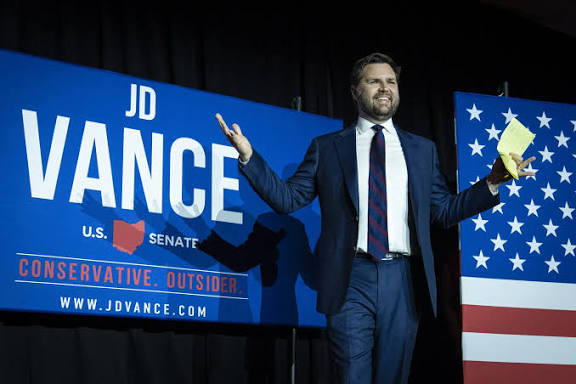
The case was filed when J.D. Vance was a senatorial candidate, claiming the restrictions interfere with First Amendment rights. Today we will discuss about Supreme Court Alert: JD Vance Case Rises, Campaign Money Rules in Danger
Supreme Court Alert: JD Vance Case Rises, Campaign Money Rules in Danger
The United States is once again at a potential tipping point in how political campaigns are funded — and the upcoming hearing before the Supreme Court could rewrite decades of campaign‑finance law. The case, brought by J.D. Vance alongside Republican political committees, challenges federal limits on spending by political parties in coordination with their candidates. If successful, it may unleash a flood of money into party coffers — and fundamentally transform election dynamics.
But what exactly is at stake? This article unpacks the legal background, the arguments, the stakes for American democracy, and the possible outcomes of the case.
The Origin of the Case: Who, What, and Why

The plaintiffs and their claim
The case originates from a lawsuit filed after the 2022 election cycle. The principal plaintiffs include the national political committees of the GOP — specifically, the National Republican Senatorial Committee (NRSC) and the National Republican Congressional Committee (NRCC) — along with then‑Senator J.D. Vance and former Congressman Steve Chabot.
Their lawsuit challenges a provision of the Federal Election Campaign Act of 1971 (FECA), which limits how much a political party can spend in coordination with a candidate during a campaign. According to the challengers, these restrictions violate the First Amendment, infringing on political parties’ — and candidates’ — freedom of speech and association.
In effect, they argue: if parties are restricted from working closely with their own candidates, it hampers their ability to advocate, communicate, and run effectively — undermining their role in the political process.
The legal and historical context
Limits on coordinated spending between parties and candidates have deep roots in American campaign‑finance law. These rules date back to post‑Watergate reforms that sought to curb corruption and undue influence by wealthy donors.
However, over the decades, the Supreme Court has chipped away at other parts of campaign‑finance regulation. A pivotal moment came with Citizens United v. FEC (2010), when the Court struck down bans on independent political expenditures by corporations and unions — upholding them as protected political speech under the First Amendment.
Then, in McCutcheon v. FEC (2014), the Court invalidated aggregate limits on how much individuals can contribute to multiple candidates, arguing such caps violated free speech.
Even the landmark Buckley v. Valeo (1976) laid the foundations — distinguishing between permissible limits on contributions and impermissible limits on expenditures. The Court struck down expenditure limits on the grounds of free speech, while upholding certain contribution caps.
In light of this history, the current case seeks to challenge what many see as one of the last major restrictions on coordinated political spending.
The Supreme Court Takes Up the Case — What Changed
Why 2025, and why now?
In 2025, the Supreme Court formally agreed to hear the challenge to coordinated‑spending limits.
Analysts note several reasons for the timing:
The jurisprudence around campaign finance has evolved significantly since 2001, when the Court last upheld coordinated‑spending limits in a case involving the Colorado Republican Federal Campaign Committee. Many argue that subsequent rulings — like Citizens United and McCutcheon — undermined the rationale for that 2001 decision.
Changing campaign‑finance realities: In recent years, much political spending shifted to “independent” channels — outside groups, PACs, Super PACs. The challengers argue that this shift has weakened the relevance of limitations on party‑coordinated expenditures, making the law outdated.
The current political landscape, especially with highly competitive upcoming elections, raises the stakes — meaning party committees and candidates have a mutual incentive to push for more flexibility and spending power.
What the Supreme Court will decide
At its core, the Court will examine whether federal limits on coordinated campaign spending — that is, spending by a political party in cooperation with a candidate — are unconstitutional under the First Amendment.
More technically, the Court may reconsider or overturn its 2001 precedent upholding those limits. If it rules for the challengers, it would effectively allow unlimited coordinated spending by political parties, so long as that spending is not formally a “contribution” from a donor directly to a candidate.
But the Court also might choose a narrower approach: not striking down the law entirely, but instead making procedural changes or carving out exceptions — thereby weakening the coordinated‑spending limits without full invalidation. Legal scholars say both paths are plausible.
Why This Case Matters: Stakes for Democracy, Money, and Elections
What could change if limits are struck down
If the Supreme Court sides with Vance and the GOP committees:
Political parties could spend unlimited money in coordination with their candidates. That means parties — not just outside PACs — would have new power to buy advertising, run campaigns, and mobilize voters directly, potentially using large donations.
The dynamic of campaign financing would shift dramatically. Rather than donations to individual candidates (subject to contribution caps), donors — especially wealthy donors and large organizations — could funnel money to party committees, which would spend heavily on behalf of multiple candidates across races.
Party power could surge. National committees could become even more central to elections, reducing the influence of grassroots donors and small‑dollar contributions.
Election competitiveness and fairness may be impacted. Wealth — and connections to large donors — could matter more than grassroots support, possibly magnifying disparities between well‑funded parties and grassroots challengers.
In short: the balance could tilt further toward moneyed interests, party machines, and big donors — and away from small‑donor grassroots politics.
Why opponents — and many democracy advocates — are alarmed
Critics say such a change would deepen inequalities in political influence and undermine democratic representation.
Their concerns include:
The risk that large donors could dominate races, drowning out average voters. The ability of wealthy individuals, corporations, or special‑interest groups to fund party‑wide ad campaigns could distort issues, candidate selection, and policy agendas.
A reduction in transparency or accountability. Coordinated spending — especially at large scale — may make tracking who influences which races more difficult, weakening disclosure rules and voter awareness.
Political polarization and entrenchment. If party machines gain more financial power, smaller or independent candidates may struggle to compete, reducing overall political diversity and lowering the likelihood of outsider or reform‑driven candidates.
Some advocates refer to the 2025 case as “the next frontier” in the systemic erosion of campaign‑finance oversight — a potential turning point where regulation is effectively dismantled.
Potential Outcomes — And What They Could Mean
As the Supreme Court prepares to hear arguments, three possible broad outcomes stand out:
| Outcome | What It Means |
|---|---|
| Full invalidation of coordinated‑spending limits | Allows unlimited party spending in coordination with candidates; likely leads to significant increases in party‑funded ads and campaigns; boosts power of national party committees and major donors. |
| Partial weakening or narrowing of limits | The Court may strike down aspects of the law (e.g., certain caps) or grant exemptions — granting parties more flexibility while retaining some regulations. |
| Upholding the law (status quo) | Coordinated‑spending limits remain, though possibly under pressure in future; campaign‑finance laws remain relatively intact for now — but future challenges remain likely. |
Given the Court’s recent track record on campaign‑finance issues, many analysts expect the Court to rule in favor of the challengers.
If that happens, the 2026 midterm elections — and subsequent cycles — could become some of the most expensive and party‑dominated in U.S. history.
The Broader Context: What This Says About Money, Speech & Power in U.S. Politics
A continuation of deregulation
The 2025 hearing is arguably part of a longer arc: over the past half‑century, the Supreme Court has increasingly expanded the meaning of “political speech” under the First Amendment — often favoring deregulation of money in politics.
If the Court strikes down coordinated‑spending limits, it will mark another milestone: from direct contributions, to independent expenditures, to now party‑coordinated spending — each major step eroding financial restrictions.
Changing the architecture of political power
The shift could significantly reconfigure how political power is organized: away from candidate‑centric fundraising and toward party‑centric finances. That has several implications:
Parties become the central conduit for money — which reinforces national political organizations over local or grassroots campaigns.
Wealthy donors and institutions gain outsized influence through large donations to party committees — even if they never directly support individual candidates.
The boundary between “independent” spending and “coordinated” spending blurs, confusing voters about where money comes from and who’s behind which campaign.
Risks to democratic representation and equity
At its worst, the change could deepen cynicism about U.S. elections. When money — especially big money — becomes the dominant speech, individual citizens and small‑donor supporters may feel their voices are drowned out.
It could reinforce entrenched power structures, reduce electoral competition, and diminish the ability of lesser‑funded or outsider candidates to compete.
Advocates for reform argue that such a shift would make politics less responsive to regular voters and more beholden to wealthy donors.
What’s at Stake for Key Players
Political parties — A favourable ruling would give them broad new powers to mobilize, advertise, and influence elections with fewer constraints.
Major donors, corporations, interest groups — They would likely gain increased influence as they funnel money to party coffers rather than individual candidates or PACs.
Grassroots donors and small‑donor campaigns — Their relative influence may shrink as parties rely on big donors for coordinated spending.
Candidates (both incumbents and newcomers) — Incumbents and those aligned with party leadership may benefit; outsider or independent candidates may find themselves disadvantaged without party‑backed spending.
Voters and democracy at large — The change could shift the balance of power, potentially reducing transparency, increasing polarization, and deepening inequalities in political influence.
The First Amendment vs. Campaign Integrity: Legal & Moral Tensions
At heart, this case taps a deep tension in American democracy:
On one side is the First Amendment — the right to political speech and association. The challengers argue that parties and candidates must be free to coordinate, communicate, and spend to express political views.
On the other side is concern for corruption, equality, and fair democratic participation — ensuring that elections remain open to broad participation, not dominated by a handful of wealthy donors or powerful interest groups.
Supporters of limits argue that regulations prevent the “appearance of corruption,” reduce undue influence, and keep the playing field more level.
Critics of regulation argue that any limit on spending is a limit on political speech itself — that spending money to communicate political beliefs is as protected as any other form of speech.
The 2025 case — by asking the Court to consider whether coordinated‑spending limits survive this tension — forces a decision on which value should prevail: free speech or electoral integrity.
What Happens Next — Timeline & What to Watch
The Supreme Court is scheduled to hear the case in its 2025–2026 term.
Oral arguments are likely to occur in the fall, with a decision expected possibly by mid‑2026 — just ahead of the 2026 midterm elections.
In advance of arguments, advocacy groups, legal scholars, and civil‑society organizations will likely mobilize — either to support the challengers or defend the existing limits.
If the Court rules to overturn or weaken limits, expect a rapid influx of party‑coordinated spending in upcoming election cycles — with possible implications for electoral competitiveness, campaign strategies, and voter mobilization efforts across the U.S.
Critics & Concerns: Voices Warning About the Consequences
Some of the strongest warnings come from democracy‑watch groups. With recent rulings like Citizens United, the 2025 challenge is seen as another step toward “eviscerating campaign finance laws passed over decades to protect the American people from corruption.”
On social media and public forums, many voters express fear that the result would be a system where “big money calls the tune.” One online commentator remarked:
“When money correlates to speech, allowing unlimited contributions means giving 0.01% the ability to drown out the voices of 99.99% of people.”
Another commenter bluntly warned:
“This would honestly be the death knell in US democracy.”
These voices reflect broader concern: that the case threatens not only campaign‑finance regulations — but the very idea of equal political participation.
What If the Court Rules Against the Challengers — Could Limits Survive?
While many analysts expect the Court to strike down or weaken the coordinated‑spending limits, a few scenarios would keep them largely intact:
The Court may uphold the limits, citing the original concerns of corruption, undue influence, or the need to prevent parties from sidestepping contribution caps.
It might impose narrower rulings — for example, upholding limits only for certain races, or preserving disclosure requirements, or requiring stricter coordination rules rather than wholesale deregulation.
Congress could respond. If limits are struck down, future legislatures might attempt to write new regulations — though the feasibility of that depends on political will and likely gridlock.
Even in such a scenario, the 2025 case would still be significant — affirming the Court’s willingness to consider the balance between speech and regulation, and possibly signaling future challenges to other campaign‑finance statutes.
Why This Matters — Not Just for Americans, But for Democracy Globally
The 2025 case is about U.S.-centric laws, parties, elections. But the stakes go beyond America. Democracies worldwide watch how campaign financing and political spending are regulated (or deregulated), because the balance struck impacts fairness, representation, and legitimacy of governments.
If the Supreme Court eliminates coordinated‑spending limits, it could encourage similar legal and political efforts elsewhere — potentially undermining efforts in other countries to limit the influence of big money on democracy.
Moreover, it raises a broader question: as money becomes more deeply tied to political speech and organization, does democracy risk being commodified? When wealth equates to voice, political power risks being concentrated in the hands of a few.
For citizens — whether in the United States or abroad — the implications of this case demand attention. It’s not just about a law; it’s a test of whether democratic equality and citizen empowerment can survive in an era of unbounded political spending.
Conclusion: A Moment of Reckoning for Campaign Finance
The 2025 challenge by J.D. Vance and GOP committees is more than a legal battle — it’s a confrontation between two visions of American democracy. On one side: free-ish flows of political spending as a form of speech; on the other: limits meant to protect fairness, prevent corruption, and preserve democratic equality.
As the Supreme Court prepares to hear arguments, the country faces a choice: reaffirm decades‑old restrictions that sought to level the political playing field — or reset the rules, potentially unleashing a torrent of money into the heart of American elections.
For voters, activists, donors, and parties alike, the stakes could not be higher. The Court’s decision — expected by mid‑2026 — may well mark a turning point in how politics is funded, fought, and ultimately lived in the United States.
How useful was this post?
Click on a star to rate it!
Average rating 0 / 5. Vote count: 0
No votes so far! Be the first to rate this post.
About the Author

usa5911.com
Administrator
Hi, I’m Gurdeep Singh, a professional content writer from India with over 3 years of experience in the field. I specialize in covering U.S. politics, delivering timely and engaging content tailored specifically for an American audience. Along with my dedicated team, we track and report on all the latest political trends, news, and in-depth analysis shaping the United States today. Our goal is to provide clear, factual, and compelling content that keeps readers informed and engaged with the ever-changing political landscape.