Sotomayor Clash: Court Divide, Rights Battle, Legal Power Surge
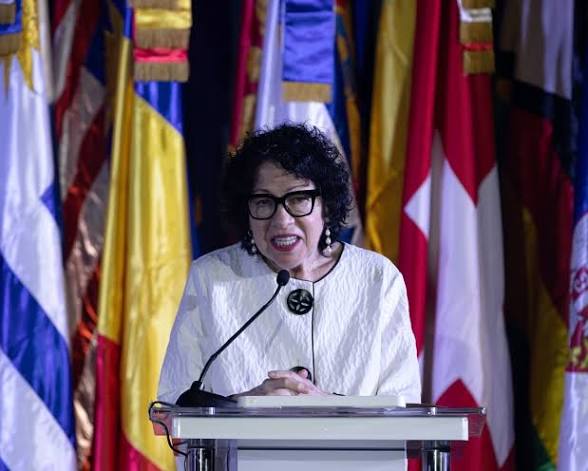
The United States Supreme Court is once again at the center of a national debate, with Sonia Sotomayor emerging as a leading voice in a growing ideological clash. Recent hearings, dissents, and courtroom exchanges reveal not just legal disagreements—but a deeper struggle over constitutional interpretation, civil rights, and the future of American law.
This “Sotomayor Clash” reflects a broader court divide, where liberal and conservative justices increasingly confront each other on issues ranging from immigration to free speech. At the heart of this divide lies a fundamental question: Who defines rights in modern America—the Constitution as originally written, or as it evolves with society?
The Current Clash: Birthright Citizenship Battle
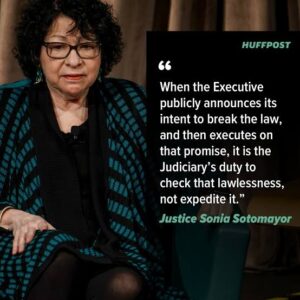
One of the most explosive flashpoints involves birthright citizenship, rooted in the 14th Amendment. During recent Supreme Court arguments, Justice Sotomayor directly challenged the government’s position on limiting citizenship rights.
She referenced the landmark case United States v. Wong Kim Ark, which affirmed that anyone born on U.S. soil is a citizen. Her questioning raised concerns about whether current legal arguments could undermine over a century of precedent.
Sotomayor pressed government lawyers on whether their stance could effectively “rewrite” constitutional protections. The exchange highlighted fears that narrowing birthright citizenship could create stateless populations and erode civil liberties.
A Deepening Court Divide
Ideological Split
The Supreme Court today is often divided along ideological lines:
- Liberal Justices (Sotomayor, Kagan, Jackson): Focus on evolving rights and protections
- Conservative Justices (Thomas, Alito, Gorsuch, Barrett): Emphasize originalism and limited judicial intervention
This divide has produced a series of 5-4 or 6-3 rulings, intensifying public scrutiny and political pressure.
Recent reports describe courtroom tensions, interruptions, and clashes over speaking time—signs of a judiciary under strain.
Sotomayor’s Judicial Philosophy
Justice Sotomayor is widely known for her rights-focused approach. Her opinions often emphasize:
- Protection of marginalized communities
- Strict scrutiny of government power
- Defense of constitutional guarantees
In past rulings, she has warned that certain decisions could make “no right safe,” signaling concern over the erosion of civil liberties.
Her dissents frequently act as moral counterpoints to majority rulings, shaping future legal debates even when she is in the minority.
Major Legal Battles Driving the Clash
1. Immigration and Citizenship
Immigration cases remain central to the court’s divisions. Sotomayor has repeatedly opposed efforts to limit rights for immigrants, arguing that constitutional protections apply broadly.
2. Free Speech and Press Rights
In a recent case involving a journalist’s arrest, Sotomayor dissented, warning that denying review could weaken First Amendment protections.
3. Criminal Justice and Death Penalty
The court is also grappling with racial bias in jury selection and death penalty cases, reflecting ongoing debates about fairness and due process.
The Power Surge: Judiciary vs Executive
The Sotomayor clash is not just internal—it extends to conflicts between the judiciary and executive branch.
Legal challenges to presidential policies have placed the Supreme Court in a power-balancing role, determining:
- The limits of executive authority
- The scope of constitutional rights
- The future of federal law
Recent rulings and arguments suggest the Court is increasingly acting as a check on executive actions, particularly in immigration and civil rights.
Why This Clash Matters
Impact on Rights
Decisions made today could redefine:
- Citizenship rights
- Voting access
- Free speech protections
Impact on Society
The court’s rulings influence everyday life, from education to healthcare and law enforcement.
Impact on Democracy
A deeply divided court raises questions about:
- Judicial neutrality
- Public trust
- Political influence
Historical Context of Supreme Court Clashes
Clashes within the Supreme Court are not new. From civil rights rulings in the 1960s to modern debates over digital privacy, the court has long been a battleground for competing visions of America.
However, today’s conflicts stand out due to:
- Increased political polarization
- High-profile dissenting opinions
- Greater public attention and media coverage
The Role of Dissents in Legal Evolution
Sotomayor’s dissents play a crucial role in shaping future law. Historically, dissenting opinions have:
- Influenced later rulings
- Guided legislative changes
- Reflected evolving societal values
Many landmark decisions were once minority opinions—suggesting today’s dissents could become tomorrow’s precedents.
Public Reaction and Political Fallout
The Sotomayor clash has sparked strong reactions:
- Supporters praise her defense of rights
- Critics argue she oversteps judicial boundaries
Political leaders have also weighed in, with some criticizing the court’s decisions and others defending its independence.
This dynamic underscores the growing intersection between law and politics.
What Comes Next?
The Supreme Court’s current term is far from over. Key questions remain:
- Will the court uphold or overturn birthright citizenship principles?
- How far will it go in redefining constitutional rights?
- Can the justices bridge their ideological divide?
The answers will shape not just legal doctrine—but the future of American democracy.
Conclusion
The “Sotomayor Clash” is more than a courtroom debate—it is a defining moment in the evolution of U.S. law. As Justice Sonia Sotomayor challenges prevailing interpretations and defends constitutional protections, the Supreme Court stands at a crossroads.
With rising tensions, landmark cases, and far-reaching implications, this legal power surge will continue to shape the nation’s future for years to come.
FAQs
1. What is the Sotomayor Clash?
It refers to ongoing legal and ideological conflicts involving Justice Sonia Sotomayor and other Supreme Court justices, especially on constitutional rights.
2. Why is birthright citizenship central to the debate?
Because recent legal challenges question long-standing interpretations of the 14th Amendment, potentially affecting millions.
3. What is United States v. Wong Kim Ark?
A landmark 1898 Supreme Court case that affirmed citizenship for anyone born in the U.S., regardless of parental status.
4. How divided is the Supreme Court today?
The court is often split along ideological lines, with frequent 6-3 or 5-4 decisions reflecting deep disagreements.
5. Why are Sotomayor’s dissents important?
They highlight alternative legal interpretations and can influence future rulings and legal thought.
6. What impact could this clash have?
It could reshape constitutional rights, redefine legal precedents, and influence American society for generations.
How useful was this post?
Click on a star to rate it!
Average rating 0 / 5. Vote count: 0
No votes so far! Be the first to rate this post.
About the Author

usa5911.com
Administrator
Hi, I’m Gurdeep Singh, a professional content writer from India with over 3 years of experience in the field. I specialize in covering U.S. politics, delivering timely and engaging content tailored specifically for an American audience. Along with my dedicated team, we track and report on all the latest political trends, news, and in-depth analysis shaping the United States today. Our goal is to provide clear, factual, and compelling content that keeps readers informed and engaged with the ever-changing political landscape.