SCOTUS Blocks Trump Tariffs : Markets Panic, Economy Shaken
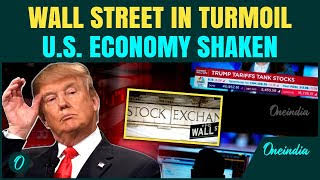
Global markets are unlikely to see a sustained reaction to the US Supreme Court’s decision on US President Donald Trump’s emergency tariffs. Today we will discuss about SCOTUS Blocks Trump Tariffs : Markets Panic, Economy Shaken
SCOTUS Blocks Trump Tariffs : Markets Panic, Economy Shaken
The United States Supreme Court’s decision to block former President Donald Trump’s sweeping tariff program has sent shockwaves through global financial markets, reigniting debates over executive power, economic stability, and America’s future trade policy. What was once framed as a bold economic nationalism strategy has now become a constitutional and economic flashpoint, shaking investor confidence and reshaping expectations for U.S. trade leadership.
The ruling marks a historic moment in the long-running tug-of-war between the executive branch and Congress over who controls trade policy. It also underscores how deeply interconnected legal decisions, market psychology, and global commerce have become in the modern economy.
Understanding the Trump Tariff Strategy
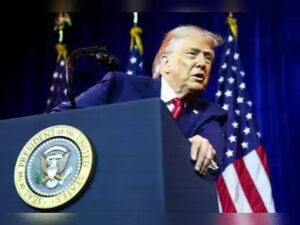
Donald Trump’s tariff agenda was central to his broader “America First” economic doctrine. The policy aimed to reduce trade deficits, bring manufacturing back to U.S. soil, and pressure foreign governments into renegotiating trade terms viewed as unfair. Under this framework, tariffs were imposed or threatened on a wide range of imported goods, including steel, aluminum, automobiles, and consumer products from major trading partners.
Trump justified many of these tariffs using emergency powers, arguing that trade imbalances and supply chain vulnerabilities posed a national security threat. This interpretation allowed the administration to bypass Congress and act swiftly, but it also sparked immediate legal and political opposition.
Critics argued that tariffs functioned as taxes on American consumers and businesses, raising prices and increasing inflationary pressure. Supporters countered that short-term pain was necessary to achieve long-term economic independence. The Supreme Court’s intervention has now forced a reckoning with those claims.
Why the Supreme Court Blocked the Tariffs
At the heart of the case was a constitutional question: Does the president have the authority to impose broad tariffs using emergency powers without congressional approval?
The Court’s decision to block the tariffs reflects growing judicial skepticism toward expansive interpretations of executive authority. While emergency powers exist, the ruling suggests that they cannot be used indefinitely or for broad economic restructuring without explicit congressional consent.
The justices focused on three key concerns:
Scope of authority: Emergency powers were designed for extraordinary, immediate threats—not long-standing economic conditions.
Separation of powers: Trade policy is constitutionally assigned to Congress, and unchecked executive action risks undermining democratic accountability.
Economic consequences: The Court acknowledged the real-world impact of tariffs on businesses, consumers, and markets.
This decision effectively halted the enforcement of the tariffs while the broader legal questions are resolved, creating immediate uncertainty across the economy.
Markets React: Panic and Volatility
Financial markets responded swiftly and dramatically to the news. Stock indices experienced sharp swings as investors scrambled to reassess risk. Sectors most exposed to global trade—manufacturing, technology, retail, and agriculture—saw heightened volatility.
The uncertainty stems not only from the tariffs being blocked, but from what comes next. Investors are now grappling with several unanswered questions:
Will tariffs be permanently struck down or restructured?
Will Congress step in with new trade legislation?
How will trading partners respond to the sudden policy reversal?
Currency markets also reacted, with fluctuations reflecting concerns about U.S. economic leadership and policy predictability. Commodity markets, particularly metals and agricultural products, experienced turbulence as traders recalibrated supply and demand expectations.
Impact on the U.S. Economy
The economic consequences of blocking the tariffs are complex and multifaceted. While some sectors welcomed the decision, others warned of long-term risks.
Short-Term Relief for Consumers and Importers
For consumers, the ruling offers potential relief. Tariffs often translate into higher prices for everyday goods, from electronics to household items. Blocking the tariffs could ease inflationary pressures and restore purchasing power.
Import-dependent businesses also benefit from reduced costs and improved supply chain stability. Many small and mid-sized companies had argued that tariffs squeezed margins and forced layoffs.
Challenges for Domestic Manufacturers
Conversely, some domestic manufacturers who relied on tariff protection now face renewed competition from foreign producers. Industries such as steel and aluminum, which benefited from import restrictions, may struggle to maintain pricing power without government support.
This tension highlights the broader debate over whether tariffs truly strengthen domestic industry or merely provide temporary insulation.
Global Repercussions and Trade Relations
The Supreme Court’s move has reverberated beyond U.S. borders. Allies and rivals alike are reassessing their trade strategies in light of the ruling.
For years, Trump’s tariffs strained relationships with major trading partners. Retaliatory tariffs, trade disputes, and diplomatic tensions became common. The Court’s decision signals a possible shift toward a more rules-based, predictable trade environment.
However, uncertainty remains. Foreign governments are cautious, unsure whether future administrations might revive similar measures through alternative legal pathways.
Congress vs. the President: A Power Struggle Reignited
Perhaps the most significant implication of the ruling is its impact on the balance of power in Washington. By blocking the tariffs, the Supreme Court has effectively reaffirmed Congress’s constitutional role in setting trade policy.
Lawmakers now face pressure to act. If tariffs are to be reinstated or replaced, it will likely require legislation rather than executive action. This could lead to:
Lengthy political negotiations
Compromise-driven trade policies
Greater transparency and debate
While this process may be slower, supporters argue it leads to more stable and democratic economic outcomes.
Political Fallout and Public Opinion
The decision has reignited partisan debate. Trump and his allies argue that the ruling undermines efforts to protect American workers and weakens U.S. negotiating leverage. They frame the decision as judicial overreach that favors globalism over national interests.
Opponents see the ruling as a victory for constitutional governance and economic rationality. They argue that unchecked tariffs harm consumers and destabilize markets.
Public opinion remains divided, reflecting broader tensions over globalization, economic inequality, and America’s role in the world economy.
What Happens Next? Possible Scenarios
Several paths forward are now possible:
Congressional Action: Lawmakers may draft new trade legislation to authorize targeted tariffs or alternative trade remedies.
Policy Pivot: Future administrations could shift toward multilateral trade agreements and diplomatic negotiations.
Legal Precedent: The ruling may deter future presidents from using emergency powers for broad economic policies.
Market Adjustment: Businesses and investors will adapt to a less protectionist trade environment over time.
Each scenario carries implications for growth, employment, and global economic stability.
Long-Term Economic Implications
In the long run, the ruling may promote greater predictability in U.S. economic policy. Markets tend to favor clarity over abrupt shifts, and restoring legislative oversight could reduce policy-driven volatility.
However, it also raises questions about how the U.S. will respond to genuine economic threats in an increasingly competitive global landscape. Balancing national security, economic resilience, and constitutional limits remains a central challenge.
Conclusion: A Turning Point for U.S. Trade Policy
The Supreme Court’s decision to block Trump’s tariffs represents a defining moment for American economic governance. It has shaken markets, altered trade expectations, and reinforced constitutional boundaries that shape policymaking.
While the immediate reaction has been one of uncertainty and volatility, the ruling may ultimately lead to a more stable and transparent trade framework. Whether this shift strengthens or weakens the U.S. economy will depend on how policymakers, businesses, and global partners respond in the months ahead.
What is clear is that the era of unilateral, emergency-based trade policy has been fundamentally challenged. The economic and political aftershocks of this decision will be felt far beyond Wall Street—reshaping America’s role in the global economy for years to come.
How useful was this post?
Click on a star to rate it!
Average rating 0 / 5. Vote count: 0
No votes so far! Be the first to rate this post.
About the Author

usa5911.com
Administrator
Hi, I’m Gurdeep Singh, a professional content writer from India with over 3 years of experience in the field. I specialize in covering U.S. politics, delivering timely and engaging content tailored specifically for an American audience. Along with my dedicated team, we track and report on all the latest political trends, news, and in-depth analysis shaping the United States today. Our goal is to provide clear, factual, and compelling content that keeps readers informed and engaged with the ever-changing political landscape.