School Flag Clash: Somali flag sparks threats, Trump comment blamed
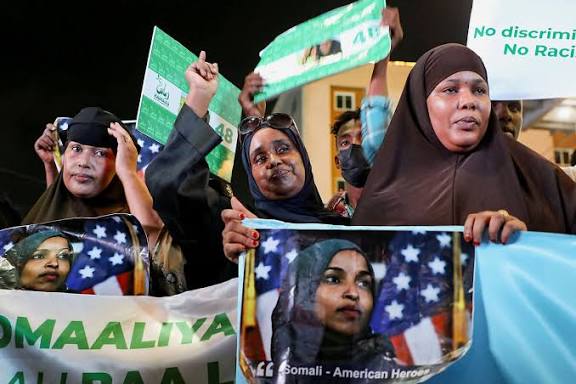
Trump takes aim at Minnesota’s Somali community. Chavarria said the district is assisting law enforcement in investigating ongoing threats. Today we will discuss about School Flag Clash: Somali flag sparks threats, Trump comment blamed
School Flag Clash: Somali flag sparks threats, Trump comment blamed
A simple gesture of cultural recognition at a small American school has erupted into a national flashpoint, exposing the deep currents of political tension, racial anxiety, and divided identity running through the country today. What began as an attempt at supporting a marginalized student community quickly spiraled into threats, outrage, and a broader debate about patriotism, immigration, and the influence of political rhetoric on everyday life.
The “School Flag Clash,” as it has come to be known, centers on a decision by a school district to raise the Somali national flag outside one of its buildings. The flag was meant to acknowledge the district’s Somali students following controversial remarks made by former President Donald Trump, who referred to Somali communities in harsh terms during a recent speech. For school administrators, the flag symbolized care and solidarity. For critics, it became a target—and a symbol of perceived political overreach.
Within hours of the flag going up, the school received a barrage of angry calls, threats, and online harassment. Staff members were targeted, voicemail systems were overwhelmed, and the district was forced to take temporary measures to protect its employees. In a matter of days, a local act of inclusivity morphed into a national political storm.
This article explores what happened, why it escalated, and what the controversy reveals about America’s ongoing battles over identity, culture, and the power of political speech.
A Gesture of Inclusion Turns Volatile
The school’s leadership had intended the flag display to serve as a show of unity for a population of students who felt singled out in the wake of national political comments. Many Somali families in the district had expressed anxiety and hurt after hearing rhetoric portraying their community in a negative light. Administrators believed a supportive gesture was necessary—something visible, immediate, and rooted in the values of belonging.
The Somali flag was raised alongside the U.S. flag and the state flag, not as a replacement but as a symbolic addition. Staff who witnessed the moment described students smiling, taking photos, and expressing pride. Some said they felt acknowledged for the first time in a long time. Others saw the gesture as a quiet assurance that they were part of the school community.
However, once photos of the flag reached social media, context evaporated. Posts mischaracterized the action, with some claiming the school had removed the American flag or was elevating a foreign identity above national unity. These claims were false, but they ignited outrage among thousands who viewed the images without explanation or detail.
Within hours, the school’s phone lines were flooded. Voicemails ranged from angry rants to explicit threats. Staff members were personally named and attacked in online comment threads. The environment became so hostile that the district temporarily limited public access to phone and web communications.
What was meant as inclusion became a storm of hostility.
Students Caught in the Crossfire
Inside the school, the atmosphere shifted dramatically. Somali students, initially uplifted by the gesture, found themselves at the center of a national firestorm. Some felt frightened walking into class; others worried about their families being targeted. Teachers reported that even young children—some only in elementary school—were asking why people were angry at their culture.
Non-Somali students also expressed confusion. Many couldn’t understand why a flag meant to support classmates had triggered so much rage. The sense of safety, pride, and unity among students turned into anxiety and uncertainty.
Administrators held emergency meetings with teachers and counselors, emphasizing the need to protect students emotionally and physically. Mental health supports were offered. Families were kept informed of the district’s efforts to manage the situation.
But students continued to ask the same question: Why would people be so angry about a flag?
The Role of Trump’s Comments
To understand the reaction, one must consider the political backdrop. Former President Donald Trump had recently made remarks that portrayed Somali communities in the United States as problematic, untrustworthy, and detrimental to American society. His comments aligned with earlier critiques he had made during past campaigns, where he often tied immigration issues to national decline or security threats.
These remarks gained traction online, amplified by supporters and detractors alike. To Somali Americans and many immigrant communities, they felt deeply personal—suggesting they were lesser, unwelcome, or un-American. Somali students in various parts of the country reported experiencing teasing, harassment, or fear following the speech.
The school’s flag gesture directly responded to this climate. But Trump’s comments also fueled the backlash. For supporters who viewed his words as a necessary stance on immigration, the school’s action seemed like a public rebuke of their political identity. Social media intensified the polarization: one side saw a school expressing solidarity; the other saw an institution taking an ideological stand.
This collision of perceptions became the spark that ignited the broader controversy.
Patriotism, Identity, and Misunderstanding
Much of the anger hinged on a single misconception: that flying a foreign flag alongside the U.S. flag is an act of disloyalty. Critics argued that American institutions should display only American symbols, insisting that anything else signaled an erosion of national pride.
Supporters countered that schools fly many flags—flags representing cultural heritage, student organizations, and international holidays—as part of efforts to foster inclusion. They pointed out that recognizing students’ backgrounds is not a political act but an educational and humanitarian one.
Across the spectrum, people interpreted the same action through radically different lenses:
Some saw it as compassion.
A way to support vulnerable students during a time of harsh rhetoric.Others saw it as political.
A statement against Trump and, by extension, his supporters.Some saw it as unpatriotic.
A dilution of American identity.Others saw it as essential.
A reflection of America’s diversity and immigrant roots.
The clash wasn’t just about a flag—it was about what the flag represented to different people.
Social Media: The Accelerant
No story about modern outrage is complete without examining social media’s role. Platforms like Facebook, X, TikTok, and Instagram played a pivotal role in escalating the dispute. Short video clips, cropped images, and out-of-context posts spread rapidly, often accompanied by incendiary captions.
A few viral posts claimed the Somali flag “replaced” the American one. Others accused the school of promoting anti-American sentiment. Even after corrections were posted, the misinformation had already taken hold. In the digital ecosystem, anger spreads far faster than facts.
Online outrage mobs began attacking the school’s staff by name. Some urged others to call the school to voice disapproval. This cascade of pressure created a hostile environment that no small school district was prepared to handle.
In a matter of hours, a local administrative decision had become national fodder.
School Leadership Under Fire
The superintendent and school administrators found themselves in an impossible situation: criticized by one group for being too political, and by another for not being political enough in their response. They reiterated repeatedly that flying the Somali flag was not a political statement but a gesture of respect for students.
They also expressed disappointment that national figures and online commentators had amplified misinformation rather than seeking clarity. The district emphasized that its priority was student safety—not political messaging.
Behind the scenes, administrators fielded threats, coordinated with local law enforcement, and worked to maintain a sense of calm for students and families. It became clear that schools are increasingly vulnerable to political storms far outside their control.
Parents Divided—and Worried
Parents across the community reacted in diverse ways.
Somali parents felt a mix of pride and fear.
They appreciated the school’s gesture but worried that the backlash meant their children were being unfairly singled out. Some expressed concern that the hostility might spill over into bullying or physical risk.
Other parents felt blindsided.
They wished the school had communicated the decision beforehand. Not because they opposed cultural inclusion, but because they wanted reassurance that the gesture was educational—not political.
Some parents aligned with critics.
They argued that schools should avoid symbols they believe could inflame political tensions. They felt the gesture was unnecessary and risked dividing the community.
Yet, across all viewpoints, nearly every parent agreed on one thing:
The students should never have become targets in a political conflict.
A Larger National Conversation
The flag clash is not an isolated incident—it reflects a broader national struggle over identity, belonging, and political rhetoric. Schools are increasingly being caught in the crossfire of national debates: about immigration, curriculum content, cultural representation, and the role of public institutions.
This incident raises several pressing questions:
Should public schools celebrate cultural diversity publicly?
When does cultural recognition become political?
How can schools support minority students without inviting backlash?
What responsibility do political leaders have in shaping public tone?
How can communities distinguish between fact and misinformation in a polarized media environment?
The answers are far from straightforward. But navigating these questions is becoming increasingly important as America grows more diverse—and more divided.
The Human Side of the Story
Lost amid the political noise are the human beings at the center of this controversy: children.
The Somali students who saw their flag raised felt recognized in a way their community seldom experiences. For many, it was a rare moment of public celebration of their heritage. That joy quickly turned into confusion and sadness as hostility poured in from strangers far outside their community.
Educators reported that some students asked whether they had done something wrong. Others wondered if celebrating their culture was somehow un-American.
These questions cut to the core of what schools are meant to be: places of learning, acceptance, and safety.
Moving Forward: A Path to Healing
The school district has since convened community forums, listening sessions, and cultural education events to bridge divides. Teachers have incorporated discussions about identity, respect, and civic responsibility into the classroom. Families have engaged in dialogue that had long been avoided.
While not everyone agrees on whether the flag should have been raised, many acknowledge that the incident revealed the need for deeper understanding—and more robust communication—within the community.
The hope now is that the school can move from crisis to clarity, from division to dialogue.
Conclusion: A Flag, a Flashpoint, and a Lesson for America
The School Flag Clash showcases how easily local actions can become national controversies in today’s hyperconnected world. It reveals how political rhetoric—especially when inflammatory—can have real consequences for real communities. It shows the risks schools face when navigating identity in an era where symbolism is scrutinized and misunderstood.
But it also highlights something more meaningful:
A community trying to acknowledge its students.
A group of young people wanting to feel seen.
A school striving to reflect the diversity of the nation it serves.
This story is not just about a flag. It is about what it means to belong, what it means to support one another, and what it means to be American in a time of deep division.
8
How useful was this post?
Click on a star to rate it!
Average rating 0 / 5. Vote count: 0
No votes so far! Be the first to rate this post.
About the Author

usa5911.com
Administrator
Hi, I’m Gurdeep Singh, a professional content writer from India with over 3 years of experience in the field. I specialize in covering U.S. politics, delivering timely and engaging content tailored specifically for an American audience. Along with my dedicated team, we track and report on all the latest political trends, news, and in-depth analysis shaping the United States today. Our goal is to provide clear, factual, and compelling content that keeps readers informed and engaged with the ever-changing political landscape.