Russian Oil Tanker : US seizes Marinera, Russia naval escort, sanctions flashpoint

The US launches operation to seize a Russian-flagged oil tanker belonging to Venezuela. Accepted ship, which changed its name from Bela. Today we will discuss about Russian Oil Tanker : US seizes Marinera, Russia naval escort, sanctions flashpoint
Russian Oil Tanker : US seizes Marinera, Russia naval escort, sanctions flashpoint
In January 2026, a dramatic confrontation unfolded on the high seas that underscored rising tensions between major global powers and exposed the fragile balance between international law, sanctions enforcement, and maritime sovereignty. The seizure of a Russian-flagged oil tanker named Marinera by the United States became far more than a routine enforcement action. It evolved into a geopolitical flashpoint involving naval escorts, diplomatic protests, and renewed debate over the reach of U.S. sanctions in international waters.
The Marinera incident has since become a defining example of how energy politics, military signaling, and international law increasingly collide in a world shaped by sanctions and strategic competition.
The Tanker at the Center of the Storm
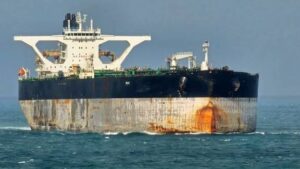
Before it was known as Marinera, the vessel operated under the name Bella 1. It was an aging oil tanker suspected by U.S. authorities of participating in the transport of oil linked to sanctioned regimes, particularly Venezuela. Such vessels are often associated with what officials describe as a “shadow fleet,” a loosely connected network of tankers that use deceptive practices to evade international oversight.
These practices commonly include frequent name changes, re-registration under multiple flags, disabling tracking systems, and transferring oil at sea. According to U.S. officials, Bella 1 had already drawn scrutiny for allegedly bypassing international sanctions long before the events of January 2026.
A Failed Boarding and a Flight Across the Ocean
In late December 2025, U.S. Coast Guard forces attempted to board Bella 1 in the Caribbean Sea as part of a sanctions enforcement operation. The boarding attempt was unsuccessful. The tanker refused compliance and fled the area, beginning a high-stakes journey across thousands of nautical miles.
What followed was a two-week pursuit that stretched from the Caribbean into the vastness of the Atlantic Ocean. Throughout the chase, U.S. surveillance assets monitored the vessel’s movements, while legal authorities prepared the groundwork for possible seizure.
A Strategic Transformation at Sea
During its escape, the tanker underwent a sudden and controversial transformation. While still underway, the crew:
Repainted the vessel’s name from Bella 1 to Marinera
Displayed a Russian flag on the hull
Claimed re-registration under Russian maritime authority
This mid-voyage identity shift was widely interpreted as an attempt to shield the tanker from U.S. action. Under international maritime law, ships sailing under a recognized national flag are typically subject only to the jurisdiction of that flag state while in international waters.
However, maritime legal experts noted that a flag change conducted during flight from law enforcement, without transparent documentation, does not automatically nullify existing legal claims or warrants.
The US Seizure in the North Atlantic
On January 7, 2026, U.S. forces seized the Marinera in the North Atlantic, far from American shores. The operation was conducted under the authority of a U.S. federal court warrant related to sanctions violations.
The seizure marked the culmination of one of the longest maritime enforcement pursuits in recent years. Multiple U.S. agencies were involved, including the Coast Guard, federal law enforcement units, and military surveillance elements. Despite the complexity of the operation and the sensitive diplomatic context, the boarding was completed without reported injuries or direct confrontation.
U.S. officials stated that the seizure was lawful, deliberate, and necessary to uphold international sanctions targeting illicit oil trade.
Russia’s Response: Legal Outrage and Military Signaling
Russia reacted swiftly and forcefully to the seizure of Marinera. Government officials condemned the U.S. action as illegal and accused Washington of violating international maritime conventions.
Diplomatic Objections
Russian authorities asserted that the tanker was lawfully registered under the Russian flag at the time of seizure and therefore protected under international law. Moscow demanded the immediate release of the vessel and crew, calling the action an infringement on sovereignty.
Russian lawmakers went further, labeling the seizure as “state piracy” and warning that such actions undermined the foundations of maritime stability.
Naval Escort: A Rare Escalation
One of the most striking aspects of the incident was Russia’s reported deployment of naval assets—including a submarine—to escort the tanker during part of its voyage. While details of the mission were not officially confirmed, analysts widely viewed the escort as a show of force rather than an operational necessity.
This marked one of the rare instances in modern times where a major power used military assets to protect a commercial tanker from enforcement action by another state. The move raised concerns among defense experts about the growing militarization of sanctions enforcement.
Legal Grey Zones on the High Seas
The Marinera case exposed significant legal ambiguities in modern maritime governance.
Flag State Jurisdiction vs Sanctions Enforcement
International law generally grants exclusive jurisdiction to the flag state of a vessel operating in international waters. However, this principle becomes complicated when a ship is suspected of sanctions evasion or changes its flag under questionable circumstances.
U.S. officials argued that:
The tanker was subject to an existing legal warrant prior to re-flagging
The flag change occurred during an active pursuit
Sanctions enforcement justified intervention despite the claimed registry
Russia, meanwhile, insisted that the re-registration was legitimate and that U.S. actions set a dangerous precedent.
The Shadow Fleet Problem
The Marinera incident drew renewed attention to the growing role of shadow fleets in global energy markets. These vessels operate at the margins of legality, exploiting regulatory gaps and political divisions.
Such fleets have become increasingly common as sanctioned countries seek to maintain oil revenues despite international restrictions. Western governments argue that allowing these operations to continue unchecked undermines sanctions regimes and destabilizes global markets.
The seizure of Marinera signaled that enforcement efforts are expanding beyond regional waters into the open ocean.
Geopolitical Consequences
Strained US-Russia Relations
Already tense relations between Washington and Moscow were further strained by the tanker seizure. While neither side signaled immediate escalation, the incident added another layer of mistrust to an already fragile diplomatic environment.
Message to Global Shipping
The operation sent a clear message to shipowners, insurers, and port authorities: sanctions enforcement is no longer confined to coastal waters or cooperative jurisdictions.
Energy Market Implications
Although the seizure did not cause immediate oil price shocks, it reinforced uncertainty around sanctioned supply chains and maritime insurance. Analysts warned that repeated incidents of this kind could disrupt shipping routes and raise costs for global energy transport.
A Precedent for the Future
The Marinera case may influence how future sanctions are enforced at sea. Governments and international bodies may be forced to clarify rules surrounding:
Mid-voyage re-flagging
Jurisdiction during active pursuits
The role of military escorts for commercial shipping
Without clearer frameworks, similar incidents could escalate more rapidly or involve additional actors.
Conclusion: When Oil, Law and Power Collide
The seizure of the Russian oil tanker Marinera was not just a maritime enforcement action—it was a convergence of energy politics, military strategy, and legal ambiguity. From its origins as Bella 1 to its dramatic capture in the North Atlantic, the tanker became a symbol of how global competition increasingly plays out on the world’s oceans.
As sanctions grow more central to international policy and energy routes remain critical to global stability, incidents like Marinera are likely to shape the future of maritime governance and geopolitical confrontation for years to come.
How useful was this post?
Click on a star to rate it!
Average rating 0 / 5. Vote count: 0
No votes so far! Be the first to rate this post.
About the Author

usa5911.com
Administrator
Hi, I’m Gurdeep Singh, a professional content writer from India with over 3 years of experience in the field. I specialize in covering U.S. politics, delivering timely and engaging content tailored specifically for an American audience. Along with my dedicated team, we track and report on all the latest political trends, news, and in-depth analysis shaping the United States today. Our goal is to provide clear, factual, and compelling content that keeps readers informed and engaged with the ever-changing political landscape.