Rahm Emanuel : Age-75 Cap, Power Shakeup, Political Storm
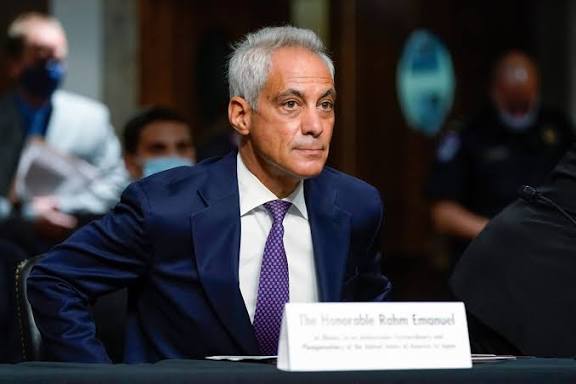
Rahm Emanuel said Wednesday he wants to raise the mandatory retirement age to 75 for the president and all branches of government. Today we will discuss about Rahm Emanuel : Age-75 Cap, Power Shakeup, Political Storm
Rahm Emanuel : Age-75 Cap, Power Shakeup, Political Storm
Rahm Israel Emanuel stands among the most formidable and polarising figures in modern American politics. A strategist, operator, policymaker, and power broker, Emanuel’s career spans Congress, the White House, city hall, and international diplomacy. Today, he is once again igniting national debate — this time with a proposal for an age-75 cap on top public offices, a potential 2028 presidential run, and a broader challenge to the direction of American political leadership.
Early Life and Political Foundations

Born in Chicago on November 29, 1959, Rahm Emanuel grew up in a family deeply connected to public service and international affairs. His father was an Israeli-born physician, and his mother was an active civil rights advocate. These influences shaped his worldview and political instincts from an early age.
Emanuel studied at Sarah Lawrence College and later earned a master’s degree from Northwestern University. His early exposure to grassroots organising and policy debate helped mold his reputation as a sharp, disciplined, and highly competitive political mind.
Rise Through Democratic Power Circles
Emanuel first gained national prominence during Bill Clinton’s 1992 presidential campaign, serving as a key fundraising strategist. His success in campaign finance and political organisation earned him a role in the Clinton White House, where he became known for his intense work ethic and hard-edged negotiating style.
After a period in the private financial sector, Emanuel entered electoral politics and won a seat in the U.S. House of Representatives from Illinois in 2002. He quickly rose through party leadership, becoming chair of the Democratic Congressional Campaign Committee and playing a central role in helping Democrats reclaim the House in 2006.
White House Chief of Staff
In 2009, President Barack Obama appointed Emanuel as his first White House Chief of Staff. In this role, he helped steer the administration through the financial crisis, the passage of the economic stimulus package, and the early battles over healthcare reform.
Emanuel’s leadership style was direct, forceful, and often controversial. Supporters viewed him as a disciplined strategist who could move legislation through a divided Congress. Critics saw him as overly aggressive and politically calculating.
Mayor of Chicago: Reform and Controversy
Emanuel was elected Mayor of Chicago in 2011 and served two terms. His administration focused on fiscal reform, infrastructure investment, and education restructuring. However, his time in office was overshadowed by major controversies.
School Closures and Labor Conflict
Emanuel authorized the closure of dozens of public schools, citing declining enrollment and budget pressures. The decision sparked widespread protests and led to the first major teachers’ strike in decades, straining relations with educators and community leaders.
Police Accountability and the Laquan McDonald Case
The 2014 police shooting of Laquan McDonald became a defining moment of Emanuel’s mayoralty. The delayed release of video evidence created a national outcry and fueled accusations of political interference and lack of transparency. The episode significantly damaged public trust and intensified calls for police reform.
By the end of his second term, Emanuel chose not to seek reelection, and his political standing in Chicago had become deeply divided.
International Role: Ambassador to Japan
Emanuel later returned to federal service as United States Ambassador to Japan. In this diplomatic role, he worked on strengthening U.S.–Japan relations, regional security cooperation, and economic partnerships in the Indo-Pacific. The position enhanced his foreign policy credentials and expanded his global profile.
The Age-75 Cap Proposal
In 2026, Emanuel introduced one of the most controversial policy ideas in recent years: a mandatory retirement age of 75 for presidents, members of Congress, Supreme Court justices, and senior federal officials.
He argued that modern governance requires cognitive agility, rapid decision-making, and generational renewal. While experience is valuable, he claimed, leadership should not become disconnected from the realities of younger voters and emerging global challenges.
The proposal immediately sparked national debate. Supporters praised it as a bold attempt to modernize American leadership and address concerns about aging political institutions. Critics countered that age alone is not a measure of competence and warned that such a limit could violate democratic choice and constitutional principles.
The plan also carried major political implications, potentially affecting current and future candidates across both parties.
Presidential Ambitions and Political Repositioning
At the same time, Emanuel has been increasingly discussed as a possible contender in the 2028 presidential race. His recent speeches and interviews suggest a strategic repositioning as a centrist reformer focused on economic competitiveness, national security, and education.
He has openly criticized his own party for what he describes as cultural overreach and messaging failures, arguing that Democrats must reconnect with working-class voters and focus on practical governance rather than ideological battles.
This stance has drawn both interest and backlash. Some view him as a pragmatic problem-solver who could bridge partisan divides. Others see him as out of step with progressive movements and distrust his record on civil rights and policing.
A Career of Power and Polarisation
Rahm Emanuel’s career reflects the central tensions of modern American politics:
– Experience versus renewal
– Pragmatism versus ideology
– Authority versus accountability
– Strategy versus transparency
He has operated at nearly every level of government, from city administration to international diplomacy. Few political figures possess such a broad portfolio of executive, legislative, and foreign policy experience.
Yet his legacy remains contested. Supporters credit him with effectiveness, discipline, and institutional knowledge. Critics argue that his style prioritizes political control over public trust and community engagement.
Conclusion: The Storm Around a Power Broker
The debate over the age-75 cap, combined with Emanuel’s possible return to national electoral politics, places him once again at the center of a political storm. Whether he emerges as a serious presidential contender or simply as a catalyst for generational reform, his influence on the national conversation is undeniable.
Rahm Emanuel represents a generation of leaders shaped by Cold War politics, post-9/11 security concerns, and the rise of global competition. As the United States confronts questions about leadership age, institutional reform, and political renewal, his voice — controversial, experienced, and unyielding — continues to command attention.
In the evolving struggle over the future of American power, Rahm Emanuel remains not just a participant, but a force capable of reshaping the debate itself.
How useful was this post?
Click on a star to rate it!
Average rating 0 / 5. Vote count: 0
No votes so far! Be the first to rate this post.
About the Author

usa5911.com
Administrator
Hi, I’m Gurdeep Singh, a professional content writer from India with over 3 years of experience in the field. I specialize in covering U.S. politics, delivering timely and engaging content tailored specifically for an American audience. Along with my dedicated team, we track and report on all the latest political trends, news, and in-depth analysis shaping the United States today. Our goal is to provide clear, factual, and compelling content that keeps readers informed and engaged with the ever-changing political landscape.