Policy Shockwave: New Federal Order Drops, States React, Experts Split
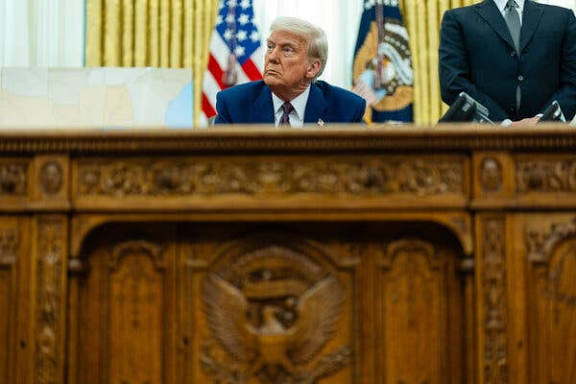
Six months ago, President Donald Trump’s “Liberation Day” tariffs seemed like a shock. Overnight, US tariffs increased. Today we will discuss about Policy Shockwave: New Federal Order Drops, States React, Experts Split
Policy Shockwave: New Federal Order Drops, States React, Experts Split
In early 2025, the United States entered what many observers are calling a new phase of federal policymaking: one marked by sweeping executive orders, aggressive deregulation, and federal reassertion over areas long influenced by agencies or state-led policy. The flurry of new directives — some rescinding prior mandates, others creating new enforcement paths — has sparked what can be described as a “policy shockwave.” The reverberations are being felt across multiple sectors: immigration, education, civil rights, environment, technology, and more.
But the shock is not uniform. While some states and stakeholders have embraced parts of the change, many others have pushed back — legally, politically, and socially. Experts, too, are divided: some hail the orders as attempts to restore “common sense” and federal efficiency; others warn of constitutional overreach, weakening of civil‑rights protections, and long-term damage to regulatory stability and social trust.
This article lays out the contours of the new federal order, delves into how states and institutions are reacting, examines expert opinions, and reflects on what this tumult might mean for the future of American governance.
Major Elements of the New Federal Order

The “policy shockwave” stems from a constellation of executive orders and regulatory moves signed or initiated by the administration in 2025. Some of the most consequential include:
Rolling Back DEI and Civil-Service Mandates
On January 20, 2025, a key executive order was signed, titled “Ending Radical And Wasteful Government DEI Programs And Preferencing.” The order mandates the termination of all federal-level Diversity, Equity, Inclusion, and Accessibility (DEIA) programs. It called for federal departments to purge DEI-related offices, remove DEI language from federal communications and websites, and terminate grants or contracts referencing DEI or related themes.
Simultaneously, another executive order rescinded several prior actions from the preceding administration — including policies around climate, environment, and border enforcement. Collectively, these orders signal a major shift away from socially progressive priorities at the federal level, redefining the role of the federal government and its values.
Deregulation and Shifting Grant/Contract Authority
The administration launched a broad deregulatory push. Multiple agencies are reviewing, delaying, or repealing existing regulations across environmental, labor, health, and economic domains.
In the science funding domain, a controversial order gave political appointees greater authority to influence or terminate research grants — including those from major agencies like the National Institutes of Health (NIH) and the National Science Foundation (NSF). Critics warn this threatens the impartial, merit-based funding system that has long underpinned U.S. research and development.
In defense and procurement, orders aim to overhaul contracting methods, lower regulatory barriers, and accelerate technology acquisition — a bid to streamline what the administration calls an “antiquated” system.
Immigration Crackdown and Sanctuary-Jurisdiction Pressure
Perhaps the most sweeping and controversial shifts have come in immigration policy. The administration reinstated, expanded, and reworked prior efforts to assert federal supremacy over states’ sanctuary laws. Federal authorities were granted broad power to impose expedited removal for undocumented immigrants, deny funding to jurisdictions deemed “sanctuary,” and increase civil and criminal penalties for noncompliance.
The order also affects non-governmental organizations (NGOs) and institutions (e.g., schools, hospitals, universities) operating in sanctuary areas — threatening funding and contracts for those seen as aiding undocumented immigrants.
Regulatory Overhaul in Technology and Finance
On the technology and financial front, the administration issued directives revoking prior policy frameworks that supported central bank digital currency (CBDC) development, and ordered a new regulatory framework for digital assets.
Other orders and directives aim to reorient the government’s posture toward tech regulation: from relaxing regulatory burdens to reframing enforcement philosophies.
State-Level Reactions: Pushback, Resistance, and Legal Challenges
The sweeping scale of these federal moves has triggered a strong — and fragmented — reaction from states, localities, courts, advocacy groups, and civil society. Much of the response reflects deeper tensions over federalism, civil rights, and the balance between national priorities and local autonomy.
Sanctuary States and Immigration Friction
Many states and cities with sanctuary policies responded with legal and legislative countermeasures. The federal government’s attempt to coerce states to enforce federal immigration law — or face funding cuts — has raised constitutional concerns regarding state autonomy.
Several states and localities challenged the orders in court, asserting that the federal government cannot force them to enforce immigration law or jeopardize federal funding as leverage.
In parallel, some states moved to protect immigrant communities: for example, limiting cooperation with enforcement efforts, or passing local laws to safeguard due process and civil‑liberties rights for noncitizens.
Educational Institutions and Civil-Rights Pushback
The purge of DEI initiatives and related funding has provoked concern across higher-education institutions, civil‑rights groups, and communities that rely on federal grants. Universities with longstanding DEI programs — including funding for minority support, research equity, and inclusive hiring — see their programs dismantled or left in limbo.
Some states and civil‑rights organizations argue this undermines decades of progress on equality and inclusion, potentially widening disparities in education, employment, and social services.
Environmental and Clean-Energy Resistance
The administration’s deregulatory agenda — including the rollback of environmental protections and loosening of enforcement — has triggered alarm among states that have made climate and clean-energy commitments.
Some states and local governments have reaffirmed their own environmental policies — rejecting federal rollbacks and pledging to proceed with renewables, efficiency standards, or green regulations irrespective of federal pullback.
Scientific Community Alarm Over Funding Politicization
Researchers and advocacy groups have voiced strong objections to the increased political control over scientific grant allocations. The shift threatens to transform what was traditionally a merit-based, peer-review science funding system into one where political calculus may prevail.
There is concern that critical research — from public health to climate science to social equity — may suffer, particularly projects addressing marginalized communities or controversial topics.
Mixed Institutional Reactions within Defense and Procurement
Some defense contractors and industry stakeholders have welcomed the streamlining of procurement and reduction of regulatory burdens, anticipating faster acquisition cycles and more flexible contracting.
But others warn that rapid deregulation could invite inefficiency, lack of oversight, and long-term strategic risks — especially if safeguards around transparency, accountability, or procurement fairness are undermined.
Expert Split: Supporters vs Critics
As the policy shockwave unfolds, experts remain deeply divided.
Supporters: Efficiency, Federal Unity, Deregulation Gains
Restoring Federal Unity and National Standards — Proponents argue that a strong federal hand helps unify policy across states, eliminating a dangerous patchwork of regulations.
Cutting Bureaucracy, Reducing Waste — The abolishment of DEI offices and redundant federal programs is framed as a way to streamline government and eliminate “wasteful” bureaucracy.
Flexibility and Innovation Encouragement — Deregulation enables innovation, allowing companies and government contractors to move faster and adapt more readily.
Tackling Immigration and Public-Safety Concerns — Supporters argue the federal crackdown addresses illegal immigration more forcefully and ensures nationwide enforcement.
Critics: Constitutional Overreach, Civil Rights Erosion, Regulatory Instability
Erosion of Constitutional Protections & Federal Overreach — Legal scholars argue that efforts to coerce states into enforcing federal immigration law violate principles of federalism.
Danger to Civil Rights & Minority Groups — DEIA purge and rollback of nondiscrimination tools threaten decades of progress in civil-rights protections.
Instability, Uncertainty for Science & Public Policy — Political influence over funding undermines long-term planning in research.
Environmental & Public Health Risks — Weakening regulation may increase pollution and damage ecosystems and communities.
Legal and Institutional Risk — Rapid deregulatory moves could lead to court challenges, reversals, or unpredictable policy swings.
Case Studies & Flashpoints
Education & Civil Rights: DEI Purge Fallout
Universities and educational institutions reliant on DEIA programs face program dismantling or freezes, disproportionately impacting students and researchers from historically marginalized groups.
Immigration & Sanctuary Jurisdictions: Legal Standoff
Several states and cities have filed lawsuits challenging federal enforcement and funding penalties. Court battles will test the balance of federal versus state power.
Science & Innovation: Funding Instability
Research projects funded by federal grants — from climate science to public health — are experiencing funding uncertainty due to increased political control.
Environment & Clean Energy: Regulatory Retreat
With deregulatory moves, states and local authorities committed to climate goals face conflicts with federal priorities, leading some to double down on local green policies.
Defense & Procurement: Opportunity or Risk?
Streamlined acquisition processes create opportunities but also raise concerns about oversight and accountability.
Broader Implications: What This Means for the Future of Governance
Federalism under Strain — Tension over sanctuary policies, state autonomy, and federal mandates could redefine the limits of federal power.
Regulatory Volatility — Rapid rollbacks and reversals may lead to an uncertain environment for businesses, researchers, and institutions.
Erosion of Social-Contract Safeguards — Dismantling DEIA and civil-rights protections may weaken trust in institutions.
Acceleration of Inequality and Polarization — Policies that reduce protections for minorities or undercut environmental and labor safeguards may worsen social and economic inequality.
Rise of State-Level Resistance — States may increasingly assert their own laws, protections, and standards, creating a fragmented national landscape.
Voices from the Experts
“This is a necessary recalibration — a chance to cut bureaucratic fat and return government to core functions.”
“Politicizing science funding is deeply dangerous and threatens long-term studies.”
“Forcing states to act as an arm of federal immigration policy is unconstitutional.”
“This is an ideological shift that undermines inclusion, justice, and trust.”
“States and localities will emerge as the real centers of resistance.”
Conclusion: Riding the Shockwave — Uncertain Waters Ahead
The policy shockwave of 2025 represents a dramatic reordering of federal priorities, tools, and governing philosophy. The depth and breadth of the changes — from immigration and civil rights to science funding, environment, and defense procurement — mark one of the most ambitious federal overhauls in decades.
But the wave is far from unchallenged. Across states, courts, civil society, and expert communities, resistance is mounting. The next few years are likely to see protracted litigation, legislative pushback from states, and fierce political and social contestation.
The “one-size-fits-all” federal order may instead fracture into a mosaic — a patchwork of divergent state laws and values, with citizens’ rights and protections varying dramatically depending on where they live.
Whether this shockwave leads to a leaner, more efficient government or a fragmented, destabilized polity may depend less on the orders themselves and more on how civic institutions, courts, and states decide to respond.
Why “Policy Shockwave” Matters — And What to Watch Next
Critical developments to watch include:
Court challenges to immigration-related executive orders
The fate of scientific and environmental research projects
States pursuing alternative frameworks for DEIA, climate action, or social welfare
Social and political reactions, including activism and elections
Long-term impact on institutional trust and national cohesion
The 2025 policy shockwave may not just change rules — it could reshape the social contract itself.
How useful was this post?
Click on a star to rate it!
Average rating 0 / 5. Vote count: 0
No votes so far! Be the first to rate this post.
About the Author

usa5911.com
Administrator
Hi, I’m Gurdeep Singh, a professional content writer from India with over 3 years of experience in the field. I specialize in covering U.S. politics, delivering timely and engaging content tailored specifically for an American audience. Along with my dedicated team, we track and report on all the latest political trends, news, and in-depth analysis shaping the United States today. Our goal is to provide clear, factual, and compelling content that keeps readers informed and engaged with the ever-changing political landscape.