Pete Buttigieg Hits Fox Claim : Warns of Democratic Rift, Midterm Shockwaves
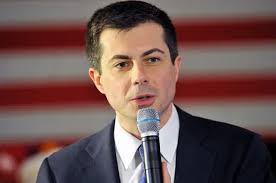
Former US Transportation Secretary Pete Buttigieg joins ‘Saturday in America’ to discuss 2026 midterm elections, growing rift. Today we will discuss about Pete Buttigieg Hits Fox Claim : Warns of Democratic Rift, Midterm Shockwaves
Pete Buttigieg Hits Fox Claim : Warns of Democratic Rift, Midterm Shockwaves
In the intensifying political climate of 2026, former Transportation Secretary and prominent Democratic voice Pete Buttigieg is pushing back loudly against Fox News’ portrayal of American public opinion — especially regarding immigration enforcement and Republican narratives about Democratic unity. Buttigieg’s recent remarks have ignited fierce debate and brought into sharp focus the deepening ideological divide within the Democratic Party and the looming implications for the 2026 midterm elections.
At the heart of this debate is Buttigieg’s rebuttal of a key claim on Fox News that “Americans stand with President Trump’s deportation forces,” a perspective he emphatically dismissed as inaccurate and politically charged. In his response, he argued that most Americans want a balanced, lawful, and humane immigration system — not an unconditional endorsement of harsh federal deportation tactics.
This episode not only underscores Buttigieg’s role as a leading Democratic strategist but also highlights the internal questions and pressures facing Democrats as they confront broader challenges: ideological rifts in their own ranks, messaging ahead of crucial elections, and how best to counter Republican narratives in a highly polarized media environment.
The Setting: Fox News Claim and Buttigieg’s Response

On January 31, 2026, during a segment on Fox News’ program, a host asserted that “Americans clearly called for immigration enforcement… and they do not support calls to abolish ICE,” implying such views reflected broad public sentiment.
In response, Pete Buttigieg, appearing as a Democratic voice, forcefully refuted this framing — arguing that the nation’s view on deportation and border enforcement is significantly more nuanced. He pointed out that ordinary Americans want laws enforced fairly, but they do not support violations of rights or excessive force in that process.
He illustrated his point by referencing widely shared images and stories, such as controversial incidents in Minnesota where federal agents were shown using aggressive tactics at private residences. Buttigieg stressed that Americans broadly do not endorse such images of enforcement, and instead want smart, humane border policies that respect constitutional rights.
His remarks were aimed at countering Fox’s assertion that Americans universally “stand with Trump’s deportation forces,” instead making the case that real public attitudes are more complex and not accurately captured by that claim.
Why This Matters: A Democratic Rift and the 2026 Midterms
Buttigieg didn’t stop at immigration policy. He also used the platform to highlight what he sees as growing ideological divisions within the Democratic Party. Fox News hosts and commentators have repeatedly framed these divisions — such as varying opinions on socialism, law enforcement reform, and border security — as symptomatic of a party that is losing touch with wider American sentiment.
According to this narrative, younger and more progressive Democrats increasingly champion policies that are sharply at odds with more moderate and center‑left factions. Meanwhile, Republicans are attempting to capitalize on these perceived Democratic faults as they gear up for the 2026 midterms, portraying the Democratic coalition as fractured and directionless.
Buttigieg contends that these internal debates — while robust — should not be painted as disunity. Instead, he believes the Democratic Party must clarify its principles while articulating policies that unify rather than fragment its base. He has warned repeatedly that failing to do so could result in a “shockwave” at the midterm polls, where close races could swing based on messaging failures or perceived incoherence.
This theme in Buttigieg’s rhetoric reflects broader concerns among Democrats about their electoral prospects. Many strategists estimate that unified messaging and centrist policy platforms may resonate more with swing voters in competitive districts, especially in the aftermath of the 2024 presidential election where Republicans regained control of the House. While Biden is no longer in office, these midterms are widely seen as a referendum on Republican governance and Democratic vision alike.
Understanding the Broader Debate: Immigration, Public Opinion, and Political Messaging
The back‑and‑forth between Buttigieg and conservative media touches on deeper fault lines in the American electorate.
Public Attitudes on Immigration and Enforcement
Independent polls indicate that most Americans express support for both secure borders and fair, humane immigration practices, rejecting both unchecked entry and excessively punitive tactics. Legitimacy and legality are central concerns for a large segment of voters, meaning that crude rhetorical frames — whether “abolish ICE” or “stand with deportation forces” — often fall flat when tested against citizens’ actual priorities.
This complicated landscape explains why Buttigieg sought to push back: not because immigration enforcement is off the table, but because he believes the national conversation should be rooted in empirical reality and humane enforcement, not oversimplified slogans or fear‑based narratives.
Democratic Party Unity: A Strategic Necessity?
Buttigieg’s warnings about a Democratic rift center on a core paradox: to win broad public support, the party must manage diverse internal currents — from progressive activists demanding bold reforms to centrists advocating incremental policy solutions.
In recent months, these tensions have played out in debates over healthcare expansion, policing reform, and economic policy. While some progressives prioritize structural changes and transformative policies, moderates argue for targeted reforms that can appeal to independents and undecided voters.
Buttigieg’s perspective, rooted in his extensive national campaign experience, suggests that misreading or dismissing these internal divides as mere factionalism could weaken Democrats at the ballot box. Instead, he advocates for consensus‑building and strategic clarity to define what the party stands for in the next electoral cycle.
Buttigieg’s Broader Political Philosophy and Media Strategy
Buttigieg’s response to the Fox News claim isn’t just a media rebuttal — it also reflects his broader approach to politics and communication.
Engaging Across the Media Spectrum
Unlike many Democratic leaders who shun conservative networks, Buttigieg has often appeared on outlets like Fox News deliberately, arguing that such platforms reach audiences that might otherwise remain unexposed to Democratic viewpoints.
His strategy recognizes a key reality of the contemporary media landscape: partisan echo chambers dominate many viewers’ news consumption. By stepping into platforms where Democrats are typically underrepresented, Buttigieg seeks not only to rebut claims but to inject alternative narratives into the broader discourse.
Policy Arguments Over Partisan Attacks
Buttigieg has also emphasized substantive policy debates over purely partisan rhetoric. His rebuttal of the Fox claim didn’t simply dismiss it as incorrect — he anchored his response in specific real-world examples and pointed to policy domains where public values and enforcement realities diverge.
This approach aligns with his broader view that political battles are won not just by scoring points against opponents, but by presenting coherent alternatives that resonate with everyday voters.
Reactions and Implications: Political and Electoral Fallout
Buttigieg’s remarks have sparked varied reactions across the political spectrum.
From Democratic Strategists
Many within the Democratic camp have applauded his willingness to confront polarizing narratives, especially those they consider distortions of voter sentiment. Some strategists argue that rebutting misinformation and clarifying party values will help Democrats retain key districts and prevent Republican gains.
Critiques From Conservative Media
Conversely, conservative commentators have dismissed Buttigieg’s remarks as politically motivated and emblematic of what they see as Democratic denial about public opinion on law and order issues. Some pundits have suggested his refusal to concede any ground on Fox’s claim demonstrates a broader Democratic inability to accept electoral setbacks or voter priorities.
Impact on Midterm Dynamics
Most importantly, observers see these exchanges as a bellwether for the 2026 midterms. Polarized issue framing — particularly around immigration, public safety, and economic policy — will likely shape battleground races in states with razor‑thin margins.
Should Democrats fail to unify their messaging or effectively counter Republican narratives, they risk ceding ground in key contests. Conversely, if leaders like Buttigieg can articulate clear, compelling alternatives that align with voter concerns, Democrats may be better positioned to retain or even expand influence despite partisan headwinds.
Conclusion: A Strategic Crossroads for Democrats
Pete Buttigieg’s forceful response to Fox News’ claim about American support for deportation forces is not just a rebuttal of one network’s rhetoric — it symbolizes a broader strategic crossroads for the Democratic Party as the nation heads into a pivotal election year.
By challenging what he perceives as misleading narratives, emphasizing nuanced public attitudes, and urging internal cohesion, Buttigieg is attempting to steer Democratic discourse toward a more grounded, voter-focused trajectory — one that acknowledges ideological diversity while seeking common purpose.
Whether this approach will translate into electoral success remains uncertain, but one thing is clear: in an era defined by polarization, bold communication and smart strategy will be indispensable — and voices like Buttigieg’s will continue shaping the conversation in ways that resonate far beyond a single cable news segment.
How useful was this post?
Click on a star to rate it!
Average rating 0 / 5. Vote count: 0
No votes so far! Be the first to rate this post.
About the Author

usa5911.com
Administrator
Hi, I’m Gurdeep Singh, a professional content writer from India with over 3 years of experience in the field. I specialize in covering U.S. politics, delivering timely and engaging content tailored specifically for an American audience. Along with my dedicated team, we track and report on all the latest political trends, news, and in-depth analysis shaping the United States today. Our goal is to provide clear, factual, and compelling content that keeps readers informed and engaged with the ever-changing political landscape.