NYC Chaos: Migrants Rise, Public Opinion Shifts
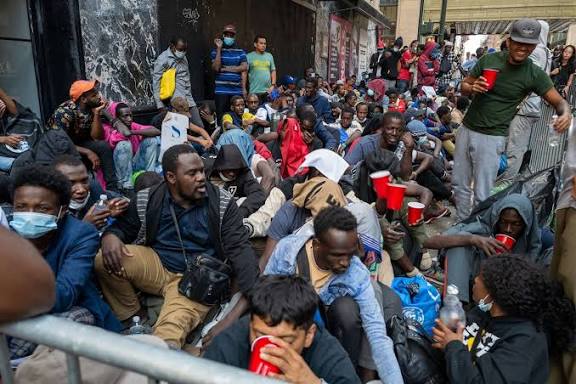
New York’s ability to spend money on illegal immigrants ‘is not unlimited,’ the state’s top budget maker said. Today we will discuss about NYC Chaos: Migrants Rise, Public Opinion Shifts
NYC Chaos: Migrants Rise, Public Opinion Shifts
Since the spring of 2022, New York City (NYC) has experienced a surge of migrants that has profoundly reshaped the city’s social, economic, and political landscape. What began as a humanitarian challenge has evolved into a defining urban crisis — one that is increasingly influencing public opinion, straining city resources, and shaping electoral politics. This article explores how the migrant influx grew, how the city responded, and how the attitudes of New Yorkers have shifted in response.
1. The Surge: From Border to Boroughs
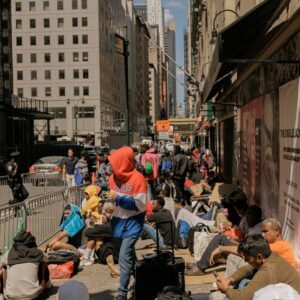
According to city estimates, more than 237,000 migrants and asylum‑seekers have arrived in New York City since spring 2022.
At the peak of the crisis in January 2024, the city was sheltering 69,000 migrants in a single day, housed in hotels, emergency shelters, and makeshift facilities across the five boroughs.
By mid‑2025, that number had dropped to fewer than 37,000 migrants in city care, as many were resettled, moved on, or left the shelter system.
Still, the wave left deep scars: at its height, the influx put enormous pressure on housing, social services, public schools, and municipal finances.
City institutions scrambled to respond: hotels — once part of the hospitality industry — were converted into emergency shelters; historic buildings became temporary intake- and housing-centers. One of the most visible symbols of this transformation was Roosevelt Hotel in Midtown Manhattan, repurposed as a massive “arrival center” and migrant shelter.
These measures were born out of necessity. The sharp rise in asylum‑seeker arrivals overwhelmed existing shelter capacity; without decisive action, city officials feared mass homelessness, public‑health crises, and a spiraling humanitarian disaster.
2. The Price Tag: Fiscal, Logistical, and Social Costs
The crisis has come with a steep cost — in dollars, services, and social cohesion.
Estimates suggest that by 2025, the total cost to New York City for caring for asylum seekers could reach $12 billion.
Historically, before the surge, the city’s per‑person shelter costs were modest; but converted hotels proved expensive. For example, under contracts with hotels, the city paid an average of US$156 per night for rooms — plus additional service costs — making the “all-in” shelter cost around US$332 per day.
Beyond economics, the sudden influx disrupted social services: public schools saw tens of thousands of new students, many with limited English and unfamiliar with the U.S. school system; shelters strained under enormous demand; neighborhoods adjusted to new patterns of residency and movement.
For several years, city agencies worked overtime: workforce‑integration programs, asylum‑application assistance, shelter management, translations, legal aid. By mid‑2025, officials reported that over 90% of eligible adults in city care had applied for work authorization.
Still, the sustainability of these efforts remained a concern — both fiscally and socially: could the city continue to absorb the load without severe strain on its budget, housing stock, and public services?
3. The Shift: Public Opinion Turning Critical
Perhaps the most significant effect of the migrant crisis has been the shift in public mood among longtime New Yorkers. What began as a hesitant welcome or tolerance for newcomers has increasingly hardened into widespread frustration — even alarm.
A 2025 poll found that 55% of New Yorkers say the city is less safe than it was in 2020 (only 16% said it’s improved).
In the same poll, 54% said NYC’s immigration policies are “too soft”; 72% supported cooperation with federal authorities to deport undocumented immigrants who committed crimes; and 69% opposed the city’s “sanctuary city” status.
On issues of policing and public safety, majorities across demographic and political divides favored more police presence — including in subways — and backing away from progressive criminal-justice reforms like bail reform.
Media reporting and public‑opinion surveys reinforced the trend: in one survey, nearly two-thirds of NYC residents said the migrant influx had severely impacted their quality of life, citing strain on housing, public services, and public safety.
Another statewide survey found that 83% of voters saw the migrant influx as a serious issue — with 57% calling it “very serious.”
In short: what many initially saw as a humanitarian challenge is increasingly viewed by residents as a public‑safety and quality‑of-life crisis. The shift reflects fatigue, economic pressure, and concerns about long-term livability — not only among conservative or right-leaning voters, but across wide swaths of the city’s electorate.
4. Political Fallout: Governance, Leadership & the 2025 Mayoral Race
The migrant surge and shifting public mood have hammered political leaders and reshaped electoral dynamics in New York.
Serving mayor Eric Adams has seen his approval rating plummet. As of March 2025, a poll put his approval at just 20%, with 67% disapproving.
The same public dissatisfaction — over crime, immigration, housing affordability — appears to be driving demand for a different kind of leadership: one perceived as more pragmatic, results‑oriented, and tough on public-safety issues.
In the 2025 mayoral primary race, these concerns intensified. A poll conducted in May 2025 found that a significant portion of voters expressed that their family finances had weakened over the past year; many said their primary concern was public-safety and crime.
The election outcome reflects a city at the crossroads: voters are signalling that migrant policy — along with public safety, housing, and cost-of-living issues — will strongly influence who governs the city next.
In effect, the migrant crisis has become a central “ballot issue,” reshaping political coalitions and priorities in a city long known for liberal values.
5. Some Relief — but the Crisis Isn’t Over
Though arrivals have slowed and shelter populations have dropped, experts caution that the crisis is far from resolved.
By July 2025, city officials announced the closure of multiple large shelters — including the Roosevelt Hotel — citing a sharp decline in new arrivals and improvements in the overall “shelter census.”
The city reports having helped more than 111,000 migrants file for work authorization, and connected many to job opportunities, offering a path toward self-sufficiency.
Yet structural issues — housing shortage, high cost of living, stretched social services — remain. Even with reduced inflows, the pressure on infrastructure, schools, and neighborhoods persists.
Moreover, the public mood remains wary: scars of fear, anxiety, and distrust linger among longtime residents, and policymakers are under intense pressure to deliver results — not just rhetoric.
6. What This Means for NYC’s Future
The migrant surge and ensuing public reaction underscore a larger dynamic: large-scale migration can, overnight, reshape a city’s demography — but also radically shift public sentiment, policy priorities, and governance.
For New York, the implications are significant:
Governance under scrutiny: City leadership is being judged not only on compassion or humanitarian values, but also on capacity, safety, and delivery of basic services.
Social cohesion challenged: As resources stretch thin — housing, schooling, public safety — tensions can rise between new arrivals and existing communities.
Electoral re-alignment: The crisis has highlighted immigration and public safety as core political issues, reshaping voter preferences and party dynamics ahead of local elections.
Budget and long-term infrastructure stress: Multi‑billion‑dollar costs threaten to crowd out other priorities unless the city finds sustainable, long-term solutions.
Yet there is also hope: through targeted integration efforts, work authorization, and community cooperation, many migrants may become contributing residents. How successfully New York balances compassion with pragmatism will shape its trajectory for years to come.
7. Conclusion
The story of “NYC Chaos” — the migrant surge, the city’s scramble to respond, and the rising tide of public frustration — is not just about numbers. It’s about a city being tested: its capacity for compassion, its limits of infrastructure, and the resilience of its communities.
In just a few short years, New York has witnessed one of the largest influxes of migrants in recent memory. The city responded — sometimes chaotically, sometimes heroically. But as the dust begins to settle, the emotional and political arithmetic has changed. Once‑welcoming open arms are increasingly giving way to anxious skepticism.
For New York to weather this storm without fracturing socially or financially, it will need leadership capable of balancing urgent humanitarian obligations with long-term planning, social stability, and civic trust.
Because if history teaches us anything: large waves of migration don’t just move people — they reshape cities.
How useful was this post?
Click on a star to rate it!
Average rating 0 / 5. Vote count: 0
No votes so far! Be the first to rate this post.
About the Author

usa5911.com
Administrator
Hi, I’m Gurdeep Singh, a professional content writer from India with over 3 years of experience in the field. I specialize in covering U.S. politics, delivering timely and engaging content tailored specifically for an American audience. Along with my dedicated team, we track and report on all the latest political trends, news, and in-depth analysis shaping the United States today. Our goal is to provide clear, factual, and compelling content that keeps readers informed and engaged with the ever-changing political landscape.