Minneapolis Chaos : ICE shooting sparks protests, Trump threatens Insurrection Act, city tensions soar
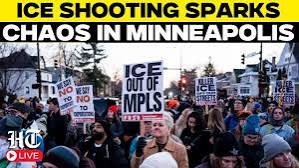
Protests in Minneapolis escalated Wednesday night after a federal officer shot and wounded a Venezuelan migrant after an attack on him. Today we will discuss about Minneapolis Chaos : ICE shooting sparks protests, Trump threatens Insurrection Act, city tensions soar
Minneapolis Chaos : ICE shooting sparks protests, Trump threatens Insurrection Act, city tensions soar
Minneapolis has once again become the epicenter of national conflict and debate in the United States. What began with federal immigration enforcement operations has escalated into persistent protests, street clashes, intense political confrontation, and threats from the highest levels of government to deploy the military on U.S. soil.
This moment follows multiple shootings involving U.S. Immigration and Customs Enforcement (ICE) agents, significant demonstrations in the streets, and an extraordinary political response from former President Donald J. Trump, who has publicly threatened to invoke the Insurrection Act to quell unrest.
The Immediate Trigger: Federal Enforcement & Shootings
Federal Immigration Surge
Late in 2025 and into January 2026, the Department of Homeland Security (DHS), including ICE and other federal agents, initiated an aggressive immigration enforcement surge in the Minneapolis–Saint Paul area. This operation, part of broader enforcement under the Trump administration’s immigration policy, involved thousands of agents conducting targeted stops, raids, and arrests across the community.
This large federal presence, particularly in neighborhoods with significant immigrant populations, was controversial from the start. Local officials and community leaders argued it was heavy-handed and disrespectful of civic autonomy, while federal authorities maintained it was lawful enforcement of immigration statutes.
Shooting of Renee Nicole Good
The first flashpoint in January 2026 came on January 7, when an ICE agent shot and killed 37-year-old Renee Nicole Good, a U.S. citizen, during an encounter related to federal enforcement activity. Video footage circulated widely on social media and local news, sparking immediate outrage.
City and state leaders, including Minneapolis Mayor Jacob Frey, condemned the fatal shooting, questioning federal transparency and demanding independent investigations. Meanwhile, federal officials labeled the shooting justified.
The community response was swift: demonstrations, vigils, and protests emerged that very weekend. Thousands of residents and activists took to the streets to decry what they saw as unaccountable federal violence and a disregard for civil rights.
Second Shooting & Renewed Turmoil
Just days later, on January 14, Minneapolis saw a second shooting involving ICE personnel. According to DHS statements, federal agents attempted a targeted traffic stop of a Venezuelan man allegedly in the country illegally. When the man fled, crashed, and resisted arrest, an altercation with agents—including what DHS described as attacks with a snow shovel and broom handle by nearby individuals—led a federal officer to fire, injuring the man in the leg.
The Minnesota Bureau of Criminal Apprehension and city police responded, and the wounded man was taken to a hospital. The shooting location—north Minneapolis—quickly became another protest site as crowds gathered and tensions flared once again.
The proximity of this incident to the earlier fatal shooting deepened public fury and raised broader questions about federal tactics and strategy in Minneapolis.
Protests and Street Tensions
Sprawling and Diverse Demonstrations
Protests in Minneapolis now occur almost daily, with crowds ranging from a few hundred to several thousand people. Demonstrators include longtime activists, immigrant rights supporters, local residents, and national organizations. Protesters have called for:
Accountability and transparency in federal law enforcement actions,
Withdrawal of ICE operations from Minneapolis,
Local and federal policy reforms, and
Justice for Renee Good and others affected by enforcement encounters.
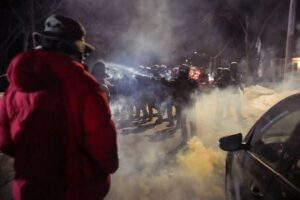
Some gatherings have remained peaceful, featuring speeches, chants, and vigils. Other demonstrations have been marked by clashes with federal agents and law enforcement, including the use of tear gas, flashbangs, and crowd-control measures.
A smaller faction of protesters has resorted to property damage, rock throwing, and defacing vehicles with violent messages directed at ICE personnel, further complicating the scene.
Local Leadership: Calls for Calm
City and state officials have consistently walked a difficult tightrope.
Mayor Jacob Frey has condemned both federal actions and violent behavior in the streets, calling the situation “unsustainable” and stressing that responding to federal tactics with further chaos only worsens community conditions.
Minnesota Governor Tim Walz has urged peace and restraint, warning that violence plays into a harmful narrative and promising legal and political action against aggressive enforcement.
Despite these calls, protests have often clashed with federal officers, including confrontations that authorities labeled “unlawful.”
Trump’s Controversial Insurrection Act Threat
Perhaps the most dramatic political development came on January 15, 2026, when former President Donald Trump publicly threatened to invoke the Insurrection Act to deploy U.S. military forces to Minneapolis if state and local authorities could not bring order to the protests.
Insurrection Act Explained
The Insurrection Act of 1807 is a rarely invoked federal law that allows a U.S. president to use military troops domestically to suppress civil disorder, rebellion, or insurrection when normal law enforcement resources are insufficient. Under the act:
Active military forces may be deployed on U.S. soil,
The National Guard can be federalized without the consent of state governors,
Troops can perform law enforcement roles normally prohibited under the Posse Comitatus Act.
Trump’s statement warned that if Minnesota officials did not stop what he described as “professional agitators and insurrectionists” attacking ICE agents, he would use the act “to quickly put an end to the travesty … taking place in that once great State.”
This was immediately controversial:
Supporters of Trump’s position saw it as necessary to restore order and protect federal law enforcement personnel.
Critics, including civil liberties advocates and some national commentators, argued the threat of military deployment against domestic protests was extreme, potentially unconstitutional, and likely to inflame tensions further.
Even some public figures argued that peaceful protest is a protected right and does not constitute insurrection, warning that broad application of the act could set dangerous precedents.
Political and Public Reaction
National Debate Amplified
The Minneapolis crisis has rippled far beyond the city’s borders. Talk show hosts, national politicians, and commentators have weighed in. Some see Minneapolis as symbolic of deeper tensions over immigration enforcement, civil liberties, and federal vs. local power. Others view it as a battleground on fundamental governance and law enforcement philosophies.
Social media has reflected fierce debate, with some users contending protesters are simply exercising rights and others warning of institutional breakdown if federal authority is not asserted. Online discourse mirrors the polarization seen in public polling, where the nation remains deeply divided on immigration enforcement priorities and protest legitimacy.
Historical Context and Broader Implications
Minneapolis’s current unrest is not without precedent. The city previously faced national scrutiny and extended protests in 2020 after the murder of George Floyd by police. Those events sparked widespread calls for policing reform and racial justice in the U.S. and internationally.
Yet the current crisis is distinctly shaped by federal immigration policy and enforcement operations. The use of federal authority within local communities, especially against predominantly immigrant populations, has deepened distrust. It also highlights ongoing debates over federalism, civil rights, and the limits of executive power.
What’s Next? Scenarios & Challenges
1. Potential Escalation
If protests grow and clashes continue, the risk of broader unrest rises. Invocation of the Insurrection Act—even as a threat—could further polarize communities and set a high-stakes legal and political confrontation between federal and state governments.
2. Legal Challenges
State leaders and civil rights groups may pursue legal action against federal enforcement tactics or the deployment of military forces without consent.
3. Public Safety Concerns
Every escalation carries risks to bystanders, protesters, and law enforcement alike. Ensuring safety while respecting constitutional rights will be a central tension.
4. National Political Ramifications
Minneapolis’s turmoil comes at a politically charged moment in U.S. history. How this situation influences national elections, immigration policy debates, and public trust in institutions remains to be seen.
Conclusion: Minneapolis at a Crossroads
The recent chain of events—two ICE-related shootings, large-scale protests, community unrest, and the extraordinary threat to invoke the Insurrection Act—reflects a city and a nation deeply divided over policing, immigration, and governance.
Minneapolis now stands at a crossroads, embodying some of the most contentious issues facing the United States today. Whether its streets find peace through dialogue and reform, or descend further into conflict with military involvement, will have profound consequences for American democracy and civic life.
How useful was this post?
Click on a star to rate it!
Average rating 0 / 5. Vote count: 0
No votes so far! Be the first to rate this post.
About the Author

usa5911.com
Administrator
Hi, I’m Gurdeep Singh, a professional content writer from India with over 3 years of experience in the field. I specialize in covering U.S. politics, delivering timely and engaging content tailored specifically for an American audience. Along with my dedicated team, we track and report on all the latest political trends, news, and in-depth analysis shaping the United States today. Our goal is to provide clear, factual, and compelling content that keeps readers informed and engaged with the ever-changing political landscape.