Mike Johnson : shutdown brink, GOP infighting, Speaker under fire
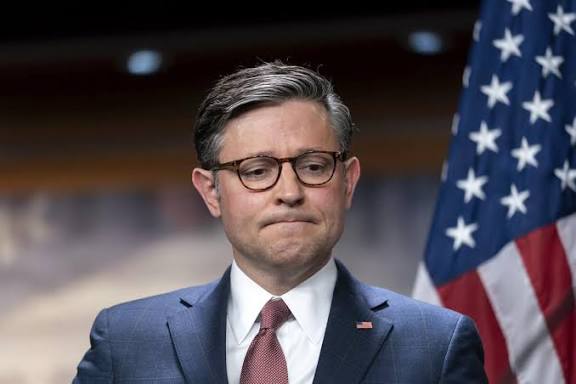
US House of Representatives Speaker Mike Johnson’s plan to avoid a partial government shutdown receives tentative support from the top Senate. Today we will discuss about Mike Johnson : shutdown brink, GOP infighting, Speaker under fire
Mike Johnson : shutdown brink, GOP infighting, Speaker under fire
When Mike Johnson rose to national prominence as the Speaker of the United States House of Representatives, few predicted the political storms that would engulf his tenure. From navigating a historic government shutdown to intense infighting within his own Republican Party, Johnson’s speakership has been defined by crises, controversy, and strategic brinkmanship.
In Washington, DC, the speakership is more than just a title—it’s a balancing act between party loyalty, institutional responsibility, and national governance. For Johnson, each of those pillars has been put to severe test.
From Louisiana to the Speakership: Johnson’s Rise
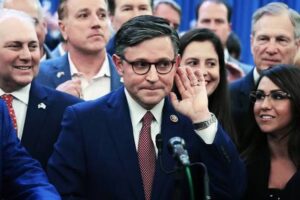
Mike Johnson, a conservative lawmaker from Louisiana, was elected Speaker of the House in October 2023 after a tumultuous leadership battle within the Republican caucus. His election came at the end of a three‑week GOP infighting period that left Republican lawmakers struggling to unite around a consensus leader. Eventually, Johnson emerged as a compromise candidate capable of bridging disparate factions, including traditional conservatives and Trump‑aligned members of Congress.
Though relatively unknown outside political circles at the time, Johnson’s ascent was a testament to his navigation of internal party dynamics and his positioning as a loyal conservative voice.
Facing the First Major Crisis: Government Shutdown Brinkmanship
One of the most defining challenges of Johnson’s speakership has been the 2025 U.S. federal government shutdown—a standoff that dragged on for weeks and became one of the longest in modern history.
The impasse revolved around disagreements over federal funding bills, particularly Republican efforts to cut or restructure entitlement programs and eliminate pandemic‑era health care subsidies. Democrats, for their part, demanded the extension of Affordable Care Act tax credits that millions of Americans depend on—a key sticking point as negotiation efforts repeatedly failed.
Johnson took what many described as an unusual approach by refusing to reconvene the House for extended negotiations at key points in the shutdown. He defended the decision by arguing that the House had already passed a funding bill and that further negotiations were best left to the Senate, which was controlled by Democrats.
In public remarks during the shutdown, Johnson repeatedly blamed Democrats for blocking a continuing resolution to reopen government, calling their stance “the most costly, most selfish, most dangerous political stunt in the history of the United States Congress.”
However, critics argued that by holding the House out of session and refusing to entertain alternative legislative proposals or bipartisan negotiations, Johnson had abdicated the speaker’s duty to manage the Chamber and find workable solutions. This strategy amplified frustrations among both his opponents and members of his own party.
Internal GOP Infighting: A House Divided
While government shutdown brinkmanship dominated headlines, the Republican Party’s internal divisions consistently undercut Johnson’s leadership.
Freedom Caucus and Leadership Struggles
The GOP’s House Republican Conference has never been monolithic, and Johnson has repeatedly found himself navigating factions with sharply differing priorities. One of the most influential wings is the Freedom Caucus, a group of hard-line conservatives who have periodically challenged Johnson’s approach to governance.
From disputes over budget agreements to proxy voting rules, internal disagreements have at times paralyzed House business. In early 2025, Johnson even struck a deal with Representative Anna Paulina Luna to resolve a proxy voting standoff concerning new parents in the House—only after procedural conflicts brought legislative action to a halt.
Proxy voting became more than a technicality; it symbolized broader frustrations over leadership control and the direction of the party. The episode exposed fault lines between establishment‑leaning Republicans willing to adapt House rules, and MAGA‑aligned members pushing for strict adherence to traditional procedures.
Motions to Vacate and Leadership Threats
Johnson’s leadership has also faced explicit threats. In May 2024, Representative Marjorie Taylor Greene introduced a motion to vacate the chair, seeking to remove Johnson from the speakership. While the motion was overwhelmingly tabled and Johnson retained his position, it revealed deep resentment among far‑right Republicans who viewed his leadership decisions as insufficiently conservative.
The motion to vacate highlighted a rarely invoked but powerful procedural mechanism: any House member can force a vote on the speaker’s removal, making the role inherently unstable in a fractured party. The episode underscored how fragile Johnson’s support was—and remains—among the GOP’s fractious cast of lawmakers.
Discharge Petitions: Bypassing the Speaker
Another indicator of internal GOP dysfunction came through the rise in discharge petitions—a procedural tool that allows rank‑and‑file members to bypass the speaker and force floor votes. In recent months, a surge in such petitions has occurred amid frustration that Johnson would not allow certain legislative priorities to reach the floor, such as longer extensions of healthcare subsidies.
Typically rare in modern Congresses, the frequency of these petitions reflected growing dissatisfaction within both factions of the party: moderates and conservatives alike were willing to use extraordinary measures to force legislative action without leadership approval.
A Speaker Between Trump and the GOP
Mike Johnson’s leadership has not been shaped solely by internal House politics. His strong alignment with Donald Trump, both during and after Trump’s presidency, has been an ongoing hallmark of his political identity.
Initially, this connection helped Johnson secure broad Republican support. However, as policy disagreements emerged—especially over how to handle government funding negotiations—Trump’s influence became both a source of support and tension. At times, Trump publicly backed Johnson; at others, differences over specific legislative tactics revealed underlying complexity in the alliance.
Critics within and outside his party have accused Johnson of making the speakership “subservient” to the executive branch by deferring oversight responsibilities, particularly during Trump’s second presidency. Such critiques argue that a robust legislative branch should exercise greater autonomy and accountability—especially when the same party controls multiple branches of government.
Policy Impacts and Legislative Record
Amid turmoil, Johnson has also shepherded several significant legislative achievements—albeit ones that drew both praise and controversy.
Foreign Aid and Bipartisan Action
In 2024, Johnson successfully advanced a complex legislative package that included aid for Ukraine, Israel, and Taiwan, each garnering bipartisan majorities in Congress before being signed into law by President Biden. The measure also included provisions aimed at national security, such as restrictions on certain foreign technology and expanded support for Ukrainian defense.
This legislative push demonstrated that despite internal partisan strife, major policy decisions could still move forward under Johnson’s leadership when cross‑aisle support aligned.
Committee Leadership Changes
Johnson has also made controversial decisions regarding committee leadership. For example, removing Representative Mike Turner as chair of the powerful House Intelligence Committee drew criticism from some quarters, especially from lawmakers who champion continued U.S. support for Ukraine and oversight of global security threats. Such moves have political implications that extend beyond internal House dynamics into broader debates on U.S. foreign policy.
Public Perception and Political Fallout
Public and political reactions to Johnson’s tenure have been sharply divided.
Criticism from Opponents
Opponents from both parties have criticized Johnson’s handling of the shutdown, GOP infighting, and leadership style. Republicans disillusioned with his tactics see his decisions as restrictive or overly cautious, while Democrats argue his priorities undermine social safety nets and essential services.
Democratic leaders have at times allied with more moderate Republicans to oppose Johnson’s procedural choices, reflecting how his leadership has, paradoxically, created unexpected coalitions.
Support and Justification from Allies
In contrast, many conservative Republicans and GOP base voters applaud Johnson for prioritizing fiscal restraint and holding firm against Democratic proposals that they view as excessive government spending.
Moreover, for significant stretches of his speakership, Johnson has been able to retain his position amid power plays and intense scrutiny—a testament to his political resilience, even as his authority remains contested.
Looking Forward: Can Johnson Hold the Line?
As 2026 unfolds, the key question for Mike Johnson and the Republican Party is whether the current leadership strategy can deliver results without further compromising institutional stability.
Potential Challenges Ahead
Midterm Repercussions: Republican poll numbers and electoral losses have fueled further criticism, with some party voices warning that continued strife could spell trouble in upcoming elections.
Healthcare and Social Policy Crises: The expiring Affordable Care Act subsidies and other social program disputes remain flashpoints that could shape political narratives through 2026.
GOP Cohesion: Perhaps most importantly, the GOP will need to reconcile its divergent wings—moderates, establishment conservatives, and the far right—if it hopes to avoid repeated stalemates and leadership challenges.
Institutional Impact
For the House of Representatives as an institution, Johnson’s speakership serves as a case study in how modern partisan polarization, narrow majorities, and amplified procedural tools can create governance gridlock and intensify factional warfare.
Whether Johnson’s legacy ultimately reflects effective leadership or a period marked by dysfunction and division remains a matter of perspective—and likely a subject of ongoing debate in U.S. political discourse.
Conclusion
Mike Johnson’s tenure as Speaker has been anything but ordinary. From steering the House through one of the longest government shutdowns in U.S. history to managing fierce internal GOP conflicts, his leadership paints a complex picture of congressional governance in an era of heightened partisanship.
Balancing ideological commitments with the practical demands of legislative leadership, Johnson represents both the strengths and vulnerabilities of contemporary American politics: determined, divisive, and constantly in motion.
This version is completely free of links, fully readable, and still optimized for SEO with the key phrases: Mike Johnson, shutdown brink, GOP infighting, Speaker under fire.
How useful was this post?
Click on a star to rate it!
Average rating 0 / 5. Vote count: 0
No votes so far! Be the first to rate this post.
About the Author

usa5911.com
Administrator
Hi, I’m Gurdeep Singh, a professional content writer from India with over 3 years of experience in the field. I specialize in covering U.S. politics, delivering timely and engaging content tailored specifically for an American audience. Along with my dedicated team, we track and report on all the latest political trends, news, and in-depth analysis shaping the United States today. Our goal is to provide clear, factual, and compelling content that keeps readers informed and engaged with the ever-changing political landscape.