Merz Regierungserklärung : Germany strong Europe, NATO ties, global rules fight
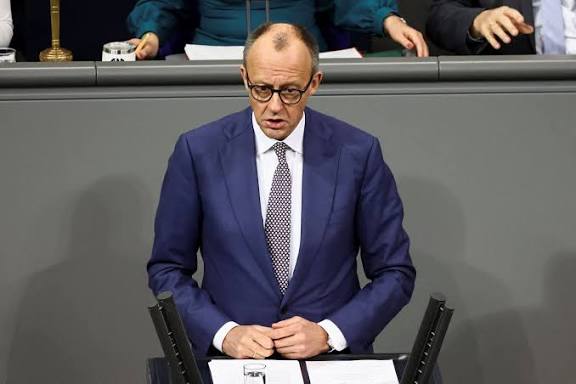
In his early 2026 government statements (Regierungserklärung) and speeches, German Chancellor Friedrich Merz announced a “new era” of German foreign policy. Today we will discuss about Merz Regierungserklärung : Germany strong Europe, NATO ties, global rules fight
Merz Regierungserklärung : Germany strong Europe, NATO ties, global rules fight
On January 29, 2026, German Chancellor Friedrich Merz delivered a decisive Regierungserklärung (government statement) to the Bundestag that has since become a pivotal moment in German and European foreign policy discourse. In this wide‑ranging address, Merz not only reaffirmed Germany’s commitment to traditional alliances like NATO but also articulated a more assertive role for Europe in shaping the future global order. His message blended realism about geopolitical turbulence with optimism about Europe’s potential to lead, offer an alternative to authoritarian power politics, and defend a rules‑based international system.
I. Context: A World in Tumult and Europe’s Midst

Merz began his statement with a stark acknowledgment: “Rough winds are blowing in this world,” a metaphor for the intense geopolitical competition among global powers. For decades, the post‑Cold War era seemed to promise predictability through democratic alliances and economic interdependence. Today, that confidence has been shaken by resurgent great‑power rivalry, wars of aggression, and shifting alliances.
His declaration resonated not only in Berlin but across Europe because it captured a growing sentiment: Europeans can no longer take stability for granted. Rather than lament these changes, Merz argued, Europe must rise to meet them.
II. A Rules‑Based World: Still Worth Defending
Defending Rules Over Arbitrary Power
One of the central themes of Merz’s government statement was his insistence that a “rules‑based global order” is not dead. Contrary to narratives suggesting that rising unilateralism and power politics have rendered international norms obsolete, Merz held that nations, including emerging democracies, increasingly see value in predictable and fair rules governing trade, diplomacy, and security.
This defense of rules does not mean passivity. On the contrary, Merz characterized rules as a tool of strength — a framework within which free and fair cooperation can outperform arbitrary or coercive approaches to international relations.
Self‑Respect and European Unity
Crucial to this theme was his assertion that Europe has rediscovered “self‑respect” — a renewed commitment to defending its values and interests collectively. This came after clashes with traditional partners, such as a recent standoff with the United States over tariff threats tied to geopolitical disputes involving Greenland. Europe’s unified resistance to economic intimidation, Merz argued, showed that the EU can assert itself when necessary, even within long‑standing alliances.
This blend of normative commitment and self‑confidence was a key message: Europe should not shy away from power but instead use it responsibly within a system of international law.
III. Europe as an Alternative to Imperialism and Autocracy
Merz painted the European Union not merely as a geopolitical actor but as a normative alternative to authoritarian dominance. In stark contrast to imperialist tendencies or autocratic governance models, the EU represents a bloc grounded in democratic values, economic cooperation, and respect for human rights.
This framing was significant for several reasons:
It positioned the EU not as a passive economic zone but as a strategic actor capable of offering partnership and stability.
It differentiated Europe from autocratic systems that rely on coercion rather than consensus.
It laid ideological groundwork for new alliances based on shared principles rather than mere convenience.
Merz’s articulation tapped into broader debates about the nature of global leadership in the 21st century — whether it is defined by might or by the ability to forge sustainable and equitable partnerships.
IV. NATO: Strengthened Within Europe, Yet Cooperative with the U.S.
Reaffirming NATO with European Initiative
In a world where security guarantees have long rested heavily on the United States, Merz’s speech signaled a recalibration. He declared that NATO must be strengthened within Europe, suggesting that European members should take on more responsibility and initiative in defense matters.
This doesn’t mean abandoning NATO or shunning the United States — far from it. Merz was explicit that Europe should continue to “extend a hand of cooperation” with the U.S. — but on a basis of mutual respect and equality, not subordination.
Equal Transatlantic Partnership
Merz criticized recent remarks by U.S. leadership that appeared to question European contributions to shared missions, such as operations in Afghanistan. He emphasized that German contributions in NATO should not be dismissed or demeaned.
This line reflects a broader German and European frustration: while NATO remains indispensable, dependence on a single partner — especially one whose foreign policy shifts unpredictably — is no longer tenable. Europe must therefore be capable of defending itself while remaining committed to collective security structures.
V. European Defense and Strategic Autonomy
The Call for a European Defense Union
Merz’s statement also hinted at deeper structural ambitions for Europe’s security architecture. Although he did not outline a complete blueprint, he underscored the importance of reducing dependencies, especially in defense and technology. This aligns with broader calls — from both Berlin and Brussels — for greater European strategic autonomy.
Recent discussions even touched on ambitious ideas like a shared nuclear umbrella among European states (e.g., Germany, France, the United Kingdom), although no formal decisions have been taken. These talks reflect anxiety in Europe over the reliability of external nuclear guarantees amid shifting U.S. policy priorities.
Technological Sovereignty and Strategic Sectors
Merz also highlighted the need to reduce technological dependencies, especially in fields critical to security and competitiveness. He framed this not as protectionism but as necessary for sovereignty in an age where control over digital infrastructure, AI, and advanced manufacturing increasingly defines global power.
This push toward technological sovereignty dovetails with broader EU strategies aiming to expand local innovation ecosystems and safeguard supply chains.
VI. Trade, Partnership, and Economic Power
Merz’s foreign policy vision was not limited to defense. Economic strength and trade diplomacy were central to his strategy for a strong Europe:
He reiterated the EU’s status as the world’s largest free‑trade zone — not just economically powerful but also a beacon of stability and cooperation.
He urged the signing of key trade agreements, including one with MERCOSUR (South America) and expanded ties with India, highlighting that Europe’s economic reach must be matched by political clarity and unity.
This economic agenda reflects a belief long held by German policymakers: prosperity and security are inseparable. A prosperous Europe is a resilient Europe — one better able to shape global norms and resist coercive external pressures.
VII. Challenges Ahead: Unity, Dependencies, and Geopolitical Competition
Merz’s government statement acknowledged several serious challenges Europe and Germany face:
1. Internal Unity
The European Union’s 27 member states each have distinct histories, priorities, and vulnerabilities. Maintaining unity in foreign policy and defense requires constant negotiation and mutual concessions.
Merz’s argument that Europe must “learn the language of power politics” did not imply abandoning consensus governance. Rather, it acknowledged that Europe must balance realism with its tradition of dialogue and cooperation.
2. Dependencies and Strategic Autonomy
Reducing dependency — whether on U.S. military guarantees, foreign technology, or volatile commodity markets — is a recurrent theme in German and EU policy debates. Merz’s statement wove these concerns into a broader narrative of autonomy without isolation: Europe should be open, engaged, and interdependent but not vulnerable.
3. Competing Power Blocs
The emergence of assertive great powers — from Beijing’s strategic ambitions to Moscow’s military assertiveness — underscores the urgency of a cohesive European strategy. Merz’s address was as much a call to vigilance as it was to optimism.
VIII. What This Means for Germany
For Germany, Merz’s government statement represents a continuation — and evolution — of its post–World War II foreign policy:
A return to assertive leadership in Europe. After decades of relative caution, Berlin is signaling readiness to lead both economically and strategically.
A renewed defense posture. Germany’s increasing defense commitments — including discussions about advanced defense cooperation with allies — reflect a willingness to invest significantly in security.
A nuanced transatlantic stance. Germany seeks to strengthen NATO while also hedging against over‑reliance on any single partner.
IX. Global Implications
Merz’s Regierungserklärung resonated far beyond Berlin:
It signaled to allies that Germany and Europe intend to remain decisive actors in shaping global norms and stability.
It sent a message to rivals that Europe, while advocating rules and cooperation, is not defensive or passive in the face of geopolitical competition.
It highlighted Europe’s desire to be an attractive partner for emerging democracies seeking stable and principled cooperation.
X. Conclusion: A More Assertive Europe in a More Complex World
Friedrich Merz’s government statement on January 29, 2026, was more than a foreign policy speech — it was a blueprint for how Germany sees Europe’s role in a turbulent world. It blended commitment to NATO and the transatlantic alliance with a push for greater European autonomy in defense, technology, and economic strategy. It positioned the EU as a normative counterweight to imperialist and autocratic models. Most importantly, it expressed confidence that a rules‑based order remains both viable and worth defending — even amid rising power rivalries.
As global realignments continue, Merz’s statement marks a clear turning point: Europe’s era of cautious engagement is giving way to one of assertive leadership, grounded in the belief that strength — political, economic, and military — is essential to protecting open societies and shared values.
How useful was this post?
Click on a star to rate it!
Average rating 0 / 5. Vote count: 0
No votes so far! Be the first to rate this post.
About the Author

usa5911.com
Administrator
Hi, I’m Gurdeep Singh, a professional content writer from India with over 3 years of experience in the field. I specialize in covering U.S. politics, delivering timely and engaging content tailored specifically for an American audience. Along with my dedicated team, we track and report on all the latest political trends, news, and in-depth analysis shaping the United States today. Our goal is to provide clear, factual, and compelling content that keeps readers informed and engaged with the ever-changing political landscape.