Melissa Hortman seat flip : Democratic victory, GOP pressure, US election drama
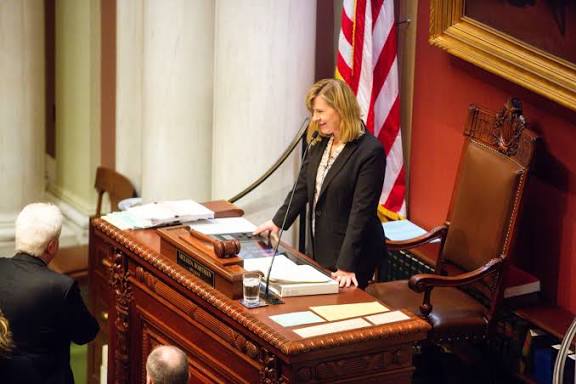
Minnesota voters on Tuesday chose a Democratic successor to the state House seat held by Melissa Hortman, who was murdered. Today we will discuss about Melissa Hortman seat flip : Democratic victory, GOP pressure, US election drama
Melissa Hortman seat flip : Democratic victory, GOP pressure, US election drama
On September 16, 2025, a special election in Minnesota captured national attention as Democrats succeeded in retaining the seat vacated by the late Speaker of the Minnesota House, Melissa Hortman — an event that resonated far beyond state politics. What could have been a straightforward legislative appointment instead became a defining moment in modern American election dynamics, exposing deep partisan divides, incidents of political violence, and intense pressure from both parties vying for control in an extraordinarily tight environment.
In a counterintuitive twist of political fate, the contest to fill Hortman’s seat galvanized Democratic voters and leaders, prompting a victory that was both symbolic and pivotal for legislative balance. This article explores how the seat flip unfolded, how political pressure shaped the outcome, and what it reveals about the drama of American electoral politics in 2025.
Who Was Melissa Hortman — and Why the Seat Mattered
Melissa Hortman was not just any state representative. A longtime stalwart of Minnesota politics, she represented District 34B — a heavily Democratic area encompassing parts of Brooklyn Park, Champlin, and Coon Rapids — since she first won the district in 2004, flipping it from Republican control and cementing it as Democratic territory for nearly two decades. Her leadership trajectory culminated in her role as Speaker of the Minnesota House, a position she held through crucial legislative sessions that defined contemporary state policy on education, labor, healthcare, and equity.
In 2024’s elections, Minnesota’s House ended in a rare 67–67 tie between Democrats (DFL) and Republicans, breaking the Democrats’ trifecta in state government. Hortman brokered a power‑sharing agreement, giving up her speaker’s gavel to Republican Lisa Demuth while retaining her influence as Speaker Emerita. This arrangement demanded rare bipartisan cooperation to pass budgets and crucial bills in 2025.
Her impact was so profound that when she was tragically assassinated on June 14, 2025, alongside her husband Mark, it shocked Minnesota and national political observers alike. The attack was allegedly politically motivated, targeting Democratic legislators. Another Democratic lawmaker and his wife survived serious injuries earlier that night.
The seat she held — already critical in balancing legislative power — suddenly became a national story of political violence and democratic resilience.
The Special Election: A Contested and Emotional Vote
In response to Hortman’s death, Minnesota Governor Tim Walz set a special election for September 16, 2025, to fill the House District 34B seat. Three Democrats — Xp Lee, Christian Eriksen, and Erickson Saye — filed for the DFL nomination, while real estate agent Ruth Bittner stood as the Republican contender.
Primary Dynamics
The Democratic primary in August reflected not only political competition but also emotional resonance. Candidates vied to carry forward Hortman’s legacy, emphasizing themes of unity, equity, and civic engagement. Xp Lee — a health equity analyst and former city council member — emerged as the Democratic nominee, positioning himself as someone committed to continuing the values associated with Hortman’s tenure.
Meanwhile, the GOP candidate, Ruth Bittner, seized on broader concerns about political violence and civic instability. Though the district leaned heavily Democratic, her campaign underscored a national narrative about fear and polarization. Bittner’s candidacy illustrated how Republicans hoped to capitalize on the chaotic political landscape to flip even secure Democratic seats.
General Election Outcome
The general election saw Lee capture a decisive victory — winning approximately 61% of the vote and restoring the tied 67–67 balance in the Minnesota House.
To many observers, Lee’s win was not merely administrative. It was a reaffirmation of the voters’ faith in the Democratic Party in the aftermath of a heartfelt loss. It also maintained legislative equilibrium, forcing both parties to continue working together under the unique power‑sharing model developed earlier in the year.
GOP Pressure and the Stakes of a Flip
While Democrats celebrated Lee’s victory, the Republican Party had strong motivations to flip the seat. Control of the Minnesota House would have given GOP lawmakers a majority, enabling them to steer legislation more forcefully and limit Democratic initiatives.
Why Republicans Targeted the Seat
District 34B might have been traditionally Democratic, but in an environment where partisan tensions were amplified, GOP operatives saw opportunities:
Narrative Momentum: After the 2024 elections left the House deadlocked, GOP leaders believed further gains could yield practical control.
Voter Fatigue: Some Republican strategists argued that national polarization made voters receptive to candidates promising stability over partisanship.
Political Violence Backdrop: The assassination of Hortman was leveraged — controversially — to critique political leadership and call for systemic change.
Despite these efforts, Republican hopes of flipping the seat were thwarted. Lee’s victory reaffirmed the district’s Democratic lean and indicated that national concerns about partisan violence did not outweigh localized political loyalties.
National Reaction and Political Reflections
The election attracted attention far beyond Minnesota’s borders. National Democrats publicly hailed the result as both a tribute to Hortman’s legacy and a bulwark against escalating political violence.
The Democratic National Committee (DNC) even referenced Hortman’s own spirited rhetoric — notably her rallying cry “LFG” — during meetings aimed at energizing voters for future elections.
For Republicans, the loss was a setback but underscored the challenges of expanding influence in historically Democratic districts without clear issue advantages. Some GOP commentators suggested the party needs more nuanced messaging to appeal to suburban voters.
Political Violence and Civic Stability
The tragedy surrounding Hortman’s death cast a long shadow. The special election became inseparable from discussions about political violence in America. Across the U.S., political pundits highlighted the dangers of rhetoric that normalizes aggression — pointing to Minnesota and other high-profile incidents in 2025 as cautionary tales.
Democrats used the election as evidence that voters still reject violence and instead endorse democratic engagement as the proper avenue for political change. The campaign themes became less about raw ideology and more about public safety, democratic norms, and mutual respect for civic processes.
Policy Implications and Legislative Balance
With the Minnesota House at 67–67 following Lee’s victory, significant policy consequences followed.
Continuation of Power‑Sharing
The restored tie meant that legislative leadership and committee chairs remained effectively balanced between Democrats and Republicans, as established earlier in 2025. This required ongoing bipartisan negotiation to pass budgets and laws.
While this arrangement sometimes slowed legislative progress, it also meant that extreme partisanship was less likely to dominate policy discussions. Both sides had to build consensus to move forward — from education funding and healthcare to infrastructure and environmental policy.
Governor’s Agenda and Future Elections
Governor Tim Walz, also a Democrat, emphasized that bipartisan cooperation was essential for Minnesota’s future stability. Lee’s election reinforced the possibility of cross-party dialogue, even as national politics remain echoing with division.
Looking toward future elections, both parties recognize that while certain districts may remain anchors for their respective bases, demographics and issue priorities continue to evolve. Lawmakers are thus watching closely to translate lessons from this election into future campaign strategies.
Legacy of Melissa Hortman and the Seat Flip’s Broader Meaning
The story of Melissa Hortman’s seat flip transcends a simple electoral calculation. It represents a moment in American democracy where tragedy, resilience, partisan conflict, and civic engagement intersected in a way that reflects the tensions and possibilities of contemporary politics.
Hortman’s Enduring Impact
Melissa Hortman’s legacy is multifaceted: she was a bridge‑builder, a pragmatic legislator, and a respected leader across party lines. Even in negotiation and compromise — such as offering Republicans the speakership to avert stalemate — she demonstrated a commitment to governance over confrontation.
Her sudden death highlighted the very real threat political violence poses in the United States, but Lee’s election underscored an equally compelling narrative: that democracy, though flawed and fragile, can rebound through participation and shared values.
Symbolism of the Election
The election wasn’t just about balance of power. It was about affirming democratic norms in the face of fear, reasserting local voices in state governance, and keeping alive the possibility of collaboration in divided legislatures. In an era of intense nationwide polarization, Minnesota’s experience serves both as a cautionary tale and a beacon of resilience.
Conclusion: A Democratic Victory With National Resonance
Melissa Hortman’s seat flip encapsulates the drama of modern U.S. electoral politics: tragic loss, strategic campaigning, insurgent rivalries, and ultimately, a voter‑affirmed outcome that preserved legislative balance. It reminds us that individual seats can carry outsized symbolic weight, particularly when they are tied to influential leaders and dramatic political circumstances.
In the broader tapestry of American democracy, this special election stands as a moment of continuity amidst chaos — showing that even when political discourse is strained, the democratic process still offers avenues for representation, change, and renewal.
d
How useful was this post?
Click on a star to rate it!
Average rating 0 / 5. Vote count: 0
No votes so far! Be the first to rate this post.
About the Author

usa5911.com
Administrator
Hi, I’m Gurdeep Singh, a professional content writer from India with over 3 years of experience in the field. I specialize in covering U.S. politics, delivering timely and engaging content tailored specifically for an American audience. Along with my dedicated team, we track and report on all the latest political trends, news, and in-depth analysis shaping the United States today. Our goal is to provide clear, factual, and compelling content that keeps readers informed and engaged with the ever-changing political landscape.