Marsha Blackburn Blast : Big Tech, China threat, Senate clash viral
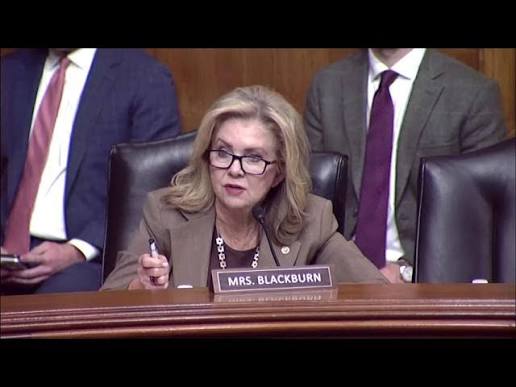
In a dramatic escalation of Washington’s ongoing battle over technology, national security, and global influence, Marsha Blackburn has once again ignited controversy. Her latest remarks targeting Big Tech companies and warning about China’s growing influence have gone viral, triggering intense debate across political, media, and tech circles.
The clash—rooted in concerns over artificial intelligence (AI), intellectual property theft, and national security—reflects a broader shift in U.S. policy toward aggressive regulation of technology platforms and increased scrutiny of Chinese-linked firms.
This article breaks down the viral moment, its context, the China angle, Big Tech tensions, and what it means for the future of tech regulation.
Who Is Marsha Blackburn?
Marsha Blackburn is a Republican senator from Tennessee known for her strong conservative stance and vocal criticism of major technology companies. Since entering the Senate in 2019, she has positioned herself as one of the leading voices advocating tighter controls on Big Tech and stronger protections against foreign tech influence.
She has consistently argued that:
- Big Tech suppresses free speech
- American innovation is under threat
- China poses a strategic technological risk
Her involvement in legislation like the Kids Online Safety Act shows her focus on digital safety, especially for children.
The Viral Senate Clash: What Happened?

The latest viral surge stems from Blackburn’s aggressive remarks during ongoing Senate discussions on AI regulation and digital policy.
Her statements focused on three major themes:
1. Big Tech Accountability
Blackburn criticized major tech companies for failing to:
- Protect user data
- Prevent harmful AI misuse
- Safeguard intellectual property
She has long argued that Silicon Valley firms operate with minimal accountability, often placing profit above user safety.
2. China as a Strategic Tech Threat
Blackburn’s remarks sharply targeted China’s role in global technology, especially AI.
She warned that:
- Chinese firms are exploiting U.S. markets
- Intellectual property theft is accelerating
- AI could become a geopolitical weapon
Her rhetoric aligns with her previous stance that China poses a long-term systemic threat to U.S. innovation and economic security.
3. ByteDance Controversy and AI Outrage
A key flashpoint in the debate involved Chinese tech giant ByteDance.
Blackburn, alongside bipartisan lawmakers, demanded that the company shut down its AI tool “Seedance 2.0,” accusing it of:
- Mass copyright infringement
- Creating deepfake content
- Undermining American creators
According to official statements, the tool generated viral fake videos involving Hollywood figures and fictional scenarios, raising alarms about AI misuse.
Why This Moment Went Viral
Several factors contributed to the viral nature of Blackburn’s remarks:
1. Timing: AI Boom and Global Tension
The clash comes amid a global race for AI dominance, with the U.S. and China competing aggressively.
Recent policy discussions in Washington highlight fears that fragmented regulations could weaken America’s position in the AI race.
2. Big Tech Under Pressure
Tech companies are facing criticism from both political parties. Issues include:
- Data privacy
- Content moderation
- AI ethics
- Monopoly power
Blackburn’s fiery tone amplified these concerns, resonating with a wide audience.
3. China Factor
The growing distrust of Chinese tech companies has made any related controversy instantly explosive.
From TikTok debates to AI tools, the narrative of “tech as a national security risk” continues to gain traction.
4. Social Media Amplification
Clips of Blackburn’s remarks spread rapidly across platforms, with hashtags related to:
- Senate hearings
- AI regulation
- China tech threat
This turned a policy debate into a viral political moment.
Big Tech vs Government: A Growing War
The Blackburn clash is part of a larger ongoing conflict between governments and technology giants.
Key Issues Driving the Conflict
1. Data Privacy
Governments argue that tech companies collect excessive user data without adequate safeguards.
2. Content Control
Debates over censorship and free speech continue to divide lawmakers and platforms.
3. AI Regulation
Artificial intelligence has become the biggest battleground, with concerns over:
- Deepfakes
- Job displacement
- Ethical risks
AI Regulation Battle in Washington
The U.S. government is currently struggling to create a unified AI policy.
Efforts include:
- Federal AI frameworks
- Restrictions on harmful AI applications
- Balancing innovation with safety
Blackburn has pushed for a strong federal approach to ensure America remains competitive globally while protecting citizens.
China vs USA: The Tech Cold War
The Blackburn controversy highlights the growing “tech cold war” between the United States and China.
Key Areas of Conflict
1. Artificial Intelligence
Both nations are investing heavily in AI development.
2. Intellectual Property
U.S. lawmakers accuse Chinese firms of copying or exploiting American innovations.
3. Digital Influence
Concerns about data access and surveillance have fueled distrust.
ByteDance and the Deepfake Debate
The controversy surrounding ByteDance and its AI tool underscores the dangers of uncontrolled AI.
Concerns Raised
- Fake celebrity videos
- Copyright violations
- Manipulation of public perception
Lawmakers argue that such tools could:
- Influence elections
- Spread misinformation
- Damage creative industries
Public Reaction: Divided but Loud
The viral moment sparked mixed reactions:
Supporters Say:
- Blackburn is protecting national interests
- Big Tech needs stricter regulation
- China poses real risks
Critics Say:
- Her rhetoric is overly aggressive
- Regulation could stifle innovation
- Political motivations are driving the narrative
Impact on Upcoming Legislation
This clash could shape future policies in several ways:
1. Stronger AI Laws
Expect increased pressure for:
- AI transparency
- Content authenticity rules
- Copyright protections
2. Tougher Action on Chinese Firms
More restrictions on companies like ByteDance could be introduced.
3. Bipartisan Cooperation
Despite political divisions, concerns about AI and China are shared across parties.
Why This Matters Globally
The implications go beyond the U.S.
Countries worldwide are:
- Watching U.S. policy direction
- Considering similar regulations
- Evaluating risks from AI and foreign tech
The Bigger Picture: Power, Technology, and Politics
At its core, the Blackburn clash is about control:
- Who controls technology?
- Who sets the rules?
- Who dominates the future of AI?
The answers to these questions will shape global power dynamics for decades.
Future Outlook
The debate is far from over.
Key developments to watch:
- New AI legislation
- U.S.-China tech relations
- Big Tech regulatory battles
- Expansion of deepfake laws
Blackburn is likely to remain a central figure in these discussions.
Conclusion
The viral “Marsha Blackburn blast” is more than just a political moment—it’s a reflection of a world grappling with rapid technological change, global competition, and evolving threats.
Her strong stance against Big Tech and China has amplified a critical conversation: how to balance innovation with security in the age of AI.
As the debate intensifies, one thing is clear—the intersection of politics and technology will define the future.
FAQs
1. Why did Marsha Blackburn go viral?
Her strong criticism of Big Tech and warnings about China during Senate discussions on AI regulation triggered widespread attention and social media debate.
2. What is the ByteDance controversy?
Lawmakers, including Blackburn, accused ByteDance’s AI tool of copyright violations and deepfake misuse, calling for its shutdown.
3. What is Blackburn’s stance on Big Tech?
She believes tech companies should face stricter regulation, especially regarding data privacy, free speech, and user safety.
4. Why is China a concern in tech debates?
U.S. lawmakers fear intellectual property theft, data security risks, and geopolitical competition in AI and digital technology.
5. What could happen next?
Possible outcomes include stricter AI laws, increased scrutiny of Chinese tech firms, and continued clashes between governments and Big Tech.
I
How useful was this post?
Click on a star to rate it!
Average rating 0 / 5. Vote count: 0
No votes so far! Be the first to rate this post.
About the Author

usa5911.com
Administrator
Hi, I’m Gurdeep Singh, a professional content writer from India with over 3 years of experience in the field. I specialize in covering U.S. politics, delivering timely and engaging content tailored specifically for an American audience. Along with my dedicated team, we track and report on all the latest political trends, news, and in-depth analysis shaping the United States today. Our goal is to provide clear, factual, and compelling content that keeps readers informed and engaged with the ever-changing political landscape.