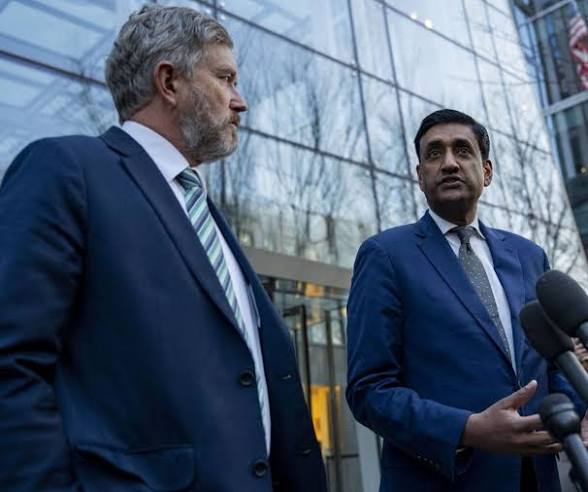
Mark Warner: warns military strike on Iran could unite enemy, calls for caution

Senator Mark Warner recently reiterated his warning against a US military attack on Iran, warning that such action could be counterproductive. Today we will discuss about Mark Warner: warns military strike on Iran could unite enemy, calls for caution
Mark Warner: warns military strike on Iran could unite enemy, calls for caution
As tensions between the United States and Iran continue to rise, senior American lawmakers are weighing the consequences of possible military action. Among the most vocal voices urging restraint is Senator Mark Warner of Virginia, Vice Chairman of the Senate Select Committee on Intelligence. Warner has cautioned that a U.S. military strike on Iran could backfire by uniting the Iranian population behind its government, strengthening hard-line leadership, and undermining internal protest movements.
His warning comes at a time when Iran is facing widespread unrest, economic pressure, and international scrutiny. While some policymakers argue that decisive military action could weaken Tehran’s power structure, Warner believes such a move may instead consolidate the regime’s control and ignite regional instability.
This article explores Warner’s position, the strategic risks of military escalation, historical parallels, the political divide in Washington, and what a cautious diplomatic approach could mean for U.S. foreign policy.
Who Is Mark Warner and Why His Warning Matters

Mark Warner is a senior Democratic senator representing Virginia and one of the most influential figures on U.S. intelligence and national security matters. As Vice Chairman of the Senate Intelligence Committee, Warner receives classified briefings and plays a central role in evaluating foreign threats, military readiness, and geopolitical risks.
Known for his pragmatic and bipartisan approach, Warner has often emphasized long-term strategic thinking over short-term political gains. His warning about Iran reflects concern that military action could create consequences far beyond the battlefield, reshaping political dynamics inside Iran and across the Middle East.
Rising Tensions Between the U.S. and Iran
Iran is currently experiencing one of the most turbulent periods in its recent history. Economic hardship, international sanctions, political repression, and social discontent have triggered large-scale protests across the country. These demonstrations, driven by frustration with inflation, unemployment, and restrictions on civil liberties, have challenged the authority of Iran’s ruling establishment.
At the same time, U.S. officials have expressed growing concern over Iran’s nuclear program, regional military activities, and support for armed groups in neighboring countries. Washington has responded with diplomatic pressure, economic sanctions, and strategic warnings.
Within this volatile environment, the possibility of U.S. military strikes—whether against nuclear facilities, military bases, or strategic infrastructure—has become a topic of serious debate.
Warner’s Core Argument: Military Action Could Strengthen the Regime
Senator Warner’s central concern is that external military pressure could unify Iran’s fragmented society against a common foreign adversary. While many Iranians may oppose their government, history shows that nations often rally around leadership when facing outside attack.
Warner argues that bombing Iran could give its rulers exactly what they need: a powerful narrative of national defense against foreign aggression. This could:
Legitimize harsh crackdowns on protesters
Silence internal opposition under the banner of patriotism
Strengthen hard-line factions within the government
Reduce the influence of reformist and moderate voices
Instead of weakening the regime, military action might solidify its control and prolong its grip on power.
Historical Lessons: When Intervention Backfires
Warner has pointed to history as a warning sign, particularly the long memory Iranians hold regarding foreign interference. One of the most significant examples is the 1953 overthrow of Iran’s elected prime minister, which involved Western intelligence agencies.
That intervention, while successful in the short term, fueled decades of resentment and contributed to the 1979 Islamic Revolution that reshaped Iran into the theocratic state it is today. The lesson, Warner suggests, is that external force can produce unintended long-term consequences that reshape entire nations in ways policymakers never intended.
A modern military strike, he fears, could similarly deepen hostility toward the United States and entrench anti-Western ideology.
The Risk of Regional Escalation
Another major concern raised by Warner is the risk of a broader regional war. Iran is not isolated; it has allies and proxy groups across the Middle East. Any U.S. strike could trigger retaliation through:
Missile attacks on U.S. bases in the region
Actions by allied militias in Iraq, Syria, Lebanon, and Yemen
Disruption of shipping lanes in the Persian Gulf
Cyberattacks on Western infrastructure
Such escalation could draw multiple countries into a conflict, destabilize energy markets, and endanger global security.
Divisions in Washington: Hawks vs. Caution Advocates
The debate over Iran reflects a broader split in U.S. foreign policy thinking.
Advocates of Military Pressure
Some lawmakers argue that forceful action could:
Deter Iran’s nuclear ambitions
Demonstrate U.S. strength
Support regional allies
Pressure the regime during a moment of internal weakness
They believe decisive strikes could shift the balance of power and accelerate political change inside Iran.
Voices of Restraint
Others, including Mark Warner, warn that:
Military action may strengthen authoritarian control
Civilian casualties could fuel anti-American sentiment
Long-term instability could outweigh short-term tactical gains
Congress must play a central role in authorizing any use of force
This camp argues that caution, diplomacy, and multilateral pressure are more effective tools for lasting stability.
Alternatives to Military Action
Rather than resorting to bombs and missiles, Warner supports strategies that reduce risks while maintaining pressure on Tehran.
Diplomatic Engagement
Sustained negotiations, even when difficult, can:
Limit nuclear escalation
Open communication channels
Reduce misunderstandings that could lead to war
Economic and Political Sanctions
Targeted sanctions can weaken regime finances without triggering nationalistic unity that military attacks often produce.
Support for Human Rights and Civil Society
Amplifying international attention on human rights abuses and providing moral and informational support to civil movements can strengthen internal calls for reform.
Multilateral Cooperation
Working with European allies, regional partners, and international institutions can isolate Iran diplomatically and limit its ability to portray conflict as a U.S.-only confrontation.
The Intelligence Perspective
As an intelligence leader, Warner also emphasizes the uncertainty inherent in military planning. Even precise strikes can have unpredictable outcomes due to:
Hidden facilities
Civilian proximity
Chain reactions within military networks
Political shockwaves that extend beyond borders
From an intelligence standpoint, caution is not weakness—it is risk management.
Public Opinion and War Fatigue
Another factor influencing Warner’s position is the American public’s growing skepticism toward foreign wars. After decades of conflict in the Middle East, voters are increasingly wary of open-ended military commitments.
Warner believes any decision to use force must be clearly justified, legally authorized, and strategically sound, with well-defined objectives and exit strategies.
The Nuclear Question
Iran’s nuclear program remains one of the most sensitive issues. While military strikes could damage facilities, they might also push Tehran to accelerate weapons development in secret.
Warner argues that diplomacy and inspections, though imperfect, are more reliable tools for monitoring and constraining nuclear activity than bombing campaigns that could drive programs underground.
Conclusion: A Call for Strategic Patience
Mark Warner’s warning is not a defense of Iran’s government, but a caution against actions that could make a dangerous situation even worse. His message is rooted in historical awareness, intelligence analysis, and concern for long-term stability.
He believes that:
Military strikes could unite Iranians behind hard-line leaders
Regional war could spiral beyond control
Diplomatic and economic tools offer more sustainable leverage
Congress must play a constitutional role in any decision to go to war
In an era of rising global tension, Warner’s call for restraint reflects a broader understanding that true national security lies not only in military power, but in strategic wisdom, patience, and the careful weighing of consequences.
How useful was this post?
Click on a star to rate it!
Average rating 0 / 5. Vote count: 0
No votes so far! Be the first to rate this post.
About the Author

usa5911.com
Administrator
Hi, I’m Gurdeep Singh, a professional content writer from India with over 3 years of experience in the field. I specialize in covering U.S. politics, delivering timely and engaging content tailored specifically for an American audience. Along with my dedicated team, we track and report on all the latest political trends, news, and in-depth analysis shaping the United States today. Our goal is to provide clear, factual, and compelling content that keeps readers informed and engaged with the ever-changing political landscape.