Mario Voigt: Doctorate Revoked,Legal Battle,Political Shock
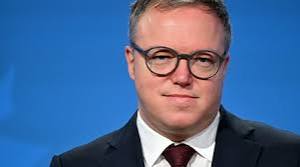
Based on recent reports, Mario Voigt, a prominent German politician and leader of the CDU in Thuringia, has faced significant scrutiny regarding his academic credentials. Today we will discuss about Mario Voigt: Doctorate Revoked,Legal Battle,Political Shock
Mario Voigt: Doctorate Revoked,Legal Battle,Political Shock
In January 2026, German politics was jolted by a major development involving one of its most prominent regional leaders: Mario Voigt, the Minister President of Thuringia and chairman of the state branch of the Christian Democratic Union (CDU). After a prolonged controversy over his academic work, Voigt’s doctoral title was formally revoked by the Technical University of Chemnitz, triggering legal action, political upheaval, and wide-ranging debate about academic integrity in public life.
This article explores the full story: who Mario Voigt is, why his doctorate was removed, the legal battle he’s now fighting, and the broader political implications — not only for him but for German public life.
Who Is Mario Voigt? A Quick Political Profile
Mario Voigt was born in 1977 and has risen through the ranks of the CDU to become one of its most influential figures in eastern Germany. His career includes:
Serving as a prominent CDU strategist and policy expert.
Leading the CDU in Thuringia — a key state in German politics.
After the 2024 state election, becoming Minister President of Thuringia, heading a coalition government.
Voigt’s academic background also played a role in his public profile. In 2008 he earned a doctorate from the Technical University of Chemnitz with a dissertation on the 2004 U.S. presidential election campaign, titled Der amerikanische Präsidentschaftswahlkampf. George W. Bush gegen John F. Kerry.
For years, that title — Doktor — followed him in campaign literature and official bios, reinforcing his image as a scholarly politician.
The Plagiarism Allegations: Seeds of Controversy
The trouble began in 2024. Plagiarism allegations surfaced in connection with Voigt’s doctoral thesis. Initially raised by academic watchdogs and independent researchers, these claims accused him of:
Using sources from secondary literature without consulting the original texts.
Failing to provide proper academic attribution in some passages of his work.
The suggestion that certain segments might not have been written with full academic rigour.
These allegations reignited broader conversations in Germany about political elites and academic credibility — a theme with historical resonance given high-profile plagiarism scandals involving other politicians in the past.
Despite this, early evaluations of Voigt’s work did not immediately lead to formal penalties. At first, commentators and even Voigt’s own party treated the claims as politically motivated attacks intended to weaken him ahead of crucial elections.
University Investigation and Doctorate Revocation
The turning point came with a formal investigation by the Technical University of Chemnitz, which followed its internal procedures for suspected academic misconduct.
What the University Found
According to official reports and press coverage:
The university reviewed Voigt’s 2008 dissertation.
It determined that approximately 2.58 % of the words in the thesis contained questionable passages that, according to its review, did not meet academic citation standards.
Critically, the case involved changes to the institution’s own procedures mid-process: an earlier external assessor had reportedly concluded that the dissertation met requirements, but the university subsequently introduced new evaluation standards and applied them to Voigt’s work. Voigt’s legal team has sharply criticised this approach.
After completing its review, the university formally retracted Voigt’s doctoral title in January 2026 — a dramatic decision given his political standing.
This decision was confirmed through official announcements and Voigt’s own statements in national press conferences, where he reluctantly acknowledged the university’s action while maintaining that his work was fundamentally sound.
Voigt’s Legal Fight: “Unlawful Decision”
Rejecting the university’s actions, Voigt has launched a legal challenge.
Arguments in His Defence
Voigt and his legal team argue:
The decision to revoke his doctorate was procedurally flawed because the evaluation rules were changed mid-stream, which they assert is highly unusual and possibly unlawful.
The initial external review confirmed the work met academic standards — yet was subsequently disregarded.
Only a minor portion of the thesis was cited as problematic, and even critics acknowledge the “scientific core” of the work remains intact.
Voigt plans to take his case to the administrative court system, seeking a reversal of the decision. In his statements, he said he will fight “for my doctoral thesis” and defend the work he completed years ago.
Strategic Decision on Title Use
Interestingly, Voigt has also stated that he will not currently use the doctoral title while the legal challenge is pending — a move framed as respectful toward the legal process, even though he could technically still publicly use the title until the case is resolved.
Political Shockwaves Across Germany
The fallout from this controversy is not limited to Voigt’s academic reputation — it has broader political consequences.
Impact on Voigt’s Leadership and CDU
The revocation has come during a delicate period for the CDU, which has been wrestling with voter dissatisfaction and rising competition from other parties, especially in the eastern states.
Voigt’s critics argue that:
Losing a doctoral title undermines public trust in his leadership.
It presents ammunition for political opponents as the CDU heads into future regional and national campaigns.
Supporters, by contrast, see the university’s decision as politically charged — possibly timed to influence electoral momentum — and argue that it’s emblematic of media and institutional bias against conservative leaders.
Broader Debate on Academic Integrity in Politics
This case also taps into a broader German narrative of academic misconduct among politicians. High-profile figures, including former ministers, have been caught up in plagiarism controversies in the past, with careers derailed or damaged as a result.
In that sense, Voigt’s situation has reignited questions about:
How seriously academic scrutiny should be applied to political figures.
Whether old theses from decades ago should be subjected to contemporary standards.
How the public perceives academic titles and their relevance to political competence.
Why This Matters: Doctorates and Politics in Germany
In Germany, a doctoral title carries significant social weight. It often implies scholarly seriousness and intellectual authority — qualities voters value in public servants. But over the past decade, a string of plagiarism controversies has exposed how fragile that authority can be when credibility is questioned.
Historically, prominent politicians lost academic titles due to plagiarism, leading to resignations and broader public debates about ethics in both academia and governance.
Voigt’s case, therefore, is part of a wider pattern — but uniquely dramatic due to his status as a sitting state leader and his decision to fight the revocation in court.
What’s Next? Potential Outcomes and Implications
The legal proceedings initiated by Voigt could take months or even years to conclude, and there are a few possible scenarios:
Court overturns the revocation
Voigt regains his doctoral title.
Political credibility may rebound.
Court upholds the revocation
Voigt’s academic qualifications remain officially revoked.
Political damage could deepen.
Settlement or procedural compromise
The case could create new legal precedents about how academic misconduct procedures are applied in Germany.
Regardless of outcome, the legal battle will be a focal point of German political coverage throughout 2026 and potentially into the national election cycle.
Conclusion: Legacy in the Balance
The Mario Voigt case encapsulates more than just a personal legal challenge — it highlights the intersection of academia, politics, and public trust. A high-ranking politician facing accusations related to scholarly work raises questions about standards, fairness, institutional power, and how political narratives are shaped.
Whether Voigt ultimately wins his court case or not, the controversy around his doctorate will have enduring effects:
On how politicians safeguard their academic credentials.
On the scrutiny future candidates face.
On public confidence in both political and academic institutions.
In Germany — where historical plagiarism scandals have reshaped careers and reputations — the Voigt case may well become another defining episode in the ongoing dialogue about ethics and accountability in public life.
How useful was this post?
Click on a star to rate it!
Average rating 0 / 5. Vote count: 0
No votes so far! Be the first to rate this post.
About the Author

usa5911.com
Administrator
Hi, I’m Gurdeep Singh, a professional content writer from India with over 3 years of experience in the field. I specialize in covering U.S. politics, delivering timely and engaging content tailored specifically for an American audience. Along with my dedicated team, we track and report on all the latest political trends, news, and in-depth analysis shaping the United States today. Our goal is to provide clear, factual, and compelling content that keeps readers informed and engaged with the ever-changing political landscape.