Maria Fernanda Cabal: Quits Party, Colombian Right Splits, Election Shock
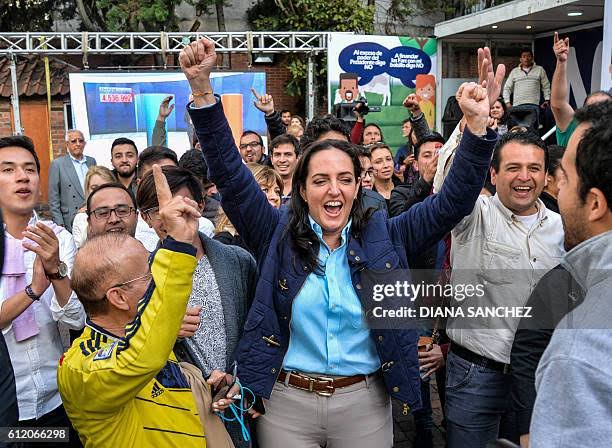
The Democratic Center (CD) said on Monday that its leading presidential candidate, Miguel Uribe (no relation) has been excluded. Today we will discuss about Maria Fernanda Cabal: Quits Party, Colombian Right Splits, Election Shock
Maria Fernanda Cabal: Quits Party, Colombian Right Splits, Election Shock
In a dramatic development with major implications for Colombian politics ahead of the 2026 national elections, María Fernanda Cabal — one of the most influential figures on the country’s right — has formally resigned from the ruling Centro Democrático party, sparking intense debates, deep divisions, and fresh uncertainty about the future of conservative politics in Colombia.
This political earthquake comes as the Colombian right seeks to unify behind a single presidential candidate to challenge the left-leaning government of President Gustavo Petro. Cabal’s departure highlights fractures within the uribista movement and could reshape the electoral landscape in one of Latin America’s most hotly contested democracies.
Who Is María Fernanda Cabal?
María Fernanda Cabal is a Colombian politician, lawyer, and senator who rose to national prominence as a leading voice of the right. She has been a member of Centro Democrático — the party founded by former President Álvaro Uribe Vélez — for much of her political career and has built a reputation as a fierce defender of conservative values, law and order, and a hard-line stance on security issues.
Cabal began her political rise in the Chamber of Representatives in 2014 and later became one of the most voted senators in 2022. Her ideological platform often emphasizes traditional social policies, a strong military and security posture, skepticism toward progressive social reforms, and economic liberalization. She has also been associated with international conservative networks.
In 2023, she publicly announced her intention to run for president in the 2026 elections, setting the stage for a high-stakes rivalry within her party to determine the conservative standard-bearer.
The Breaking News: Cabal Leaves Centro Democrático
On January 26, 2026, Cabal and her husband, influential cattle ranch federation leader José Félix Lafaurie, submitted a formal letter announcing their resignation from Centro Democrático. The letter was addressed to the party’s director, Gabriel Vallejo, and cited deep disagreements over the internal process that selected Paloma Valencia as the party’s presidential nominee.
While both Cabal and Lafaurie expressed continued respect for the party’s mission, they argued that the selection process lacked transparency, had procedural irregularities, and failed to respect fundamental internal democratic norms. Lafaurie’s letter, in particular, criticized what he described as the absence of clear guarantees, valid polling mechanisms, and accountability structures in the decision-making process.
In the heart of their argument was the process used to select Paloma Valencia as the Centro Democrático presidential candidate, which relied heavily on internal surveys conducted late in 2025. Cabal’s camp claims those surveys lacked legitimacy and violated the party’s own rules, effectively marginalizing her and other contenders.
What Led to the Resignation? A Battle of Internal Democracy
The dispute traces back to late 2025, when Centro Democrático attempted to solidify its presidential nominee in a highly competitive internal process. Multiple aspirants competed, including María Fernanda Cabal, Paloma Valencia, Paola Holguín, and Miguel Uribe Londoño, son of the late Miguel Uribe Turbay.
The party eventually announced that Paloma Valencia emerged as the winner of internal polls that determined the single candidate who would represent the right in the national elections. While Centro Democrático leaders insist the polls were conducted transparently and in line with party statutes, Cabal’s faction vigorously denies this claim, arguing that the process was flawed and opaque.
Cabal’s supporters say the procedures lacked key guarantees such as enforceable oversight committees, clear dispute mechanisms, and legal validation of the polling firms involved. They have claimed that certain advisers and actors from outside the party appeared to have undue influence on the outcome.
A Party Divided: Reactions From Within Centro Democrático
Within hours of the announcement, reactions from the party were swift and public.
Paloma Valencia, chosen as the presidential nominee, delivered a conciliatory message. She described Cabal as “a woman who has contributed deeply to the party and to Colombia” and urged her to reconsider her departure, emphasizing unity and collective strength. Valencia insisted the party remains whole and urged that “this is a moment to stay together.”
Meanwhile, Gabriel Vallejo, director of Centro Democrático, acknowledged receiving the resignation but defended the integrity of the candidate selection process, referencing an external audit that reportedly found no irregularities. He signaled efforts to stabilize the party and advance its electoral strategy.
Despite these reassurances, the fracturing within the party is now unmistakable — a situation that some analysts suggest could reshape the Colombian electoral map.
What Does This Mean for the 2026 Elections?
Cabal’s exit comes at a critical moment. Colombia’s 2026 elections — where a new president will be chosen — are now less than five months away. Historically, Centro Democrático has been one of the most important conservative forces in Colombian politics, successfully propelling Álvaro Uribe and Iván Duque to the presidency in past elections.
Now, with the party fractured and one of its most outspoken leaders gone, the conservative front faces several risks and challenges:
1. Potential Fragmentation of the Right
Cabal’s departure may encourage the emergence of splinter groups or new conservative platforms that compete directly with Centro Democrático. Her vision, which resonates with more hard-line segments of Colombian voters, could siphon support from the party’s base, weakening its unified electoral strength.
2. Electoral Uncertainty
Without a consolidated conservative block, the right risks diluting its vote in the presidential race, which could advantage the left — particularly if candidates like incumbent President Gustavo Petro or other progressive figures maintain or expand their support.
3. A Shift in Campaign Dynamics
With Cabal no longer in the party’s ranks, Centro Democrático may shift its campaign messaging to align more closely with Valencia’s strategic priorities, which might differ from Cabal’s more combative rhetoric. How this affects voter turnout, messaging appeal, and coalition-building remains to be seen.
Cabal’s Vision Beyond the Party
María Fernanda Cabal has long been known for her strong personality and clear ideological positions. Even before her resignation, she frequently battled not only opposing political factions but also internal competitors. She publicly criticized government policies of President Petro, especially on issues like labor and institutional conduct.
Though she leaves Centro Democrático, Cabal has signaled she will continue to be politically active, and some commentators speculate she may explore launching her own political movement or support like-minded candidates sympathetic to her views.
Her political style — combative, staunchly conservative, and unapologetically outspoken — has created both admiration and sharp criticism. Nonetheless, her departure from the party makes her one of the most consequential political figures in this election cycle.
Historical Context: Centro Democrático and Its Evolution
Centro Democrático was founded in 2013 by former President Álvaro Uribe as a political vehicle to promote security-focused, conservative policies that opposed the peace processes negotiated with guerrilla groups. The party quickly became a dominant force, winning the presidency in 2018 with Iván Duque and commanding significant congressional representation.
Over time, the party has faced internal debates about its direction, strategy, and leadership succession — particularly after Duque’s presidency and in the face of rising leftist movements, including Petro’s. The struggle over identity and strategy became clear as the 2026 campaign approached: should the party lean into traditional uribista priorities or adapt toward a broader conservative coalition?
Cabal’s departure underscores that these debates are not merely academic — they manifest in real organizational fractures with electoral consequences.
Voices From Civil Society and Analysts
Political analysts and Colombian commentators suggest that Cabal’s resignation symbolizes broader systemic tensions within Colombia’s right. These are not just personalities in conflict, but competing visions of what conservative politics should look like in a rapidly changing society. Some point to her belief that the current machinery of Centro Democrático has drifted from its core principles, requiring new leadership and perhaps a new political formation.
Others caution that splintering could weaken conservative influence, potentially enabling broader progressive gains in national governance.
Public reactions on social media and discussion forums reflect diverse opinions — from admiration for Cabal as a rugged political voice to sharp criticism, dismissing her influence or questioning her motives. Sections of political discourse reflect deep polarization, indicating that her exit has become a lightning rod for broader cultural and ideological debates in Colombia.
Conclusion: A New Chapter in Colombian Politics
María Fernanda Cabal’s resignation from Centro Democrático is more than a party squabble — it could mark a turning point for the political right in Colombia. With elections looming, the consequences of this split are poised to influence voter alignments, campaign strategies, and ultimately the national balance of power.
Whether Cabal will rise as a distinct political leader outside her former party or act as a kingmaker through alliances remains uncertain. What is clear is that Colombian politics are entering a phase defined by strategic recalibration, ideological realignment, and heightened stakes — all unfolding as voters prepare for one of the most consequential election cycles in recent memory.
How useful was this post?
Click on a star to rate it!
Average rating 0 / 5. Vote count: 0
No votes so far! Be the first to rate this post.
About the Author

usa5911.com
Administrator
Hi, I’m Gurdeep Singh, a professional content writer from India with over 3 years of experience in the field. I specialize in covering U.S. politics, delivering timely and engaging content tailored specifically for an American audience. Along with my dedicated team, we track and report on all the latest political trends, news, and in-depth analysis shaping the United States today. Our goal is to provide clear, factual, and compelling content that keeps readers informed and engaged with the ever-changing political landscape.