Luigi Mangione : fights federal death penalty, court showdown today
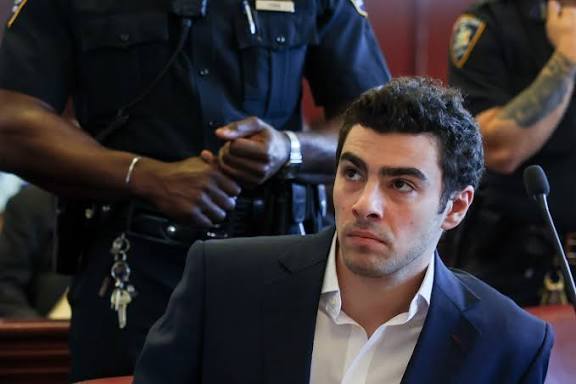
On Friday, a federal judge is expected to hear arguments on a defense motion to dismiss two charges from the indictment against Mangione. Today we will discuss about Luigi Mangione : fights federal death penalty, court showdown today
Luigi Mangione : fights federal death penalty, court showdown today
Luigi Mangione’s name has become a focal point of one of the most legally and politically charged criminal justice battles in recent U.S. memory. At 27 years old, Mangione is the central figure in a case that has drawn intense media scrutiny, political controversy, and deep public debate about the federal death penalty. On January 9, 2026, he was due in federal court in the Southern District of New York for a pivotal hearing in his fight to block the government from pursuing the death penalty in connection with the December 4, 2024 killing of UnitedHealthcare CEO Brian Thompson.
This article provides a comprehensive look at the unfolding legal drama: the allegations, the federal death penalty fight, the defense’s constitutional claims, public responses, and broader implications for U.S. capital punishment jurisprudence.
The Crime and Arrest: A High‑Profile Killing That Shocked America

Luigi Mangione is accused of fatally shooting Brian Thompson, the chief executive officer of UnitedHealthcare’s insurance arm, in Midtown Manhattan outside a hotel during a business conference in December 2024. Prosecutors say Thompson was ambushed and shot from behind, and reports indicate bullets at the scene had messages written on them reflecting hostility toward the health insurance industry.
A massive multi‑state manhunt ensued. Mangione was arrested five days later at a McDonald’s in Altoona, Pennsylvania, where police found him with a 9 mm handgun and a notebook allegedly outlining plans to “wack” an insurance executive. He was quickly extradited to New York to face a series of charges.
State and Federal Charges
Mangione now faces a range of charges:
In New York state court, he was indicted on 11 counts, including second‑degree murder and other related offenses. A judge later dismissed terrorism charges in that case but allowed the murder and other counts to stand.
In federal court, Mangione is charged with murder through the use of a firearm, interstate stalking resulting in death, and related gun offenses. These federal charges open the possibility of the federal death penalty — a punishment not available under New York state law.
Mangione has entered a plea of not guilty in both jurisdictions, setting the stage for complex legal battles on multiple fronts.
Federal Death Penalty: A Rare and Contentious Pursuit
The federal government’s decision to seek the death penalty against Mangione has drawn extraordinary attention. The federal death penalty had been largely dormant prior to this case, with very few prosecutions in recent years. But in April 2025, U.S. Attorney General Pam Bondi announced that she had directed federal prosecutors to pursue capital punishment in Mangione’s case, calling the killing “a premeditated, cold-blooded assassination that shocked America.”
Bondi’s directive explicitly invoked the Justice Department’s renewed emphasis on capital punishment under the Trump administration’s policy to revive federal executions, after the practice had been limited under previous leadership.
Prosecutors argue that Mangione’s acts — involving stalking, deliberate planning, and deadly violence — make him eligible for the ultimate federal sentence. In filings, they have labeled Mangione a “future danger” whose actions go beyond that of a routine homicide, demonstrating deliberate targeting of corporate leadership and ideological motivations.
Defense Strategy: Challenging the Death Penalty Itself
Faced with a capital prosecution, Mangione’s defense team has adopted a multi-pronged strategy aimed squarely at undercutting the government’s ability to seek execution.
1. Legal Arguments Against Death Penalty Eligibility
One of the most important technical defenses centers on the interpretation of federal law: Mangione’s lawyers argue that some of the counts underpinning the federal death penalty — particularly the stalking charge — do not legally qualify as violent crimes under the statutory framework that makes capital punishment available. If that argument succeeds, the government could lose its basis for seeking the death penalty entirely.
2. Constitutional Challenges
Beyond statutory interpretation, the defense has mounted an aggressive constitutional challenge to the federal death penalty. Citing foundational due process and Eighth Amendment protections, Mangione’s lawyers argue that the federal capital punishment regime is inherently arbitrary and cruel, violating constitutional norms against arbitrary sentencing and cruel punishment. They have asked the court either to dismiss the indictment or to strip out the government’s death penalty notice.
3. Conflict of Interest and Prejudice Claims
Another significant aspect of the defense’s argument is that Attorney General Bondi’s conduct — including her public statements and possible past connections with a lobbying firm representing UnitedHealthcare’s parent company — biased the prosecution from the outset. The defense claims that this political backdrop unfairly taints proceedings and violates Mangione’s right to due process. Prosecutors fiercely deny these assertions, calling them “meritless” and “misleading.”
4. Suppression of Evidence
The defense is also seeking to suppress key evidence, arguing that crucial items such as the handgun and notebook were obtained without proper warrants or Miranda warnings — potentially undermining the government’s case even if the death penalty question is resolved.
The January 9, 2026 Hearing: A Pivotal Moment
On January 9, 2026, Mangione faced a critical hearing in federal court in Manhattan, where his attorneys pressed their challenge to the federal death penalty and sought rulings that could reshape his case’s trajectory.
During the hearing, defense attorneys reiterated their claims that the government’s public campaign to pursue execution prejudiced the judicial process. They also asked the judge to examine the core legal questions that would determine whether Mangione’s case even qualifies for capital punishment under existing law.
The judge’s rulings on these procedural and constitutional issues are expected to be decisive. They could either uphold the federal government’s power to pursue the death penalty or rule that Mangione’s case must proceed without the possibility of execution — dramatically reducing the defense’s exposure. No final decision had been announced at the time of writing.
Public and Political Reactions
The case has ignited strong reactions across the United States and abroad.
Public Opinion and Support Movements
While many Americans, especially those who saw Thompson’s killing as a brutal crime, support vigorous prosecution, others view Mangione’s case through a political or ideological lens. Some critics of the health insurance industry — already a flashpoint in broader U.S. healthcare debates — have lionized Mangione as a symbol of protest against corporate power, sparking rallies and grassroots support movements.
Opponents of the death penalty also see Mangione’s case as a critical battleground over federal capital punishment’s legitimacy in the modern era. Demonstrations outside courtrooms and online advocacy reflect broader debates about fairness, proportionality, and race/class disparities in capital sentencing.
Political Backdrop
The case occurs against a backdrop of renewed federal emphasis on capital punishment under U.S. Attorney General Bondi and the Trump administration’s policy directives. Critics argue that this pursuit, particularly when tied to a high-profile, non-terrorism violent crime, represents a politicization of the justice system. Supporters counter that the government is fulfilling its duty to punish a murder that “shocked America.”
Internationally, the case has drawn attention from human rights observers, especially in countries that have abolished the death penalty and view its use as inherently inhumane. Debates in foreign parliaments and diplomatic discourse have touched on the human rights dimension of capital cases involving foreign dual citizens, including Mangione, who has Italian American heritage.
Broader Implications: Law, Policy, and the Future of Federal Capital Punishment
The Mangione case is not just a criminal prosecution; it is potentially a landmark moment in the ongoing debate over federal capital punishment.
Clarifying Federal Crime Definitions
The federal court’s interpretation of statutory definitions — such as whether federal stalking qualifies as a crime of violence — could have broad implications for future federal prosecutions. If the court narrows what constitutes a violent predicate offense, it could limit the circumstances under which prosecutors can pursue the death penalty.
Death Penalty Jurisprudence
Mangione’s constitutional challenge puts the Eighth Amendment and due process principles at the center of renewed death penalty litigation. A successful challenge could influence future capital cases and possibly encourage broader reevaluations of how and when the federal government employs the ultimate punishment.
Public Confidence in Justice
The case’s political overtones — involving public statements by the attorney general and media spectacle around Mangione’s arrest — raise questions about the role of external publicity in ensuring a fair trial. How courts balance intense public interest with the defendant’s rights may set precedents for future high-profile cases.
Conclusion: A Defining Legal Crossroads
Luigi Mangione’s legal battle represents far more than one man’s fate; it encapsulates deep and unresolved tensions in American criminal justice. At issue is not merely whether a defendant will face the death penalty, but whether the federal system’s mechanisms for imposing capital punishment can withstand serious constitutional and procedural scrutiny.
As the courts deliberate these questions, observers from legal, political, and human rights spheres will be watching closely. The outcome of Mangione’s federal death penalty challenge may resonate well beyond a single courtroom, shaping the future of capital punishment in the United States.
How useful was this post?
Click on a star to rate it!
Average rating 0 / 5. Vote count: 0
No votes so far! Be the first to rate this post.
About the Author

usa5911.com
Administrator
Hi, I’m Gurdeep Singh, a professional content writer from India with over 3 years of experience in the field. I specialize in covering U.S. politics, delivering timely and engaging content tailored specifically for an American audience. Along with my dedicated team, we track and report on all the latest political trends, news, and in-depth analysis shaping the United States today. Our goal is to provide clear, factual, and compelling content that keeps readers informed and engaged with the ever-changing political landscape.