Lindsey Halligan: Trump-Linked U.S. Attorney Blocked by Judges, Legal Shock
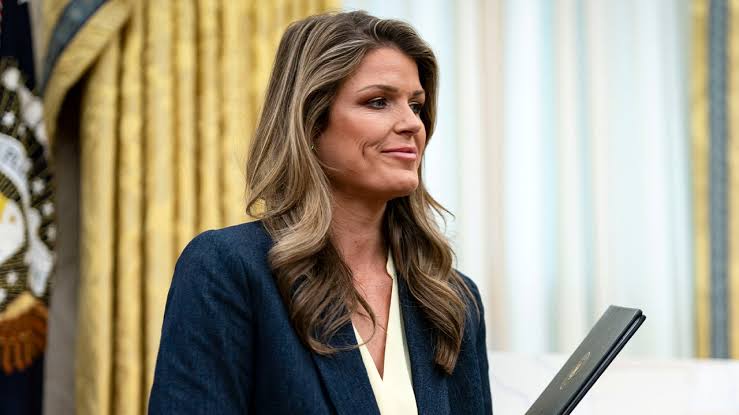
Lindsay Halligan steps down as US attorney after fierce criticism of judges. Trump-appointed federal prosecutor has no prosecution experience. Today we will discuss about Lindsey Halligan: Trump-Linked U.S. Attorney Blocked by Judges, Legal Shock
Lindsey Halligan: Trump-Linked U.S. Attorney Blocked by Judges, Legal Shock
The appointment of Lindsey Halligan as interim United States Attorney for the Eastern District of Virginia triggered one of the most dramatic legal confrontations in recent American history. Her rise to a powerful prosecutorial post, her connection to former President Donald Trump, and the unprecedented decision by multiple federal judges to declare her appointment unlawful created a constitutional storm that rippled across the U.S. justice system.
The controversy was not merely about one lawyer’s career. It became a defining test of executive authority, judicial independence, and the rule of law in a deeply polarized political environment.
Who Is Lindsey Halligan?
Lindsey Halligan is an American attorney who gained national attention after being appointed interim U.S. Attorney for the Eastern District of Virginia, one of the most influential federal prosecutor offices in the country. Prior to her appointment, she served as a legal adviser and political operative closely linked to Donald Trump and his inner circle.
Unlike most U.S. attorneys, Halligan had no prior experience as a federal prosecutor. Her background was largely political and advisory, which immediately raised concerns within legal circles. Traditionally, such positions are filled by career prosecutors with decades of courtroom experience. Her appointment broke that convention and ignited debate over whether loyalty had replaced merit in key justice roles.
The Appointment That Sparked a Legal Crisis

Halligan was named interim U.S. attorney under emergency appointment powers after the previous officeholder stepped down. Under federal law, such interim appointments are temporary and subject to strict time limits. If a permanent nominee is not confirmed by the Senate within that period, the authority shifts to the judiciary to appoint a lawful successor.
However, Halligan continued in the role even after the statutory time window expired. The Justice Department argued that the executive branch retained the authority to keep her in place. Several federal judges strongly disagreed.
Federal Judges Block Her Authority
The turning point came when district judges ruled that Halligan’s continued service violated federal appointment law. They found that her authority had expired and that any actions she took afterward had no legal standing.
One judge went so far as to order her to stop referring to herself as the U.S. Attorney in court filings, stating that she was unlawfully “masquerading” as a federal prosecutor. This language was extraordinary, especially coming from judges appointed by presidents of both parties, including Trump himself.
The rulings effectively stripped Halligan of legal power and cast doubt on every prosecution initiated under her name after the statutory deadline passed.
High-Profile Cases Collapse
The legal consequences were immediate and severe. Several politically sensitive cases overseen by Halligan were dismissed because the courts ruled that she lacked lawful authority to bring them.
Among the most notable were cases involving high-ranking political figures and vocal critics of Donald Trump. Judges emphasized that the dismissals were not based on the evidence but on the fundamental principle that prosecutions must be initiated by properly appointed officials.
This development dealt a major blow to the Justice Department and reinforced the judiciary’s role as a constitutional check on executive overreach.
Justice Department Pushback
Rather than quietly replacing Halligan, senior officials at the Justice Department publicly criticized the judges. They accused the courts of political bias and interference in executive authority. Statements from top officials described the rulings as part of a broader pattern of judicial resistance to the administration’s legal agenda.
This open confrontation between branches of government deepened concerns about institutional trust and the politicization of justice.
The End of Halligan’s Tenure
Under mounting legal pressure, Halligan eventually stepped aside. Courts declared the position vacant and began procedures to appoint a lawful replacement. Her departure marked the end of one of the shortest and most controversial tenures in the history of the Eastern District of Virginia.
Although the Justice Department maintained its defense of her service, the judicial rulings left no ambiguity: her authority had been invalid, and her continuation in the role had violated federal law.
Constitutional Implications
The Halligan episode reignited debates over three critical issues:
1. Limits of Executive Power
The case reaffirmed that interim appointments cannot be used to bypass Senate confirmation indefinitely.
2. Judicial Independence
Judges demonstrated a willingness to confront executive overreach, even when politically sensitive figures were involved.
3. Politicization of the Justice System
Critics argued that the appointment reflected a broader trend of prioritizing political loyalty over professional qualifications in key legal positions.
A Defining Legal Precedent
While Halligan herself may fade from public attention, the precedent set by her case will continue to influence future administrations. It clarified that courts will enforce statutory limits on appointments and will invalidate prosecutions if the rule of law is compromised.
Her story stands as a reminder that even the most powerful political forces remain bound by constitutional procedure.
Conclusion
Lindsey Halligan’s brief and turbulent tenure as a Trump-linked U.S. Attorney became a landmark moment in modern American legal history. Blocked by judges, stripped of authority, and forced from office, her case exposed the fragile balance between politics and law.
In a time of intense polarization, the courts’ decisive action sent a clear message: the rule of law cannot be suspended, even in the pursuit of political objectives. The Halligan saga will be remembered not only as a personal controversy but as a powerful reaffirmation of constitutional checks and judicial independence in the United States.
How useful was this post?
Click on a star to rate it!
Average rating 0 / 5. Vote count: 0
No votes so far! Be the first to rate this post.
About the Author

usa5911.com
Administrator
Hi, I’m Gurdeep Singh, a professional content writer from India with over 3 years of experience in the field. I specialize in covering U.S. politics, delivering timely and engaging content tailored specifically for an American audience. Along with my dedicated team, we track and report on all the latest political trends, news, and in-depth analysis shaping the United States today. Our goal is to provide clear, factual, and compelling content that keeps readers informed and engaged with the ever-changing political landscape.