Kevin Warsh : Fed exit alert, Trump influence, Wall Street shock, US economy
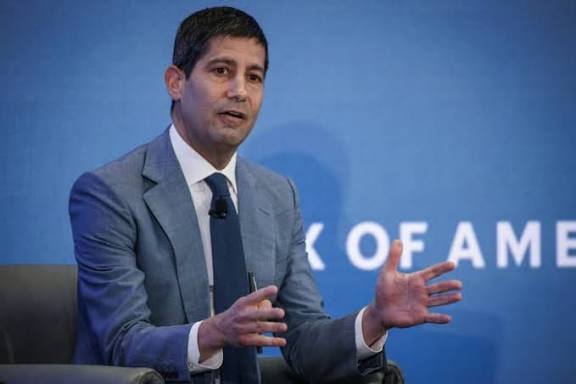
President Donald Trump plans to nominate Kevin Wersh to be governor and next chairman of the board of the Federal Reserve. Today we will discuss about Kevin Warsh : Fed exit alert, Trump influence, Wall Street shock, US economy
Kevin Warsh : Fed exit alert, Trump influence, Wall Street shock, US economy
Kevin Warsh has re-emerged as one of the most consequential figures in U.S. economic policy, sending ripples across Wall Street, Washington, and global financial markets. A former Federal Reserve governor and longtime Wall Street insider, Warsh’s potential return to the center of power — reportedly backed by former President Donald Trump — has triggered intense debate about the future of the Federal Reserve, the independence of monetary policy, and the direction of the U.S. economy.
The discussion is not just about a single individual. It is about whether the Federal Reserve is approaching a structural shift, how political influence could reshape central banking, and what this means for inflation, interest rates, and financial stability. For investors, policymakers, and everyday Americans, Kevin Warsh represents both opportunity and uncertainty.
This article explores Warsh’s background, his evolving economic views, the political forces behind his rise, Wall Street’s reaction, and the broader consequences for the U.S. economy.
Who Is Kevin Warsh? Background and Rise
Kevin Maxwell Warsh was born on April 13, 1970, in Albany, New York. His professional journey blends elite education, high-level finance, and central banking experience — a combination that has shaped his influence and controversy.
Education and Early Career
Warsh earned his undergraduate degree from Stanford University, where he studied economics and public policy. He later graduated from Harvard Law School, positioning himself at the intersection of law, finance, and governance.
Before entering public service, Warsh built his reputation on Wall Street, rising to executive level at Morgan Stanley. His work involved mergers, acquisitions, and complex financial transactions, giving him deep exposure to global capital markets and financial institutions.
This background later became both an asset and a liability — admired by market participants but questioned by critics concerned about regulatory capture.
Kevin Warsh at the Federal Reserve
Warsh was appointed to the Federal Reserve Board of Governors in 2006, becoming one of the youngest governors in the institution’s history. His tenure coincided with one of the most turbulent economic periods in modern history.
Role During the Global Financial Crisis
During the 2008 financial crisis, Warsh played a critical role in crisis management and communication with major financial institutions. He was closely involved in emergency policy responses designed to prevent systemic collapse.
While many credit the Federal Reserve for averting a depression, Warsh later expressed concern that some of the Fed’s extraordinary measures created long-term distortions in financial markets.
Departure and Shift in Perspective
Warsh left the Federal Reserve in 2011. In the years that followed, he became one of the most prominent critics of post-crisis monetary policy, particularly quantitative easing and the rapid expansion of the Fed’s balance sheet.
His critiques focused on three main points:
Excessive intervention distorted market pricing
Asset purchases disproportionately benefited Wall Street
Prolonged ultra-low rates risked undermining institutional credibility
This stance positioned Warsh as a reform-minded voice calling for a leaner, more disciplined central bank.
The Fed Exit Alert: Why Warsh’s Return Is Controversial
The possibility of Kevin Warsh returning to lead the Federal Reserve has been described as a “Fed exit alert” — not because the Fed is shutting down, but because long-standing norms could be challenged.
A Break From Tradition
Federal Reserve chairs are traditionally chosen for their perceived neutrality and independence from political power. Warsh’s close alignment with Donald Trump has fueled fears that monetary policy could become more openly politicized.
Trump has repeatedly criticized the Fed for keeping interest rates too high and slowing economic growth. Warsh’s nomination is widely viewed as a signal that Trump wants a more accommodative, growth-focused central bank leadership.
Concerns Over Independence
Critics argue that appointing a Fed chair closely aligned with presidential preferences could undermine the institution’s credibility. Central bank independence is considered vital for controlling inflation and maintaining long-term stability.
Supporters counter that independence should not mean isolation and that the Fed must remain responsive to economic realities, including employment, productivity, and competitiveness.
Kevin Warsh’s Economic Philosophy
Warsh’s economic views are often misunderstood as rigidly hawkish. In reality, his philosophy has evolved, reflecting changing economic conditions and political realities.
From Hawk to Strategic Pragmatist
Earlier in his career, Warsh was known for emphasizing inflation control and fiscal discipline. More recently, he has signaled openness to interest rate flexibility, particularly if inflation remains contained.
Key elements of his current thinking include:
Skepticism toward permanent emergency policies
Support for productivity-driven growth
Emphasis on technological innovation as a deflationary force
Preference for traditional monetary tools over unconventional interventions
This makes Warsh neither a pure hawk nor a traditional dove, but a pragmatist seeking to recalibrate policy frameworks.
Criticism of Balance Sheet Expansion
One of Warsh’s strongest positions is opposition to excessive balance sheet expansion. He argues that large-scale asset purchases blur the line between monetary and fiscal policy and risk creating asset bubbles.
This view resonates with investors concerned about long-term financial stability but raises concerns about the Fed’s ability to respond quickly during crises.
Trump Influence and Political Dynamics
Kevin Warsh’s rise cannot be separated from Donald Trump’s economic agenda.
Trump’s Frustration With the Fed
Trump has long expressed dissatisfaction with Federal Reserve leadership, particularly regarding interest rates. He has argued that higher rates weaken U.S. competitiveness and strengthen foreign economies.
Warsh’s perceived alignment with Trump’s views has made him a favored candidate among those seeking a more growth-oriented monetary stance.
Political Pushback
Democrats and some moderate Republicans have raised alarms about politicizing the Fed. Congressional scrutiny of Warsh’s nomination would likely focus on his independence, past Wall Street ties, and stance on regulation.
The confirmation process itself could become a major political battleground.
Wall Street Reaction: Shockwaves Across Markets
The prospect of Kevin Warsh leading the Federal Reserve has triggered mixed reactions across financial markets.
Market Volatility
Investors initially responded with caution, reflecting uncertainty about future rate policy and regulatory changes. Equity markets experienced volatility, while currency and bond markets adjusted expectations for interest rates.
Some investors welcomed the possibility of regulatory easing and a more predictable policy framework. Others feared abrupt changes that could destabilize markets.
Banking Sector Response
Large financial institutions have generally reacted positively to Warsh’s nomination prospects, expecting:
Reduced regulatory pressure
More market-friendly capital rules
A shift away from aggressive stress testing
However, critics warn that easing regulations could increase systemic risk if economic conditions deteriorate.
Implications for the U.S. Economy
If Kevin Warsh assumes leadership at the Federal Reserve, the economic impact could be far-reaching.
Interest Rates and Inflation
Warsh’s approach could lead to:
Gradual interest rate reductions if inflation remains under control
Greater emphasis on long-term credibility
Reduced reliance on emergency tools
The risk lies in misjudging inflation pressures, which could reignite price instability.
Economic Growth
Warsh believes flawed monetary policy can suppress growth. By restoring market discipline and encouraging productivity, he argues the economy can expand without triggering inflation.
Economists remain divided, noting that growth driven by financial markets does not always translate to broad-based prosperity.
Wall Street vs. Main Street
A recurring concern is whether Warsh’s policies would disproportionately benefit financial markets at the expense of households and small businesses. Balancing liquidity, credit access, and stability would be a defining challenge.
Global Impact and Dollar Stability
The Federal Reserve’s decisions affect not only the U.S. economy but also global markets. A shift in policy tone under Warsh could:
Strengthen the U.S. dollar
Affect emerging markets reliant on dollar liquidity
Influence global capital flows
International observers are watching closely for signals of continuity or disruption.
Conclusion: A Defining Moment for the Federal Reserve
Kevin Warsh stands at the intersection of finance, politics, and economic policy. His potential leadership of the Federal Reserve represents a pivotal moment — one that could redefine the balance between independence and accountability, stability and growth.
Supporters see him as a reformer capable of restoring discipline and credibility. Critics fear political influence and Wall Street favoritism. What is certain is that Warsh’s rise signals a broader debate about the future of central banking in a polarized economic landscape.
As the U.S. economy navigates inflation risks, geopolitical uncertainty, and technological transformation, the choices made at the Federal Reserve will shape outcomes for years to come. Kevin Warsh’s role in that story is only beginning.
How useful was this post?
Click on a star to rate it!
Average rating 0 / 5. Vote count: 0
No votes so far! Be the first to rate this post.
About the Author

usa5911.com
Administrator
Hi, I’m Gurdeep Singh, a professional content writer from India with over 3 years of experience in the field. I specialize in covering U.S. politics, delivering timely and engaging content tailored specifically for an American audience. Along with my dedicated team, we track and report on all the latest political trends, news, and in-depth analysis shaping the United States today. Our goal is to provide clear, factual, and compelling content that keeps readers informed and engaged with the ever-changing political landscape.