Kate Menendez: ICE protest detentions blocked, federal court shock, national backlash
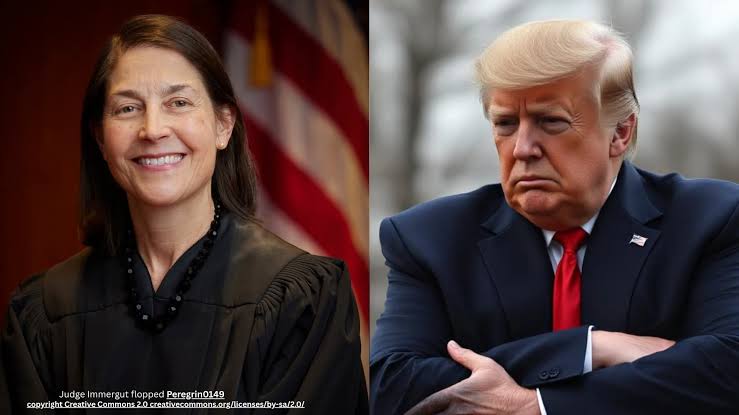
The decision by U.S. District Judge Kate Menendez addresses a case filed in December on behalf of six Minnesota activists. Today we will discuss about Kate Menendez: ICE protest detentions blocked, federal court shock, national backlash
Kate Menendez: ICE protest detentions blocked, federal court shock, national backlash
In January 2026, a federal courtroom in Minneapolis became the epicenter of a nationwide legal and political storm. At the center of it all stood Judge Kate M. Menendez, whose ruling placed firm constitutional limits on how Immigration and Customs Enforcement (ICE) agents could operate during mass protests. Her decision to block the detention of peaceful demonstrators and restrict the use of force sent shockwaves through Washington, energized civil rights groups, and triggered intense backlash from supporters of aggressive immigration enforcement.
This moment was not just about one protest or one court order. It marked a turning point in the ongoing struggle between federal power and constitutional freedom, between immigration control and civil liberties, and between executive authority and judicial oversight.
Who Is Judge Kate Menendez?
Judge Kate M. Menendez serves on the United States District Court for the District of Minnesota. Before joining the federal bench, she built a long career as a public defender, representing individuals who could not afford private legal counsel. This background gave her deep familiarity with constitutional protections, due process, and the limits of government power.
Appointed as a federal judge in 2021, Menendez quickly gained a reputation for careful legal reasoning and strict adherence to constitutional principles. Her courtroom style is known for being precise, methodical, and grounded in precedent rather than politics. However, her January 2026 ruling placed her directly into the national spotlight, transforming her from a respected jurist into a central figure in a heated national debate.
The Minneapolis Protests and Federal Crackdown
The ruling emerged from a tense atmosphere in Minnesota, where large-scale protests erupted against a sweeping federal immigration operation. Thousands of ICE and federal agents were deployed as part of an intensified enforcement campaign targeting undocumented immigrants and alleged immigration fraud.
As arrests increased, so did public outrage. Demonstrators gathered in Minneapolis to protest what they viewed as racial profiling, aggressive raids, and constitutional violations. What began as peaceful assembly soon escalated into a volatile standoff between protesters and federal officers.
The situation turned tragic when an ICE officer fatally shot a civilian during a chaotic confrontation. Video of the incident spread rapidly across social media, igniting nationwide outrage and intensifying demands for judicial intervention.
The Lawsuit That Changed Everything
Civil rights organizations, legal observers, and individual protesters filed a federal lawsuit arguing that ICE agents were unlawfully detaining peaceful demonstrators, using chemical agents without justification, and intimidating legal observers and journalists.
The plaintiffs claimed their First Amendment rights to free speech and peaceful assembly were being violated, and that the Fourth Amendment’s protection against unreasonable detention was being ignored.
The case landed in Judge Menendez’s courtroom.
The Court Order That Shook Washington
After reviewing evidence, testimonies, and video footage, Judge Menendez issued a preliminary injunction that dramatically restricted federal enforcement behavior during protests.
Her order:
• Prohibited ICE and federal agents from detaining peaceful protesters or observers without clear probable cause.
• Banned the use of tear gas, pepper spray, and similar crowd-control weapons on non-violent demonstrators.
• Blocked agents from stopping or intimidating legal observers, journalists, or civilians documenting enforcement activity.
• Required federal officers to clearly identify themselves and the legal basis for any detention.
The ruling did not halt immigration enforcement operations, but it drew a sharp constitutional boundary around how those operations could intersect with public protest.
Constitutional Foundations of the Decision
Menendez’s legal reasoning rested on two pillars of American law.
First Amendment Protections
She emphasized that peaceful protest lies at the heart of democracy. Government actions that intimidate or suppress lawful assembly, she wrote, threaten the very foundation of free expression.
Fourth Amendment Safeguards
The judge ruled that detaining individuals without individualized suspicion violates basic protections against unreasonable seizure. Mass detentions based on proximity to a protest, she argued, are constitutionally impermissible.
Her order made clear that immigration enforcement, while legally authorized, cannot override constitutional freedoms.
Political Firestorm and Federal Pushback
The response was immediate and fierce.
Federal officials accused the court of interfering with national security and immigration enforcement. Conservative lawmakers argued that the judiciary was tying the hands of law enforcement and emboldening unrest.
Some political leaders called for appeals, while others suggested the ruling reflected “judicial activism.” Talk shows, editorials, and political rallies quickly turned Menendez into a symbol of what supporters called “constitutional courage” and critics labeled “dangerous obstruction.”
Civil Rights Groups Applaud the Ruling
On the other side, civil liberties organizations praised the injunction as a historic defense of democratic rights. Activists argued that the court had finally placed legal limits on what they described as militarized immigration policing.
For many protesters, the decision was validation that their constitutional rights mattered, even in the face of federal authority.
National Implications Beyond Minnesota
Legal scholars quickly noted that the ruling could influence courts across the country. If upheld on appeal, it may establish precedent for:
• Limiting federal law enforcement tactics at protests nationwide
• Expanding legal protections for observers and journalists
• Reinforcing judicial oversight of immigration operations
• Clarifying constitutional boundaries in crowd-control scenarios
Other cities with ongoing immigration protests are now watching closely, and similar lawsuits may soon follow.
The Larger Debate: Power vs. Liberty
The Menendez ruling reflects a broader national struggle over how far the federal government can go in the name of security and enforcement.
Supporters of strong immigration control argue that firm action is necessary to maintain border integrity and rule of law.
Civil liberties advocates counter that no policy goal justifies eroding constitutional freedoms.
Judge Menendez’s decision placed the Constitution squarely above political pressure, reminding both sides that enforcement authority has limits.
What Happens Next?
The federal government is expected to appeal the ruling. Higher courts may narrow, uphold, or overturn parts of the injunction. If the case reaches the Supreme Court, it could become one of the most significant civil liberties cases of the decade.
Regardless of the outcome, the impact is already undeniable.
Kate Menendez’s name is now etched into the national conversation on constitutional rights, immigration enforcement, and the role of the judiciary in times of political tension.
Conclusion
The federal court decision blocking ICE protest detentions has become a defining moment in modern American constitutional law. Judge Kate Menendez’s ruling did more than resolve a local dispute—it reignited a national debate over freedom, authority, and the limits of state power.
In an era of polarized politics and expanding federal enforcement, her injunction stands as a reminder that the Constitution remains the ultimate authority, even when the stakes are high and the pressure is intense.
Whether history will view the ruling as a turning point or the opening chapter of a longer legal battle, one fact is certain: Kate Menendez is now a central figure in the story of how America balances security with liberty in the 21st century.
How useful was this post?
Click on a star to rate it!
Average rating 0 / 5. Vote count: 0
No votes so far! Be the first to rate this post.
About the Author

usa5911.com
Administrator
Hi, I’m Gurdeep Singh, a professional content writer from India with over 3 years of experience in the field. I specialize in covering U.S. politics, delivering timely and engaging content tailored specifically for an American audience. Along with my dedicated team, we track and report on all the latest political trends, news, and in-depth analysis shaping the United States today. Our goal is to provide clear, factual, and compelling content that keeps readers informed and engaged with the ever-changing political landscape.