Julian Oxborough Sacked for 17p Water: Lidl Tribunal Shock
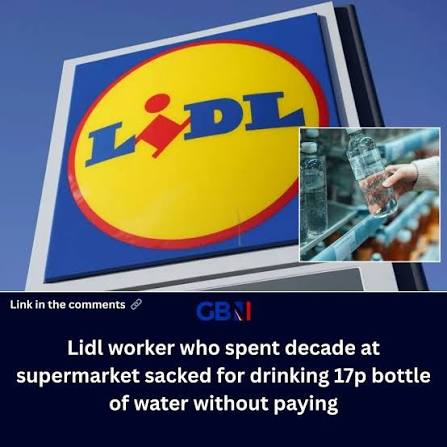
In one of the most unusual and widely-reported employment tribunal cases in recent UK workplace history, Julian Oxborough — a long-serving employee of supermarket giant Lidl — was dismissed for drinking a 17 pence bottle of water while on duty. The dismissal was upheld by an employment tribunal, sparking debate around employee rights, company policies, and common-sense workplace conduct.
This case has drawn attention across national media and has become a talking point for workers, employers, legal experts, and human rights advocates alike. Here’s everything you need to know about this remarkable story — how it unfolded, why it matters, and what it could mean for workplace discipline and employment rights in the UK.
The Incident: Drinking Water or Gross Misconduct?

On 19 July 2024, Mr Oxborough was working on the checkout at Lidl’s store in Wincanton, Somerset when a customer attempted to buy a bottle from a multipack that lacked a barcode. The customer exchanged it for a barcoded bottle and left the original at the checkout.
Later that day, Mr Oxborough took the 17p bottle of water and drank from it while continuing to serve customers. He also poured some into his own drink.
The next day, a manager found the discarded bottle near the till and, after reviewing CCTV footage, accused Mr Oxborough of breaching store policy.
Lidl’s Stance
Lidl treats the consumption of unpaid stock very seriously, with a strict zero-tolerance policy. The company considered Mr Oxborough’s actions as gross misconduct — potentially theft — even though the item cost just 17 pence.
Oxborough’s Explanation
Mr Oxborough admitted that he drank the water without paying. However, he claimed:
He was dehydrated during his long shift.
His own drink was “too strong” and undrinkable.
He believed the bottle could be written off because he had seen similar bottles in the canteen without receipts.
He didn’t intend to be dishonest and simply forgot to get the bottle written off.
He later described his dismissal as a “huge overreaction.”
The Disciplinary Process and Tribunal Hearing
Following the incident, Mr Oxborough was suspended and a disciplinary process was launched. Lidl’s area manager, Karina Moon, reviewed his explanations and concluded they were inconsistent and unreliable. She also questioned why he had not chosen tap water instead.
After the internal investigation, Lidl dismissed Mr Oxborough for gross misconduct.
In October 2025, Mr Oxborough brought an unfair dismissal claim to an Employment Tribunal in Southampton. However, the tribunal — led by Employment Judge Yallop — found in favour of Lidl, upholding the decision and dismissing his claim.
The tribunal’s judgment specifically ruled that:
The dismissal was not unfair.
The company’s disciplinary process was lawful.
Mr Oxborough’s allegedly extenuating circumstances did not outweigh the company’s need to enforce its policies consistently.
Workplace Policies and “Zero-Tolerance” Enforcement
One of the biggest controversies surrounding this case is the severity of the response to a relatively minor act involving a cheap bottle of water.
Why Lidl Took Action
Lidl insists that even small items like a 17 p bottle of water should:
Be paid for before consumption, or
Be written off correctly via store procedures.
This is part of a broader corporate approach to inventory and theft prevention, which the company argues is essential for operational efficiency and fairness among staff.
The tribunal agreed that Lidl’s zero-tolerance policy was consistently applied and justified in this case.
Employee Perspective
From Mr Oxborough’s point of view, the issue wasn’t criminal intent but a moment of poor judgment mixed with dehydration and confusion. Many commentators have called the outcome disproportionate, highlighting the human element that was arguably overlooked. Critics say it raises important questions about whether strict policies should override workplace empathy and common sense.
Public and Media Reaction
The story quickly became viral across media outlets and on social platforms because of its unusual nature.
Some key responses included:
Criticism of corporate inflexibility.
Discussions about employee welfare, especially related to hydration, work conditions, and staff treatment.
Analysis of whether employment tribunals should factor in context and intent more heavily in disciplinary cases.
The news has been covered not only in the UK but also internationally, highlighting the broader implications for workplace discipline standards.
Legal Perspective: Employment Law and Fairness
From a legal standpoint, the tribunal’s decision reflects established principles in UK employment law:
1. Employer’s Right to Set Policies
Employers are generally entitled to:
Set and enforce workplace policies.
Take disciplinary action for breaches, including dismissal for misconduct — even for relatively minor items — if they are applied consistently and fairly.
2. Burden of Proof
In unfair dismissal claims, the tribunal assesses whether:
The employer acted reasonably.
The disciplinary process followed was fair.
The sanction was within the range of reasonable responses open to an employer.
3. Context Matters — But Only to a Degree
While tribunals often consider context (e.g., intent, personal circumstances), they also weigh the employer’s need to maintain order and policy. In this case, the judge found that zero tolerance was justified under the company’s rules.
Implications for Workers and Employers
This case has implications far beyond one bottle of water.
For Employees:
Understand and follow company policies strictly.
Ask employers about acceptable practices for items like water, food, and personal needs during shifts.
Document any workplace conditions affecting health (e.g., dehydration) and seek support.
For Employers:
Ensure disciplinary policies are clear and well-communicated.
Train managers on handling minor violations with discretion if appropriate.
Consider employee wellbeing as part of workplace culture to avoid backlash.
Frequently Asked Questions (FAQs)
1. Why was Julian Oxborough fired for a 17p bottle of water?
Mr Oxborough was dismissed for allegedly breaching Lidl’s rules on unpaid stock consumption by drinking a 17 p water bottle he did not pay for or properly write off. The company treated it as gross misconduct.
2. Did the employment tribunal support Lidl’s decision?
Yes. The Employment Tribunal in Southampton dismissed Mr Oxborough’s unfair dismissal claim, finding Lidl’s actions reasonable and lawful.
3. Was there any evidence of dishonest intent?
Mr Oxborough claimed he did not intend to be dishonest and was dehydrated, but the tribunal accepted Lidl’s view that his explanations were inconsistent, and this undermined his case.
4. Does this set a precedent for similar cases?
While employment tribunal decisions aren’t binding nationwide, this case reinforces that employers can enforce strict policies consistently and that tribunals may uphold dismissals even for seemingly minor policy breaches.
5. What can employers learn from this?
Clear policies and consistent enforcement are crucial, but balancing rules with staff welfare and context can improve morale and public perception.
Conclusion: A Water Bottle That Made Waves
What happened to Julian Oxborough is more than an odd news story — it’s a sharp reminder that workplace rules matter, but so does how they are applied and perceived.
A seemingly trivial act — drinking a cheap bottle of water — resulted in a serious professional and legal consequence, upheld by an employment tribunal. This case highlights the importance of understanding company policies, the complexities of employment law, and the delicate balance between discipline and fairness.
No matter your workplace, it’s a story worth paying attention to — both for employees and employers alike.
How useful was this post?
Click on a star to rate it!
Average rating 5 / 5. Vote count: 1
No votes so far! Be the first to rate this post.
About the Author

usa5911.com
Administrator
Hi, I’m Gurdeep Singh, a professional content writer from India with over 3 years of experience in the field. I specialize in covering U.S. politics, delivering timely and engaging content tailored specifically for an American audience. Along with my dedicated team, we track and report on all the latest political trends, news, and in-depth analysis shaping the United States today. Our goal is to provide clear, factual, and compelling content that keeps readers informed and engaged with the ever-changing political landscape.