Johannesburg crisis: water shortage, crime surge, political pressure
You sai
Johannesburg, South Africa’s largest city and economic engine of the continent, is confronting a converging crisis that threatens its stability and future: prolonged water shortages, an alarming crime surge, and mounting political pressure that challenges both municipal governance and national leadership. This crisis is not an isolated incident but a culmination of systemic failures, infrastructure decay, socio-political conflict, and public frustration. In this comprehensive analysis, we examine the crisis from multiple angles, outline causes, impacts, and responses, and offer insights into what the future holds for the City of Gold.
🧠 Background: A City Under Strain
Johannesburg, with a metropolitan population exceeding 5.5 million and a broader urban region of nearly 15 million, has long been an economic and cultural hub of Africa. Yet in recent years, its reputation as a modern, thriving metropolis has been challenged by deepening governance breakdowns. Persistent infrastructure neglect, under-investment, and mounting urban pressures have converged to create a crisis that affects daily life, public safety, and civic trust.
✔ Water Crises Reach Breaking Point
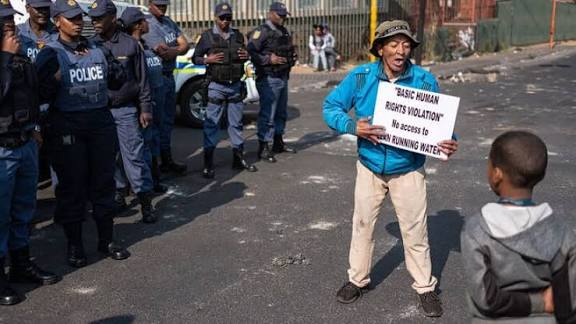
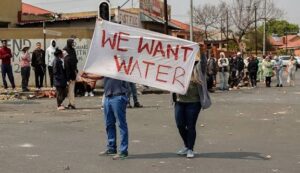
One of the most visible manifestations of this urban breakdown is Johannesburg’s crippling water shortages. Multiple districts have faced prolonged interruptions in water supply, with some residents enduring weeks without running water. Communities in areas like Westbury, Coronationville, Protea Glen, Diepkloof and Melville have protested against the crisis, barricading roads and taking to the streets to demand immediate action. Police have even fired rubber bullets to disperse some protests amid tensions rooted in lack of access to this basic necessity.
In a media briefing responding to public alarm, Johannesburg’s Mayor Dada Morero denied that the city was on the brink of “Day Zero” — a total depletion of supply — while confirming widespread disruption and deploying a dedicated “water war room” to monitor and respond to system failures in real time.
📍 What’s Causing the Water Shortage?
The crisis is not merely a technical breakdown — it has deep structural roots:
⚠ Aging Infrastructure & Poor Maintenance
Johannesburg’s water infrastructure is aged, with segments dating back decades that struggle to meet modern demand. The city’s pipeline network spans over 12,000 km, much of it antiquated and in need of replacement. Officials report that only a tiny fraction of required upgrades are actually carried out each year, leaving a vast backlog that worsens over time.
💧 High Water Losses
The phenomenon known as Non-Revenue Water (NRW) — water that is treated but lost before delivery due to leaks, theft, or billing issues — is alarmingly high. Estimates suggest up to 40–50% of Johannesburg’s treated water never reaches residents because of leaks or illegal connections, a staggering inefficiency for a city already in crisis.
💸 Corruption & Mismanagement
Financial mismanagement and corruption have compounded these infrastructure issues. Analyses show that water authorities are underfunded and ill-equipped, with poor oversight, weak accountability, and inadequate planning exacerbating service delivery failures — creating a situation where water shortages are as political as they are technical.
🚨 The Human Impact
👨👩👧 Daily Life Disrupted
Water scarcity affects every aspect of life: cooking, hygiene, sanitation, and public health. In some districts, residents must queue for hours at water trucks or resort to expensive private tanker deliveries. Vulnerable groups, especially the elderly and those dependent on medical equipment, face heightened risks when water is unavailable.
🙏 Public Outrage And Protests
The crisis has sparked waves of protest across Johannesburg. Residents blocked roads with burning tyres, stones and debris to demand reliable service. These demonstrations reflect not only frustration over water access but also broader disillusionment with governance and municipal performance.
🤝 Civil Society Mobilisation
Civic leaders and activists, such as Dr Ferrial Adam, have emerged as influential voices in demanding accountability and solutions. These community advocates urge more inclusive planning, better leadership, and collaborative approaches to solving what they describe as not just a technical problem but a societal challenge that requires public participation.
🔐 Crime Surge Adds Pressure
While the water crisis dominates headlines, Johannesburg also grapples with one of South Africa’s highest crime rates. Nationally, the country averages over 60 homicides per day, with organized crime, gangs, and illegal mining operations driving violence and insecurity.
👮 Government Response to Crime
In the 2026 State of the Nation Address, President Cyril Ramaphosa pledged a renewed focus on tackling organized crime and violence, announcing plans to deploy the military to support police operations in hotspots including Gauteng province. This reflects deep concern at the highest levels of government regarding crime as a threat to democracy, safety, and economic stability.
🌀 Impact on Daily Life
From gang violence in township areas to random shootings and theft, crime has a chilling effect on residents’ sense of security. Businesses, schools, and families all navigate a landscape where personal safety is a daily concern. High unemployment, economic inequality, and limited job opportunities fuel youth involvement in criminal activities, creating a cycle that is difficult to break.
🧩 Political Pressure and Governance Crisis
The water shortage and crime surge are causing intense political scrutiny at both provincial and national levels.
🗣 Public Trust Erodes
Johannesburg residents are increasingly frustrated with leadership perceived as slow to act or out of touch. A widely criticised comment by Premier Panyaza Lesufi, suggesting that residents could use hotel showers during water shortages — a luxury unaffordable to many — sparked outrage and highlighted a disconnect between officials and citizens.
📈 Service Delivery Protests
Service delivery protests have spiked, with hundreds of incidents reported across Gauteng. Citizens view government failures as symptomatic of deeper governance breakdowns, encompassing not just water but electricity, sanitation, and basic urban services.
🪛 Coalition Politics and Accountability
Johannesburg’s political landscape has been turbulent, with coalition governments at the city level adding complexity to service delivery. Accountability issues are widespread, as residents demand audits, reforms, and transparent recovery plans to prevent future crises.
🧭 What’s Being Done?
🛠 Immediate Actions
The national government has approved emergency measures to stabilise water supply, including licences for additional abstraction from the Integrated Vaal River System to bolster reservoir levels, and reinforced anti-crime strategies involving police and military cooperation.
🔧 Infrastructure Projects
City authorities have implemented initiatives such as war-rooms, targeted repairs, and reservoir upgrades to manage supply and reduce disruptive outages. Longer-term projects include new storage facilities, major pipeline replacements, and collaboration with bulk suppliers like Rand Water.
📊 Calls for Reform
Opposition parties and civil society groups are calling for independent audits of Johannesburg Water and comprehensive infrastructure masterplans to ensure accountability and sustainable solutions, arguing that current management practices are insufficient.
📌 Conclusion
The Johannesburg crisis — defined by water shortages, rising crime rates, and political pressure — is a multifaceted challenge with roots in historical neglect, governance failures, and rapid urban growth. While immediate reforms and emergency measures are underway, lasting solutions require deeper institutional change, stronger accountability, significant investment in infrastructure, and meaningful engagement between citizens and government.
The crisis is a test of governance, civic resilience, and political will. Johannesburg’s future depends on whether leaders and communities can collaborate to convert reactionary responses into transformative action.
❓ FAQs (Frequently Asked Questions)
1. What are the main causes of Johannesburg’s water crisis?
Johannesburg’s water shortages stem from ageing infrastructure, chronic leaks and non-revenue water, maintenance backlogs, mismanagement, corruption and population pressures that outstrip planning.
2. Which areas are most affected by the water shortages?
Communities in Westbury, Coronationville, Protea Glen, Diepkloof, Melville and other working-class districts have experienced prolonged outages and have been hotspots for protests.
3. Is Johannesburg likely to reach a “Day Zero” water situation?
Officials have denied imminent “Day Zero” conditions, but intermittent outages persist, prompting emergency response measures and reserve management.
4. How is the government responding to rising crime in Johannesburg?
The national government has pledged strategic action, including deployment of military support for police to combat organized crime and gang violence.
5. What long-term solutions are proposed for the crisis?
Long-term solutions include major infrastructure investments, transparent audits, comprehensive master planning, community engagement and stronger governance accountability across city and national institutions.
How useful was this post?
Click on a star to rate it!
Average rating 0 / 5. Vote count: 0
No votes so far! Be the first to rate this post.
About the Author

usa5911.com
Administrator
Hi, I’m Gurdeep Singh, a professional content writer from India with over 3 years of experience in the field. I specialize in covering U.S. politics, delivering timely and engaging content tailored specifically for an American audience. Along with my dedicated team, we track and report on all the latest political trends, news, and in-depth analysis shaping the United States today. Our goal is to provide clear, factual, and compelling content that keeps readers informed and engaged with the ever-changing political landscape.