Homeland Security Rift: New Policy Announced, States Unite in Rebellion
The order demands that the Secretary of Defense and the Secretary of Homeland Security submit a joint report by April 20, 2025. Today we will discuss about Homeland Security Rift: New Policy Announced, States Unite in Rebellion
Homeland Security Rift: New Policy Announced, States Unite in Rebellion
In late 2025, the United States has seen a dramatic escalation in federal homeland-security and immigration enforcement policies under the administration of Donald J. Trump. The renewed push — spearheaded by DHS — includes expanded travel bans, increased powers for immigration agencies, and an aggressive deportation campaign. These moves have triggered a sharp backlash from several U.S. states, prompting legal challenges, new state legislation, and public protests. What was once mostly a federal domain — immigration enforcement — is now turning into a battleground between federal authorities and state governments.
This article details the key policy changes, the reactions from states, the legal and political clash, and the broader implications for U.S. democracy, civil rights, and the future of federalism.
What Changed: Key DHS Policies and Directives

Expanded Travel Ban & Immigration Restrictions
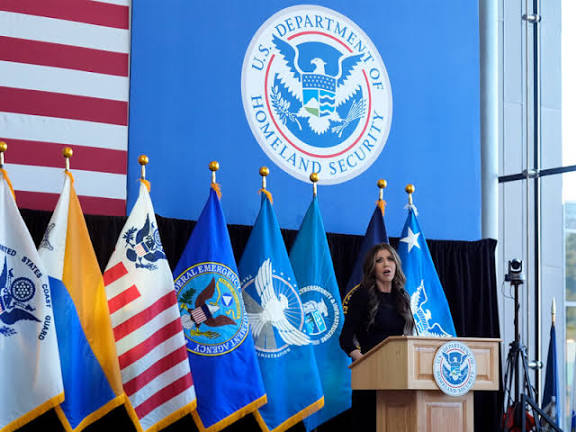
One of the most consequential moves by DHS is its latest directive to widen the U.S. travel ban to more than 30 countries. According to DHS Secretary Kristi Noem, the expansion is based on a new set of criteria focusing on government stability and the ability of countries to provide reliable identity verification for travelers.
This builds on earlier bans implemented in June 2025 that restricted entry from 19 countries — including both immigrant and non‑immigrant visas. In the wake of a shooting in Washington, D.C., allegedly involving an Afghan national, the administration moved to further tighten immigration controls. The new policy also reportedly entails halting many immigration benefit applications, including green cards and naturalizations, for citizens from the impacted nations. Critics argue this has effectively frozen pathways to residency and asylum for many people, including some who were already in the immigration system.
Empowering Immigration Agencies — Arrest Powers, Deportation Surge
Another major shift involves expanding the enforcement powers of immigration agencies. The U.S. agency responsible for immigration services, U.S. Citizenship and Immigration Services (USCIS), is now authorized to investigate, arrest, carry firearms, and execute search and arrest warrants for individuals who violate immigration laws. This marks a significant intensification of DHS’s enforcement capacity.
In parallel, the federal government is diverting staff from cybersecurity and other divisions into agencies like Immigration and Customs Enforcement (ICE) and border‑control divisions. The reassigned personnel will support the surge of deportations and mass immigration enforcement — and reportedly, staffers who refuse reassignment face dismissal.
Institutional Oversight: A Brief Retreat — Then Reversal
Earlier in 2025, DHS had considered abolishing or significantly curtailing certain oversight offices — including the Office for Civil Rights and Civil Liberties (CRCL), the USCIS Ombudsman, and the Office of the Immigration Detention Ombudsman (OIDO) — which handle complaints and civil rights issues related to immigration enforcement.
However, following litigation and public pressure, DHS reversed that decision and announced that these oversight offices would remain active. While this reversal might seem like a concession, many civil‑rights advocates remain skeptical about how effective the oversight will be given the department’s shifting priorities.
Where the Rift Becomes Visible: When States Say “No”
The federal government’s aggressive new approach has triggered organized pushback from multiple states — from legislation to lawsuits, and from public portals for reporting misconduct to protests. At the heart, the rift revolves around issues of federal power, civil rights, and state-level autonomy.
The No Secret Police Act (SB 627) — A Direct Challenge
In September 2025, the state of California made a bold move: Governor Gavin Newsom signed into law SB 627 — the No Secret Police Act — which prohibits federal and local law enforcement officers from wearing ski masks, balaclavas, neck gaiters, or similar face coverings while conducting operations.
Exceptions are allowed only for undercover agents, tactical gear, or medical masks such as N95 respirators. The law also aims to mandate visible identification (badge numbers, agency affiliation), thereby increasing transparency and reducing fear among immigrant communities.
The law reflects a broader concern: many Californians felt federal immigration raids — often conducted by masked, plain‑clothes agents in unmarked vans — had become a source of terror rather than law enforcement. Supporters of the law framed it as a defense against “secret-police” tactics.
Federal Pushback — Lawsuit, Non‑Compliance, Supremacy Clause
The passage of SB 627 triggered immediate friction. The federal government responded swiftly. The U.S. Department of Justice (DOJ) filed a lawsuit against California, challenging the law as unconstitutional and asserting that the federal government has exclusive authority over its agents — particularly regarding uniforms, tactics, and operational protocols.
Parallel to that, DHS declared that it “will not comply” with the mask ban. In short: California passed a law — but federal agents have signaled they will ignore it. The confrontation underscores a deeper constitutional battle, where state-level protections of civil rights clash with centralized federal power.
States & Cities Creating Oversight Mechanisms — Portal for Reporting Agent Misconduct
Beyond California, other states and cities are also organizing resistance. For example, California recently launched an online portal allowing members of the public to submit videos, photos, and other evidence of alleged misconduct by federal immigration agents.
This kind of grassroots, civic‑level oversight is emblematic of a broader trend: states and localities seeking to reclaim control, protect civil rights, and offer recourse to immigrant communities facing aggressive enforcement. The portal aims to document potential unlawful activities — excessive force, wrongful detentions, illegal arrests — and empower state justice offices to act.
Sanctuary Cities & Municipal Resistance — Local Governments Push Back
Across the country, multiple cities and sanctuary jurisdictions have taken steps to limit federal enforcement in their territories. Some are refusing to cooperate, others are barring federal agents from certain facilities (like schools), and many are mobilizing social-service supports for immigrant families. In some cities there are active efforts to shield Somali and other immigrant communities from pending raids announced by DHS.
In many ways, local governments are building a parallel — sometimes adversarial — system of protection and resistance. Their actions reflect concern that federal policies are undermining community trust, civil rights, and the social fabric of immigrant-heavy cities.
Why the Rift? Underlying Motivations & Frictions
Understanding this clash requires looking at both sides — what motivates DHS and the Trump administration, and what’s driving states, civil‑rights groups, and local governments to resist.
From the Federal Side: Security, Enforcement, and a Hardline Vision
Perceived Security Threats: The expansion of travel bans and tightened immigration restrictions are justified by DHS and administration officials as necessary to counter terrorism, crime, and national-security threats.
Deterrence Through Deportations: Empowering immigration agencies with arrest and deportation capabilities reflects a broader goal of deterring unauthorized immigration.
Efficiency & Scale: By reassigning staff across divisions, DHS appears to be prioritizing removal operations. The agency seems intent on using its full bureaucratic and technological resources to achieve mass enforcement at scale.
Centralization of Power: The administration’s moves reflect belief in a strong centralized authority over immigration enforcement — both in legislation and in operations.
From the States & Civil Society: Civil Rights, Accountability, and Local Autonomy
Protecting Immigrant Communities: Many state and local governments see the new federal policies as a threat to civil liberties. Laws like SB 627 reflect a demand for transparency and dignity.
Rule of Law & Constitutional Checks: States like California frame their resistance as upholding democratic norms, constitutional protections, and transparency in law enforcement.
Defense of Local Governance: Cities and states are asserting their autonomy — particularly in areas like public safety, schooling, and community support.
Humanitarian and Economic Concerns: Aggressive deportations impact families, businesses, labor markets, and entire communities.
Examples of the Rift in Action: Cases & Backlash
Mask‑Ban Law vs. Federal Refusal: California’s No Secret Police Act
California’s SB 627 prohibits law enforcement — including federal agents — from wearing masks during enforcement operations. The impetus: a wave of ICE / federal immigration raids involving masked agents in unmarked vans arresting immigrants.
The DOJ filed suit against the state, arguing the law violates the Constitution, particularly the Supremacy Clause. Meanwhile, DHS announced it would not comply with the law — raising the specter of federal agents ignoring state-level legislation, and deepening the constitutional crisis.
Public Oversight — Reporting Misconduct, Documenting Raids
California launched a public-facing portal enabling citizens to report alleged misconduct by federal immigration agents — including videos, photos, or testimonies. The portal signals a shift from top-down regulation to grassroots accountability.
Sanctuary Cities & Municipal Defiance
Some cities and regions — especially sanctuary jurisdictions — are pushing back against the federal crackdown. Mayors and local officials are refusing cooperation with ICE, barring federal agents from schools, and launching community support efforts for immigrants.
Deportations Surge & Arrests of Non‑Criminals
Nearly 75,000 individuals arrested by ICE between January and October 2025 had no criminal record. This statistic undermines the administration’s narrative — that deportation targets criminals or security threats.
Interpretations: What Is Really at Stake?
Erosion of Civil Rights and Due Process
Broad travel bans, blanket immigration restrictions, mass deportations — without adequate individualized review — risk punishing people for their nationality, origin, or status, rather than any demonstrated wrongdoing.
A Shift in Federal–State Power Dynamics
At the heart of this “rift” is a struggle over control: does the federal government have unchecked authority to enforce immigration law — or can states and localities assert autonomy when enforcement practices contradict their own laws, norms, or values?
Social, Economic, and Human Costs
Deportations and raids disrupt families, divide communities, and instill fear among immigrant populations. Aggressive enforcement can destabilize labor markets and shred trust between communities and law enforcement.
What It Means for U.S. Democracy
The federal government’s push reflects a hardline, top-down approach — potentially prioritizing control and enforcement over rights, due process, and community well-being. The pushback from states and cities reflects a countervailing demand for transparency, accountability, and protection of civil liberties.
Where Things Stand Now & What to Watch
Ongoing Legal Battles
The DOJ lawsuit challenging SB 627 is active; it could have major implications for whether states can regulate or restrict federal law enforcement tactics. Many immigrant-rights organizations are preparing to use the new California portal to document and litigate alleged federal misconduct.
Evolving Federal Policy — More Crackdowns Likely
DHS is already reassigning staff to enforcement duties and expanding powers of immigration agencies, suggesting that the pace of arrests and deportations is likely to increase further.
Growing Political Polarization & Civic Backlash
Public sentiment — especially in states like California — appears increasingly resistant to what many see as draconian enforcement tactics. The backlash may deepen legal challenges, public protests, and further legislation.
Challenges & Criticisms — From Both Sides
Criticisms of Federal Policy: Civil‑Rights & Overreach
Expanded powers, travel bans, and arrests of non‑criminals risk undermining civil rights and due process.
The use of masked, plain‑clothes agents fosters fear, distrust, and potential abuse.
The diversion of resources can weaken other critical national-security responsibilities.
Criticisms of State & Local Resistance: Federal Authority & National Security
States may be undermining federal law enforcement ability.
Restricting agent tactics may limit operational flexibility.
Local oversight policies could complicate uniform national enforcement.
Broader Implications: What the “Rift” Means for the Future
Reinventing Federalism — A New Balance of Power
States asserting control over enforcement tactics and civil-rights protections may redefine federalism.
Evolving Notions of Security & Civil Liberties
Public attitudes may shift from enforcement-first policy to a more balanced approach emphasizing both security and civil liberties.
Social & Economic Consequences
Aggressive enforcement carries heavy social and economic costs, while state-level resistance may foster community resilience and stability.
Precedent for Future Conflicts
This rift may set a precedent for future clashes between federal authority and state-level protections.
Conclusion: A Divided Homeland — What Lies Ahead
The “homeland security rift” is more than a moment — it may signal a structural and constitutional realignment. DHS is pushing for maximum power and sweeping enforcement, while states and cities push back with civil-rights protections and community safeguards.
The future may belong to a more devolved, contested, and negotiated version of homeland security — one where states, localities, and civil society have a voice. For immigrant communities and advocates for civil rights, these developments offer both hope and uncertainty. For the nation, they represent a critical test of balancing security, law enforcement, and liberty.
How useful was this post?
Click on a star to rate it!
Average rating 0 / 5. Vote count: 0
No votes so far! Be the first to rate this post.
About the Author

usa5911.com
Administrator
Hi, I’m Gurdeep Singh, a professional content writer from India with over 3 years of experience in the field. I specialize in covering U.S. politics, delivering timely and engaging content tailored specifically for an American audience. Along with my dedicated team, we track and report on all the latest political trends, news, and in-depth analysis shaping the United States today. Our goal is to provide clear, factual, and compelling content that keeps readers informed and engaged with the ever-changing political landscape.