Greg Moriarty: Australia Appoints US Ambassador, Global Alliance Shockwaves
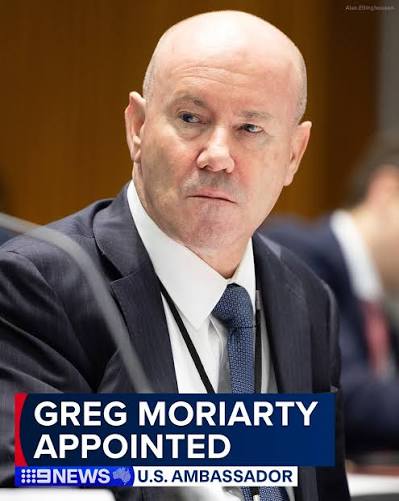
Defense Department chief Greg Moriarty will replace Kevin Rudd as Australia’s ambassador to the US. Career public servant and former chief of staff. Today we will discuss about Greg Moriarty: Australia Appoints US Ambassador, Global Alliance Shockwaves
Greg Moriarty: Australia Appoints US Ambassador, Global Alliance Shockwaves
Australia’s decision to appoint Greg Moriarty as its next Ambassador to the United States marks a pivotal moment in global diplomacy. At a time of shifting alliances, rising geopolitical tensions, and renewed great-power competition, Canberra’s choice of a seasoned national security strategist sends a powerful message: the Australia–US alliance is entering a new, more security-focused phase.
This appointment is not merely ceremonial. It reflects Australia’s intent to reinforce its strategic partnership with Washington amid intensifying challenges in the Indo-Pacific, evolving defence arrangements such as AUKUS, and growing uncertainty in the global order.
Who Is Greg Moriarty?
Greg Moriarty is one of Australia’s most experienced public servants, with a career spanning diplomacy, defence, intelligence, and counter-terrorism. Known for his calm authority and deep strategic insight, Moriarty has worked at the highest levels of government, shaping Australia’s national security and foreign policy for decades.
He has previously served as:
Secretary of the Department of Defence
Ambassador to Indonesia
Ambassador to Iran
Commonwealth Counter-Terrorism Coordinator
Senior adviser on national security to Australian prime ministers
Unlike many political appointees, Moriarty is a career professional whose influence is built on policy expertise rather than party affiliation. His appointment signals a shift toward technocratic diplomacy at a time when military, intelligence, and cyber cooperation dominate international relations.
Why the US Ambassadorship Matters
The Australian Ambassador to the United States is arguably the most important diplomatic post in Canberra’s foreign service. The role goes far beyond ceremonial representation and includes:
Managing defence and intelligence cooperation
Supporting joint military operations and strategic planning
Advancing trade and economic partnerships
Influencing policy on regional security, especially in the Indo-Pacific
Navigating alliance politics within the US Congress and Pentagon
With rising tensions across Asia, war in Europe, and instability in the Middle East, Washington remains the central pillar of Australia’s strategic security architecture.
From Political Envoy to Strategic Operator
Moriarty replaces a politically high-profile predecessor, shifting the tone of Australia’s diplomacy in Washington. While political ambassadors bring influence and visibility, Moriarty brings something different: institutional memory, defence planning experience, and crisis management expertise.
This transition suggests:
A move from symbolic diplomacy to operational alliance management
Greater emphasis on military integration and intelligence sharing
A desire for stability and professionalism in sensitive negotiations
AUKUS and the Security Imperative
One of Moriarty’s top priorities will be the advancement of the AUKUS security partnership between Australia, the United States, and the United Kingdom. This landmark agreement focuses on:
Nuclear-powered submarine acquisition
Advanced missile and cyber capabilities
Artificial intelligence and undersea warfare technologies
Long-term defence industrial integration
As former Defence Secretary, Moriarty understands the technical, political, and financial complexities of this program better than almost any Australian official. His presence in Washington strengthens Australia’s hand in negotiations over timelines, technology transfer, and strategic planning.
Indo-Pacific Power Struggle
The broader context of Moriarty’s appointment is the accelerating strategic competition in the Indo-Pacific. China’s military expansion, assertive diplomacy, and regional influence campaigns have reshaped security calculations across Asia and the Pacific.
Australia’s response has been to:
Deepen its alliance with the United States
Expand defence partnerships with Japan, India, and ASEAN nations
Increase defence spending and force readiness
Strengthen intelligence cooperation
Moriarty’s diplomatic experience in Asia, especially Indonesia, equips him to navigate this complex regional environment while aligning Australian policy with US strategic priorities.
Managing a Complex US Political Environment
Washington itself is deeply polarized. The ambassador must engage with:
The White House
The State Department
The Pentagon
Congress
Think tanks and defence contractors
Media and public opinion
Moriarty’s non-partisan reputation and professional standing allow him to work effectively across party lines, ensuring that the alliance remains stable regardless of political shifts.
Alliance Expectations and Burden Sharing
One ongoing challenge in US-allied relations is burden sharing. Washington expects partners to:
Increase defence investment
Contribute to regional security operations
Support freedom of navigation missions
Align diplomatically on strategic issues
Moriarty’s task will be to demonstrate Australia’s value as a serious, capable, and reliable ally while safeguarding national interests and policy independence.
Global Reactions and Strategic Signaling
Internationally, Moriarty’s appointment is viewed as a signal that Australia is doubling down on its role as a frontline security partner of the United States. It reassures allies and partners that Canberra is committed to:
Upholding a rules-based international order
Maintaining open sea lanes
Countering coercion and destabilization
Investing in long-term strategic deterrence
At the same time, it sends a clear message to rival powers that Australia intends to remain firmly anchored within the Western security architecture.
The Transition from Kevin Rudd
Moriarty takes over from former Prime Minister Kevin Rudd, whose tenure was marked by high-level engagement but also political sensitivities. The change reflects a recalibration: from a high-profile political figure to a seasoned strategic operator.
This transition emphasizes:
Institutional continuity
Reduced personalization of diplomacy
Greater focus on defence and intelligence coordination
Challenges Ahead
Despite his experience, Moriarty faces significant challenges:
1. Strategic Uncertainty
Global power competition is intensifying, with flashpoints across Taiwan, the South China Sea, Ukraine, and the Middle East.
2. Defence Modernization Pressures
Delivering on ambitious military programs requires sustained political and financial commitment.
3. Alliance Management
Balancing loyalty to the US with Australia’s regional diplomacy and economic interests will demand careful statecraft.
4. Technology and Cybersecurity
Emerging domains such as cyber warfare, space security, and artificial intelligence are redefining alliance cooperation.
What Moriarty’s Appointment Ultimately Represents
Greg Moriarty’s posting to Washington represents more than a personnel change. It symbolizes:
The securitization of diplomacy
The centrality of the US alliance in Australian strategy
The elevation of professional expertise over political symbolism
A recognition that the world is entering a more contested, volatile era
His leadership will shape how Australia positions itself in the evolving global order—whether as a middle power navigating between giants or as a core pillar of a broader strategic coalition.
Conclusion
The appointment of Greg Moriarty as Australia’s Ambassador to the United States comes at a defining moment in international affairs. With wars, rivalries, and technological transformations reshaping global politics, Canberra has chosen a diplomat whose career has been forged in the crucible of security and strategy.
As he assumes office, Moriarty will stand at the intersection of diplomacy and defence, alliance and autonomy, continuity and change. His tenure is likely to influence not only the future of Australia–US relations, but also the broader balance of power in the Indo-Pacific and beyond.
In an age of uncertainty, Australia has placed one of its most trusted strategists at the heart of its most important alliance.
How useful was this post?
Click on a star to rate it!
Average rating 0 / 5. Vote count: 0
No votes so far! Be the first to rate this post.
About the Author

usa5911.com
Administrator
Hi, I’m Gurdeep Singh, a professional content writer from India with over 3 years of experience in the field. I specialize in covering U.S. politics, delivering timely and engaging content tailored specifically for an American audience. Along with my dedicated team, we track and report on all the latest political trends, news, and in-depth analysis shaping the United States today. Our goal is to provide clear, factual, and compelling content that keeps readers informed and engaged with the ever-changing political landscape.