Government Shutdown 2026 : Funding Deal Blocks Shutdown

On November 12, Congress ended the federal shutdown after 43 days by passing a continuing resolution to fund the government through January 30. Today we will discuss about Government Shutdown 2026 : Funding Deal Blocks Shutdown
Government Shutdown 2026 : Funding Deal Blocks Shutdown
In early 2026, the United States once again faced the threat of a federal government shutdown—one that had the political world watching, millions of Americans worried, and media outlets buzzing with speculation about the economic, social, and political consequences. However, a bipartisan funding deal passed in late 2025 effectively blocked a shutdown through early 2026, setting the stage for heightened negotiations, political maneuvering, and ongoing debates about federal priorities.
This article examines the origins of the 2025–26 shutdown crisis, the deal that averted the 2026 shutdown, the political dynamics involved, the impacts on government functions and the public, and what lies ahead for Congress as it works to fully fund the federal government for the fiscal year.
What Is a Government Shutdown?
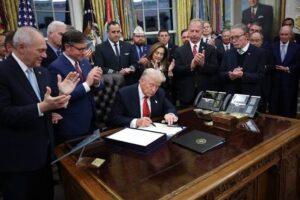
A government shutdown occurs when Congress fails to pass appropriation bills or a continuing resolution (CR) to provide funding for federal agencies. Without enacted funding, non‑essential government functions must cease, federal employees may be furloughed, and critical services are disrupted. Essential services such as Social Security, Medicare, and military operations continue, but routine operations like national parks, visa processing, and many administrative services pause until funding is restored.
Shutdowns are not new to U.S. politics; since the modern budget process began in 1977, shutdowns have occurred repeatedly when appropriations were not agreed upon before deadlines.
The 2025 Shutdown: Setting the Stage
The troubles began long before 2026.
On October 1, 2025, the federal government entered a shutdown after Congress failed to pass the necessary appropriation bills for Fiscal Year (FY) 2026. Attempts to pass a continuing resolution failed repeatedly in the Senate, blocked amid partisan disagreement over spending levels and other legislative priorities.
This shutdown quickly became the longest in U.S. history, lasting 43 days. It affected federal agencies nationwide, furloughing approximately 900,000 federal workers and delaying or disrupting services ranging from food aid to national park operations.
Central to the standoff were disputes over fiscal spending levels and controversial policy riders, including health care provisions like Affordable Care Act (ACA) subsidy extensions. Republicans in the House pushed for strict spending caps and policy changes, while Democrats demanded protections for programs like ACA tax credits, trying to leverage funding votes for broader policy wins.
The Bipartisan Funding Deal That Blocked the 2026 Shutdown
The historic crisis led to intense negotiations in late 2025.
On November 9, 2025, leaders in the Senate announced a bipartisan funding deal aimed at ending the shutdown and preventing another one at the start of 2026. The agreement came after weeks of negotiations between Senate Majority Leader and a group of moderate Democrats and Republicans, with the White House playing an active role.
Key Features of the Deal
Continuing Resolution Through January 30, 2026
– The government would remain funded at FY 2025 levels for most agencies until January 30, 2026, buying Congress more time to finalize the full FY 2026 budget.Full-Year Appropriations for Select Agencies
– Three appropriations bills were passed with full funding through September 30, 2026. These included:Department of Agriculture (including SNAP and WIC)
Department of Veterans Affairs
Legislative Branch operations
These full‑year sections provided stability for key programs while the remainder of the budget was negotiated.
Protection for Federal Workers
– The deal reversed certain mass layoffs and protected federal employees from further reduction‑in‑force actions until January 30, 2026. Furloughed workers were guaranteed back pay once operations resumed.Future Votes on Contested Provisions
– Democrats secured a promise for a future vote on ACA tax credits (which help millions afford health insurance), though passage was not guaranteed.Resumption of Federal Services
– Programs like the Supplemental Nutrition Assistance Program (SNAP) resumed operations, restoring assistance to millions of Americans who had faced delays during the shutdown.
Why This Deal Was Significant
The deal was historic for several reasons:
1. Ending the Longest Shutdown in History
By breaking the deadlock, Congress finally reopened the federal government after a record‑breaking 43 days of disruption. Millions of federal workers were paid and critical services resumed.
2. A Bipartisan Breakthrough
Both parties made concessions. Republicans accepted short‑term funding at existing levels rather than deeper cuts, while Democrats agreed to extend funding without securing immediate extensions of healthcare tax credits.
3. Immediate Relief for Americans
The deal restored food assistance programs and protected services that were paused during the shutdown, providing tangible relief for millions of families.
Political Dynamics Behind the Deal
The deal exposed the complex power plays in U.S. politics:
House vs. Senate
While Senate leaders negotiated the deal, the House of Representatives remained deeply divided—especially among conservative Republicans who opposed funding without stringent spending cuts or policy riders. This made it difficult to pass short‑term funding earlier, prolonging the shutdown.
Role of Moderates
Moderate senators from both parties played a crucial role in brokering the compromise, illustrating how centrists can be pivotal in budget negotiations.
The White House
President Donald Trump’s administration publicly framed the deal as resisting what it described as partisan “extortion,” while still endorsing the final agreement to avoid further economic pain.
Economy and Public Impact
The shutdown and subsequent deal had real effects beyond Washington.
Federal Worker Hardships
Hundreds of thousands of federal employees experienced financial stress due to furloughs or unpaid work, though back pay helped mitigate long‑term impact.
Economic Costs
Shutdowns hurt consumer confidence and slow government services that support business and travel sectors. Analysts estimated billions in economic disruption, though precise figures remain debated.
Public Services Restored
Services such as nutrition assistance, regulatory inspections, and administrative functions resumed, lessening disruptions for families and stakeholders who rely on federal support.
What Happens Next? January 30 and Beyond
Although the 2026 shutdown was averted, the January 30, 2026 funding deadline loomed large. With only a short‑term CR in place for much of the government, lawmakers face pressure to finish nine remaining appropriations bills to fully fund the government for the fiscal year.
Congress returned in January 2026 with a limited session, knowing that failure to enact full funding or another CR by January 30 could once again trigger partial shutdowns or political brinkmanship.
Some analysts noted that the November 2025 deal was less a resolution than a temporary truce—a pause that merely deferred future conflicts over budget priorities.
Broader Implications
Political Stakes
The shutdown and the deal underscored how budget battles are no longer technical negotiations about dollars and cents but have become politicized fights over health care, social programs, immigration, and fiscal priorities.
Impact on the Budget Process
Many observers argue these repeated shutdown threats indicate deeper dysfunction in the federal budgeting process—where annual deadlines, partisan pressure, and ideological battles override bipartisan compromise.
Public Trust
Extended shutdowns erode trust in institutions. Surveys consistently show public frustration when lawmakers fail to govern effectively, especially when impacts ripple into everyday life for ordinary Americans.
Conclusion
The Government Shutdown 2026 saga was not averted by luck but by extensive negotiation, compromise, and political pressure mounting over weeks of prolonged budget failure. The funding deal that blocked the 2026 shutdown also revealed the fragility of the U.S. budget process, the power of political brinkmanship, and the stakes involved when millions of Americans depend on the continuity of federal services.
As Congress moves forward from January 2026, the deal represents both a temporary solution and a cautionary marker for future budget negotiations. Avoiding shutdowns long‑term will require serious structural adjustments to how appropriations are prioritized, negotiated, and enacted—something policymakers must confront if they truly want to stabilize government operations and restore public confidence.
How useful was this post?
Click on a star to rate it!
Average rating 0 / 5. Vote count: 0
No votes so far! Be the first to rate this post.
About the Author

usa5911.com
Administrator
Hi, I’m Gurdeep Singh, a professional content writer from India with over 3 years of experience in the field. I specialize in covering U.S. politics, delivering timely and engaging content tailored specifically for an American audience. Along with my dedicated team, we track and report on all the latest political trends, news, and in-depth analysis shaping the United States today. Our goal is to provide clear, factual, and compelling content that keeps readers informed and engaged with the ever-changing political landscape.